Astronomers Confirm Elias 2-24 b as Youngest Known Exoplanet
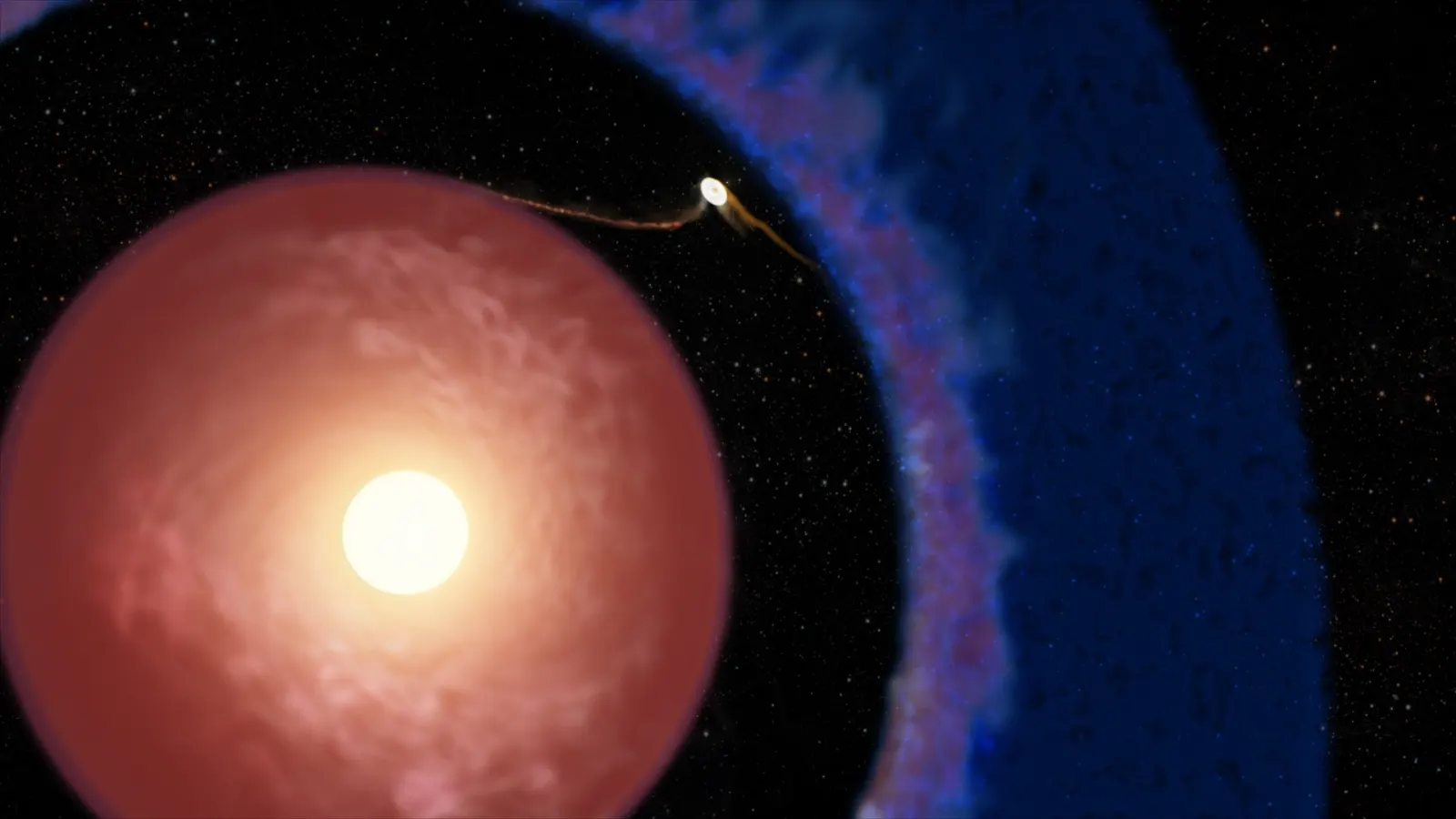
A giant planet less than one million years old has been detected still forming inside the dusty disk of its young star, astronomers report, challenging existing models of how planets take shape.
Astronomers confirmed Elias 2-24 b, under one million years old, as the youngest exoplanet ever found, still forming inside its star's dusty disk.
- Planet is less than 1 million years old, a new record
- The parent star is positioned approximately 450 light-years away from Earth
- Confirmation combined Keck, VLT and ALMA data
- Previous record holders were over 5 million years old
- Finding challenges current planet-formation models
What's new
- Study published Sept 16 in Astrophysical Journal Letters confirms Elias 2-24 b
- Planet is under 1 million years old, far younger than previous record holders
- Confirmation combined archival Keck, VLT and ALMA observations
- Discovery challenges existing planet-formation timescales
Astronomers have confirmed Elias 2-24 b, a giant planet less than one million years old, as the youngest exoplanet ever found, still forming inside the protoplanetary disk of its host star roughly 450 light-years from Earth, according to a study published in The Astrophysical Journal Letters on September 16, 2026.1236
How the discovery was made
About a decade ago, observations by the Atacama Large Millimeter/submillimeter Array revealed a gap in the dusty disk surrounding the young star Elias 2-24. A dim spot of light within that gap was then picked up by the Very Large Telescope, operated by the European Southern Observatory. Researchers led by doctoral candidate Andrea Bernardi at Universidad Diego Portales then searched the Keck Observatory Archive and found the same faint source in observations collected in 2018 and 2020, allowing them to track its motion over time.134
Tracking the object's movement, the researchers concluded its motion matched that of a planet in orbit, ruling out the possibilities of a camera artifact or a distant background star, they said. Andrea Bernardi said, "We usually hear about telescopes working separately, but this confirmation was possible only by using multiple telescopes together."34
A record for youth
Elias 2-24 b is estimated to be less than one million years old, according to multiple sources. Before this, the youngest confirmed planets were tied among four worlds—two circling PDS 70 and two circling WISPIT 2—each exceeding five million years in age, according to study co-author Lucas Cieza, a professor at Instituto de Estudios Astrofísicos in Chile.136
Existing theoretical models indicate that forming a planet the size of Jupiter at a comparable distance from its star typically requires around five million years, per the sources compiled in the dossier. Elias 2-24 b appears to have formed considerably faster, and current planet-formation models struggle to explain how, according to SciTechDaily.135
Size, distance and disputed measurements
The planet is described as roughly as massive as Jupiter, according to NASA and SciTechDaily, though Sci.News reports a mass estimate of between 1.9 and 4 times Jupiter's mass, a figure disputed by Universe Today. Its orbit is placed at about 55 astronomical units from its star by NASA and SciTechDaily, while Universe Today gives a figure of around 54.9 AU; the exact distance is disputed between sources. Universe Today additionally reports the planet's temperature at between 1,300 and 1,600 Kelvin and states the disk gap around Elias 2-24 is about 30 astronomical units wide, with the likelihood that a background star caused the signal put at just 0.015%.1236
Elias 2-24 orbits within the Ophiuchus star-forming region, according to Sci.News, which places the star roughly 139 parsecs from Earth, while other sources describe the distance as approximately 450 to 454 light-years. Approximately 6,000 exoplanets have been confirmed to date, according to NASA and SciTechDaily.1236
What it means for planet-formation theory
Lucas Cieza said, "Elias 2-24 b shows us that even our best planet-formation models are still missing some important processes." Per Sci.News, the finding bolsters the idea that massive planets can assemble rapidly via core accretion—where a solid core builds up and pulls in surrounding gas—rather than through the swifter collapse mechanism called gravitational instability.23
Andrea Bernardi said Elias 2-24 b "is at the limit of what current telescopes can detect, but with new instruments like NASA's Nancy Grace Roman Space Telescope, such detections should become easier." The Roman telescope, equipped with a more powerful coronagraph than current instruments, launched on August 30, 2026, according to NASA. Cieza added that this marks the start of a fresh era of discovery. He remarked that it is remarkable modern technology now lets scientists witness planet formation directly, and that the Roman telescope will elevate planet hunting even further.1
Why it matters
Verification drew on observations gathered by the Very Large Telescope, a facility in Chile run by the European Southern Observatory, together with ALMA and Keck data, highlighting how European-affiliated instruments contribute to progress in planet-formation research. For readers in Europe, the case illustrates how archival data from jointly operated observatories can yield discoveries years after collection, and how models of planet formation, relevant to understanding solar systems including our own, may need revision.34
Version history
- version 1 ·