Business · Australia
Australia Lifts Cash Rate to 4.6%, a 15-Year High
The Reserve Bank of Australia raised its benchmark interest rate for the fourth time in 2026, citing persistent domestic demand and energy costs linked to the Middle East conflict.
Australia's central bank raised its benchmark interest rate to 4.6 per cent, a 15-year high, citing persistent inflation linked partly to Middle East-driven energy costs.
- RBA hiked cash rate 25 basis points to 4.6%, fourth rise in 2026
- Inflation hit 3.5% in July, above the 2-3% target
- Nearly a third of mortgage holders at risk of financial stress
- Governor Bullock says more rate rises possible
- $750,000 mortgage holders face $114 more per month
What's new
- RBA raised the official cash rate by 25 basis points to 4.6 per cent on Tuesday, the highest level in about 15 years
- Governor Michele Bullock said the move was tough but necessary and left the door open for further tightening
- Mortgage holders and debt-counselling services reported rising financial stress linked to the increases
- The Australian dollar outperformed peers even as trade balance data came in weak
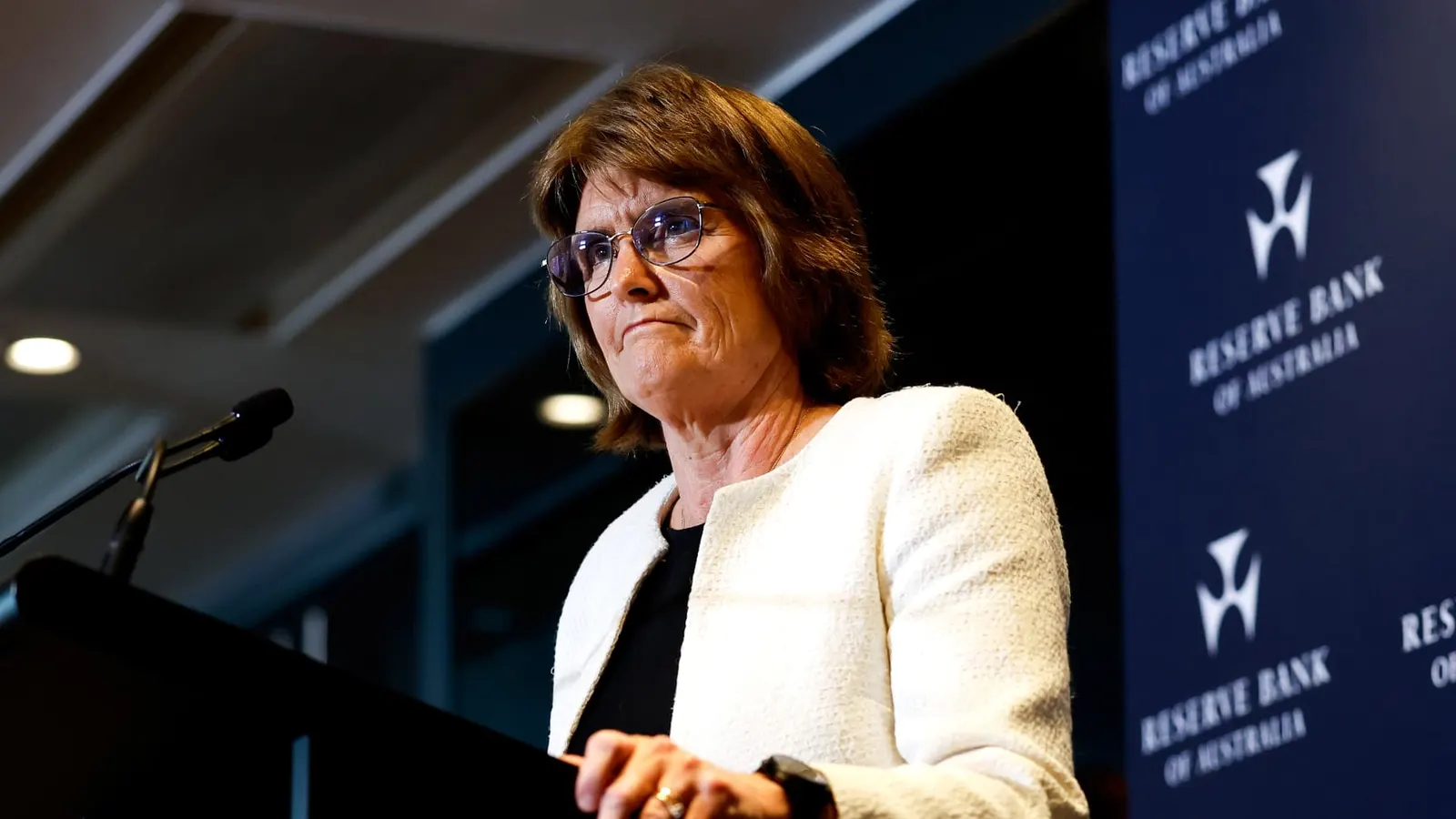
The Reserve Bank of Australia raised its official cash rate by 25 basis points to 4.6 per cent on Tuesday, the fourth increase of 2026 and the highest level in roughly 15 years, as the central bank continues to confront inflation that has run above its target band.2345
Decision and rationale
The Monetary Policy Board lifted the cash rate target to 4.60 per cent, saying recent inflation outcomes were stronger than expected and that global energy prices had risen significantly above earlier forecasts. The bank pointed to further disruptions to global oil supply and said higher fuel prices had partially passed through to the cost of other goods and services.32
Governor Michele Bullock said "excessive domestic demand, combined with capacity pressures, is the principal driver of sticky inflation." According to CNBC, the bank also attributed rising inflation to domestic price pressures and higher energy prices stemming from the war involving Iran, while Al Jazeera reported that an AI-driven surge had contributed to higher technology costs.542
The Reserve Bank said it remained focused on ensuring high inflation does not become embedded, stating: "The Board will continue to do what it considers necessary to bring inflation sustainably back to target, including increasing the cash rate target further if needed."3
Household impact
According to Roy Morgan data cited by Al Jazeera, nearly one-third of Australian mortgage holders were at risk of mortgage stress as of July, defined as spending between 25 and 45 per cent of after-tax income on repayments. ABC Australia reported that owners of a $750,000 mortgage now pay roughly $114 more each month, pushing the cumulative rise in repayments to $454 over the course of the central bank's tightening cycle that started in February.21
Homebuyer Natasha Luscri-Miller said, "I'm at that point where I'm like, 'How much more are you going to squeeze before you're satisfied?'" Financial Counselling Australia's Jane Pires said mortgage stress is already the top concern for callers to the National Debt Helpline, which according to ABC Australia received 187,905 calls in the 12 months to August.1
Anglicare Sydney's Rob Stokes said, "The banks pass on rate rises. Landlords pass on higher costs. Developers pass up new housing opportunities. But people on low incomes have nobody left to pass the burden onto." ABC Australia also reported that just 1 per cent of Greater Sydney rental properties were within reach of low-income earners. Mortgage broker Samuel Power urged borrowers to shop around, saying, "Make sure your bank is being competitive. Do not pay a loyalty tax."1
Economic backdrop
The Reserve Bank noted that output growth eased yet exceeded earlier forecasts for the June quarter, while housing prices dropped in most capital cities and new housing loans fell markedly. Labour market conditions eased broadly as expected, the bank said.3
CNBC reported that Australia's inflation climbed to 3.5 per cent in July, exceeding forecasts, and that Bank of America viewed inflation as picking up pace rather than easing toward target, pointing to signs that energy-driven price pressures were feeding into other costs and entrenching inflation risk.4
Government and market response
Treasurer Jim Chalmers said, "We know a lot of Australians are under pressure and this will make things harder," adding that "inflation and interest rates are going up around the world but we know that doesn't take the sting out of today's decision." He said the government would keep "managing the budget responsibly, rolling out tax cuts and cost of living help."21
According to the Canberra Times, government leaders including Prime Minister Anthony Albanese responded to the announcement, and the newspaper's editorial voice suggested the RBA "wouldn't be acting this aggressively if it didn't believe domestic economic conditions dictate the current reality."5
FXStreet reported that the Australian dollar outperformed riskier peers despite weak trade balance data, with Bullock keeping the door open for further tightening aimed at bringing inflation back to the 2 per cent target.7
Why it matters
The decision illustrates how central banks are still wrestling with inflation linked to energy markets destabilised by the broadened Middle East conflict, a dynamic also facing European policymakers. Rising borrowing costs are translating directly into household financial stress, a pattern being closely watched by counterparts managing similar trade-offs between inflation control and consumer strain.23
Videos
Related stories
Version history
- version 1 ·