Science & Tech · Australia
Australian cyber agency warns of unexpected outages as AI threats grow
Australia’s cyber agency says organisations may need to take services offline to secure them. Its annual report records a rise in incidents as officials urge stronger defences against AI-enabled attackers.
Australia’s cyber agency warns that online services may face unexpected interruptions as AI-enabled threats grow. Officials say securing systems should take priority over keeping them available.
- ASD responded to 1,500 incidents in 2025-26, up 20%.
- Some services may need to go offline for security work.
- Bradshaw says defenders need AI tools to counter AI-enabled attackers.
- Older systems remain a major concern for the agency.
What's new
- ASD reported responding to 1,500 cybersecurity incidents in 2025-26, up 20%.
- Officials urged organisations to put security ahead of keeping services available.
- ASD says advanced AI tools are needed to help defend against AI-enabled attacks.
The Australian Signals Directorate warned Australians on October 26, 2026, to prepare for unexpected interruptions to essential online services, as its annual cyber threat report recorded more incidents and officials urged organisations across the country to strengthen defences against attackers using artificial intelligence.1
Security before availability
The agency’s advice includes accepting interruptions while systems are made secure. ASD director-general Abigail Bradshaw and defence minister Richard Marles said organisations should put protection ahead of keeping services running, according to the Guardian. That approach could require services to be taken offline while weaknesses are addressed.1
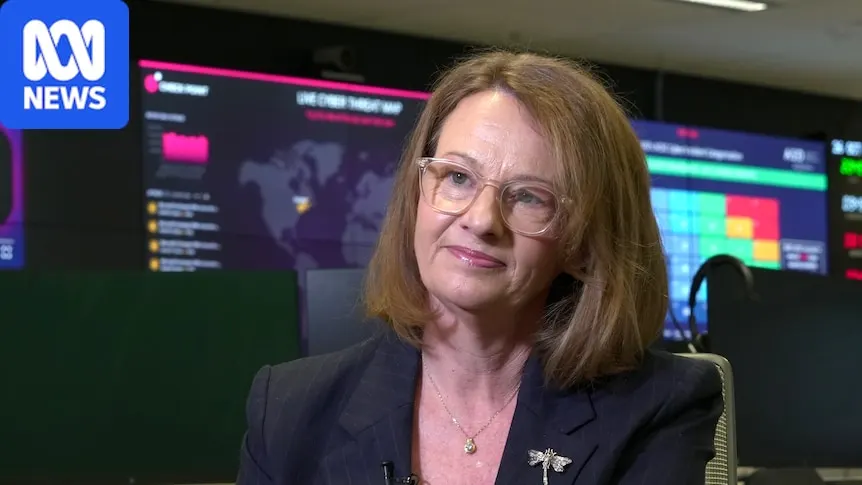
ABC reported on October 27 that government websites, including ASD’s own site, had been partly taken offline after vulnerabilities were identified. Bradshaw warned that advances in AI capabilities would probably bring further disruption, potentially involving both breaches of data and interruptions to services.2
According to the Guardian, newly identified vulnerabilities in PHP prompted governments and businesses to undertake repairs. ASD also urged organisations to update their systems, contact the agency for assistance and report suspicious incidents. It identified older technology as a major vulnerability and a target for hackers.1
More incidents and warnings
ASD said it responded to 1,500 cybersecurity incidents during 2025-26, an increase of 20% on the previous year. It also alerted external organisations to more than 4,400 potentially malicious incidents, an 80% increase. Those notifications and the incidents requiring a response were reported as separate measures.1
The agency said Australian government and private networks faced repeated attempts by state-based actors to gain access during the past year. Its report suggested that activity in the Indo-Pacific could be intended to prepare for possible future conflicts, according to the Guardian; that purpose remains unconfirmed.1
ASD said hostile governments, criminals and hackers were using AI for intelligence collection, interference with critical infrastructure and theft. Wider access to the technology was helping attackers locate weaknesses and carry out attacks more quickly and effectively, the agency said, making cybersecurity a responsibility for organisational leaders.1
AI as a defensive tool
Bradshaw argued that defenders also needed the technology. “We need AI tools to help automate our defences to stay ahead of AI-enabled attackers,” she said. ASD said integrating AI into security work could help identify vulnerabilities and unusual activity, as well as improve responses.1
Bradshaw said ASD had access to Anthropic’s Mythos model. Anthropic said it could not make the model publicly available because it could identify previously unknown flaws in IT systems, according to the Guardian. Australian agencies regard access to advanced models and cooperation with leading AI laboratories as important to stronger cybersecurity.1
ABC also reported that ASD had established early-warning arrangements with AI companies and shared them with laboratories and Five Eyes agencies. Tauri Gregory, ASD’s acting deputy director-general of intelligence, said the agency was using AI to produce software capabilities faster, while Bradshaw called for further work to replace vulnerable older systems.2
Why it matters
For European readers, the dossier includes an example beyond Australia: ABC reported that hackers exploited online-system flaws to raise supermarket refrigerator temperatures in France. ABC also reported that the criminal network behind Amadey had access to 180,000 computers worldwide, illustrating the international reach of the threats discussed by ASD.2
Related stories
same place

background



Version history
- version 1 ·