Business · United States of America
Boeing Flags Software Glitch On Some 737 Max Jets
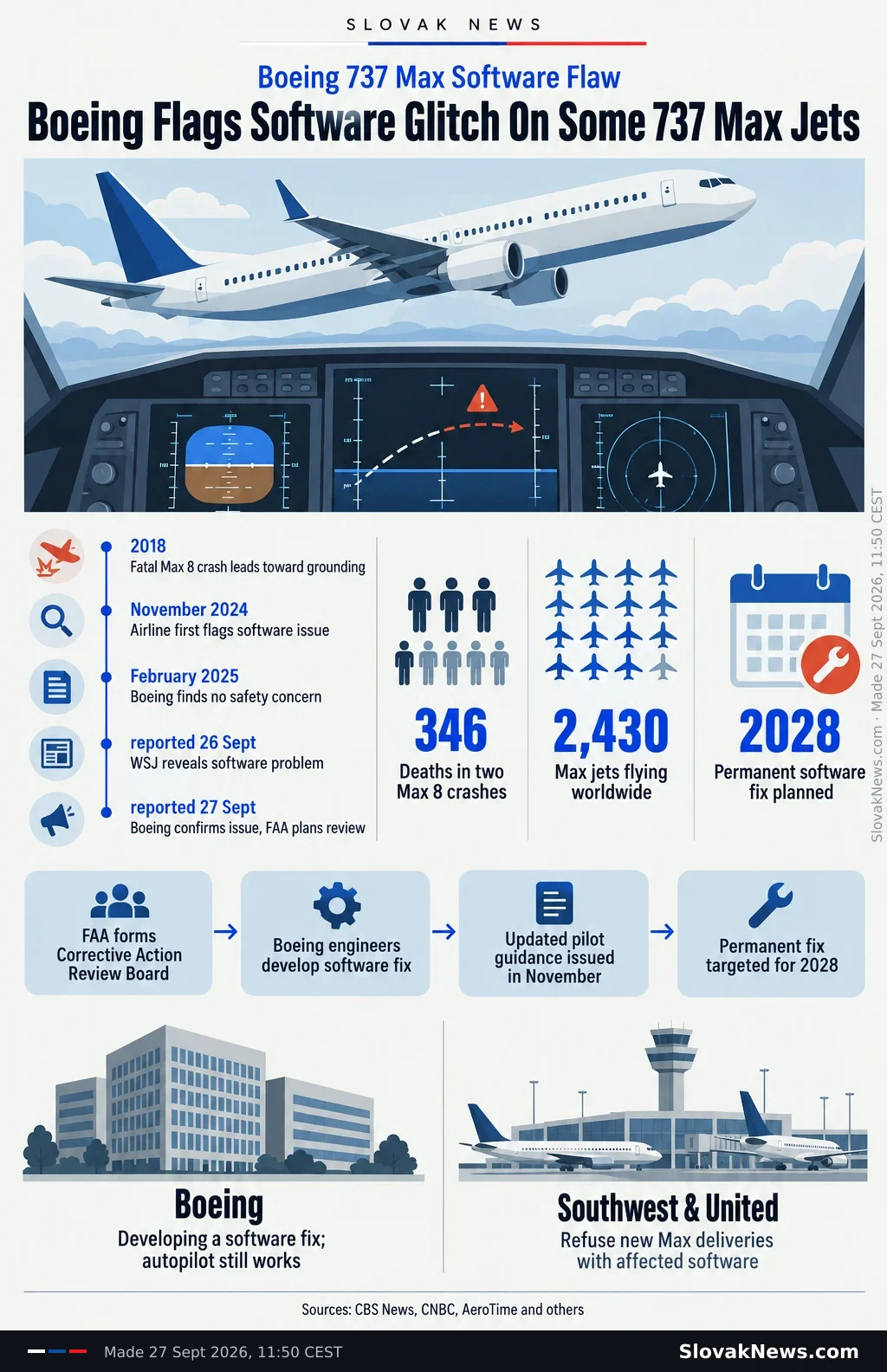
Boeing has told regulators and airlines about a software problem that can cause automated flight guidance to disengage during certain landing scenarios, prompting an FAA review and delivery caution from major carriers.
Listen to the story
Short version
Boeing has flagged a software glitch on some 737 Max jets that can disable automated landing guidance in rare scenarios, prompting an FAA safety review.
- FAA to convene review board over 737 Max software glitch
- Glitch can disengage automated vertical navigation after missed approach
- Southwest and United refuse new deliveries with affected software
- Boeing developing permanent fix; Max 10 certification could be delayed
Infographic
What's new
- FAA to convene a Corrective Action Review Board over the 737 Max software issue
- Southwest and United ask Boeing not to deliver new Max jets with the affected software
- Boeing says engineers are developing a permanent software fix
- Review could further delay Max 10 certification and Max 7 deliveries
The Federal Aviation Administration said on September 27, 2026, it is investigating a software glitch on some Boeing 737 Max jets that could cause automated flight guidance to disengage during aborted landings, after Boeing disclosed the issue to operators and regulators.124
Infographic
What the glitch does
According to Boeing and the FAA, the issue can arise in rare circumstances involving a missed approach, when autopilot is engaged and pilots subsequently alter a preprogrammed flight path. In that scenario, a flaw within the flight management computer may trigger disengagement of the automated vertical navigation feature, referred to as VNAV.13
Boeing and the FAA noted that the plane's autopilot keeps operating even when VNAV disengages, and that pilots receive training to complete landings without relying on that automated feature. A Boeing spokesperson said the company had told operators about the situation and reinforced existing procedures for handling it.123
Regulatory and industry response
The FAA said it is coordinating closely with Boeing and carriers, and plans to assemble a Corrective Action Review Board to assess whether the glitch poses a safety risk to flights. The agency added that it would move swiftly to respond should any safety issue be confirmed.143
Boeing stated that its engineering teams are developing a lasting software fix, and that the company is collaborating with airlines to establish a formal procedure enabling pilots to restore automated vertical navigation should the issue arise.241
Both Southwest Airlines and United Airlines have requested that Boeing withhold new 737 Max deliveries carrying the problematic software, asking for an older version to be installed instead. Southwest said none of its fleet, including new Max 8 deliveries, is equipped with the software version in question, known as Version U.14. United said it is not taking any Max deliveries with the new software. Alaska Airlines, a Max 10 customer, said it has been engaged with Boeing and the FAA on the matter.421
Origins of the issue and timeline
The Wall Street Journal first reported the software problem on September 26, 2026, before Boeing and the FAA issued their own statements. CBS News reported that an airline alerted Boeing to the problem in November 2024, and that the company examined it in February 2025, concluding at that point that it did not constitute a safety hazard. Boeing later received additional information from operators that prompted it to launch a formal safety review board, whose findings were sent to the FAA for review by the Corrective Action Review Board.13
Boeing's original bulletin stated that a lasting software correction wouldn't be available until 2028, and that revised guidance for pilots would come out in November. Bloomberg reported that Boeing said it is working to accelerate the permanent fix.15
Effect on Max 7 and Max 10 programs
The review adds fresh scrutiny to Boeing's two remaining Max variants awaiting regulatory clearance. In early August, the FAA granted certification to the Max 7 equipped with the latest software, though it remained unclear whether the plane could instead be delivered or operated using an older version. Boeing had earlier aimed to begin delivering both the Max 7 and Max 10 to customers in 2027, with Southwest scheduled to begin receiving its Max 7 jets this autumn.231
Earlier this month, Boeing's chief executive, Kelly Ortberg, informed investors that he anticipated the Max 10 would receive FAA certification "very soon." CBS News reported that the ongoing FAA review might push back both that certification and the delivery timeline for the Max 7.21
Why it matters
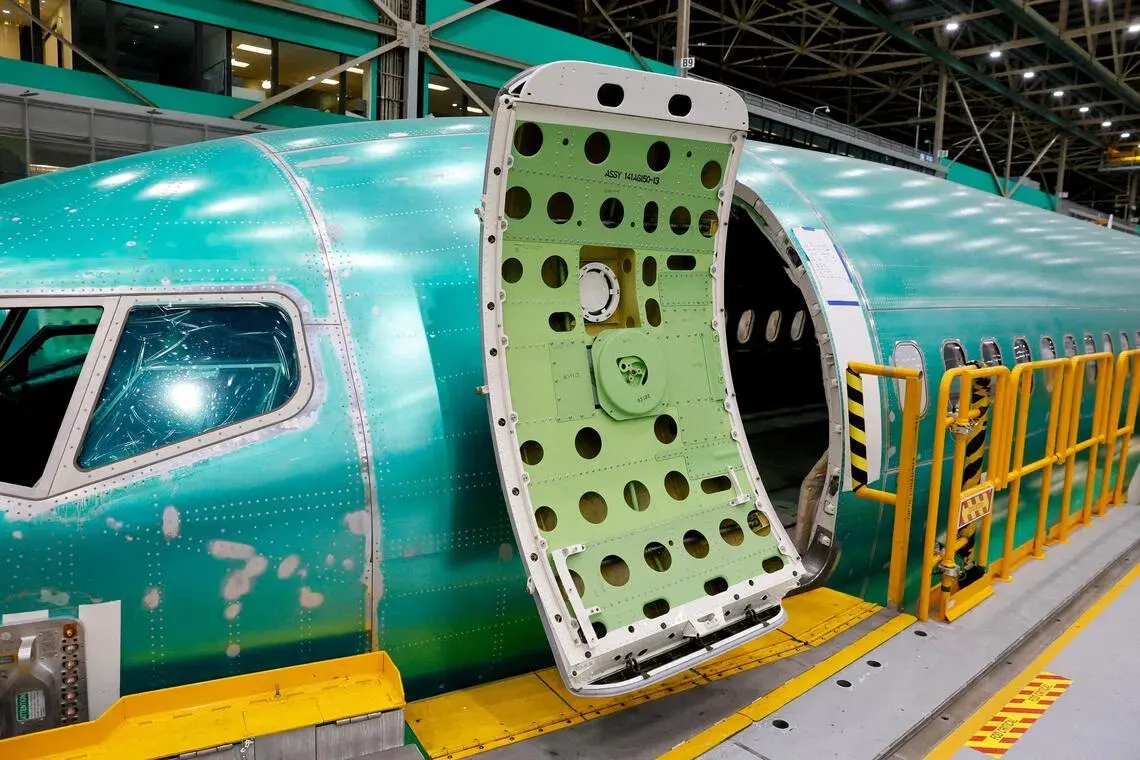
The episode also revives questions about Boeing's safety oversight following the fatal 2018 and 2019 Max 8 crashes and the 2024 Alaska Airlines door-panel incident.214
Version history
- version 1 ·