New releases · Books
New books: Muránska bosorka and Teige a harlekýn
Juraj Červenák returns to a castle crime scene, while Jiří Kamen follows Karel Teige through the Czech avant-garde.
A roundup of new releases and their reviews. We have not seen, heard or read the works ourselves: the verdicts are those of the critics cited.
This week’s documented selection pairs Červenák’s historical detective fiction with Kamen’s biographical collage.
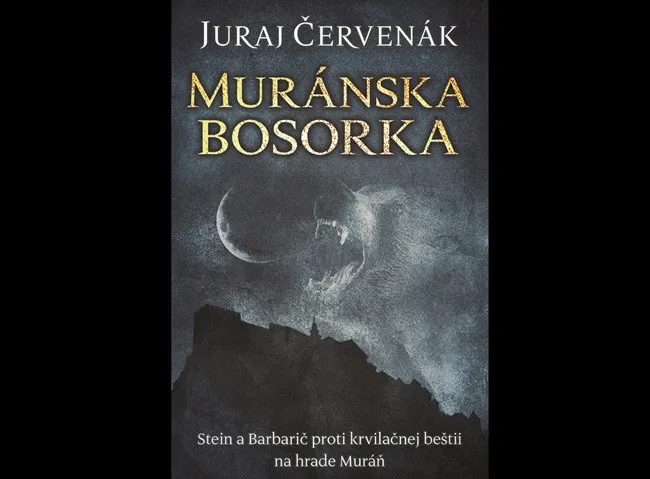
- Muránska bosorka is the eleventh Stein, Barbarič and Jaroš novel.
- Červenák’s investigators confront a mutilated victim and witchcraft accusations at Muráň Castle.
- Teige a harlekýn connects Karel Teige’s biography with the Czech interwar avant-garde.
The books roundup for the week of October 21, 2026, brings together Muránska bosorka, Juraj Červenák’s latest historical detective novel, and Teige a harlekýn, Jiří Kamen’s biographical collage. One sends an established investigative trio to a remote castle in Gemer; the other approaches the Czech interwar avant-garde through the life of an art critic, theorist, artist and translator.123
Slovakia and Czechia
A suspicious death and a life reconstructed from documentary sources provide this selection’s two starting points. Červenák’s book continues the series about Captain Stein, Notary Barbarič and Sergeant Jaroš, with accusations of witchcraft surrounding their latest investigation. Kamen’s book, presented by Argo, moves between an individual biography and the history of an artistic movement, following Teige’s work, affiliations and political commitments.123
Muránska bosorka
At the remote Muráň Castle in Gemer, the castle provost has been found mutilated, with injuries that appear to suggest an attack by a wild animal. Local suspicion falls on his wife, whom people accuse of witchcraft and dealings with the devil. That is the premise described by TASR and Slovart for Muránska bosorka, the eleventh novel in Červenák’s historical detective series. The accusations belong to the story’s inhabitants: the investigators’ task is to establish what happened behind the frightening appearance of the crime. Matej Barbarič persuades Joachim Stein and Bohdan Jaroš to stop at Muráň and investigate, bringing the notary, captain and sergeant into a case in which further victims remain a threat.12
The publisher’s account describes a network of crimes that the three men must untangle before more people die. Slovart is the publisher, and the supplied release record gives October 16, 2026, although the source material also flags the October publication timing as disputed. The release coverage includes plans for author discussions at Martinus bookshops in Košice, Bratislava and Zvolen; it does not provide dates for those appearances. It also places this instalment within Červenák’s longer writing career: his first book appeared in 1993, and he has devoted himself exclusively to writing since 2005. He lives with his family in Banská Štiavnica.12

Teige a harlekýn
Jiří Kamen’s Teige a harlekýn is presented by Argo as a biographical collage whose scope extends beyond its central figure to the Czech interwar avant-garde. In the publisher’s account, Karel Teige worked as an art critic and theorist, artist and translator. At twenty, he helped formulate the programme of Umělecký svaz Devětsil alongside friends of a similar age. Argo situates the emergence of Poetism after the experience of the war and describes Surrealism as a later development. Those connections establish the book’s stated historical range: Teige’s life is recounted alongside the ideas and collective artistic activity in which he participated.3
Argo also foregrounds Teige’s politics, stating that he identified with communist ideology for most of his life. The publisher says Kamen built the book through extensive study of the available sources and literature, and describes its narrative details and turns as grounded in facts. These are the publisher’s claims about the book’s construction, rather than an independent assessment of its research or storytelling. The supplied Argo listing identifies the author and the biographical approach but gives no release date, so the publication cannot be assigned a precise day within this week’s calendar.3
Version history
- version 1 ·