Health · United States of America
Brain implants enable speech and singing in two patients with ALS
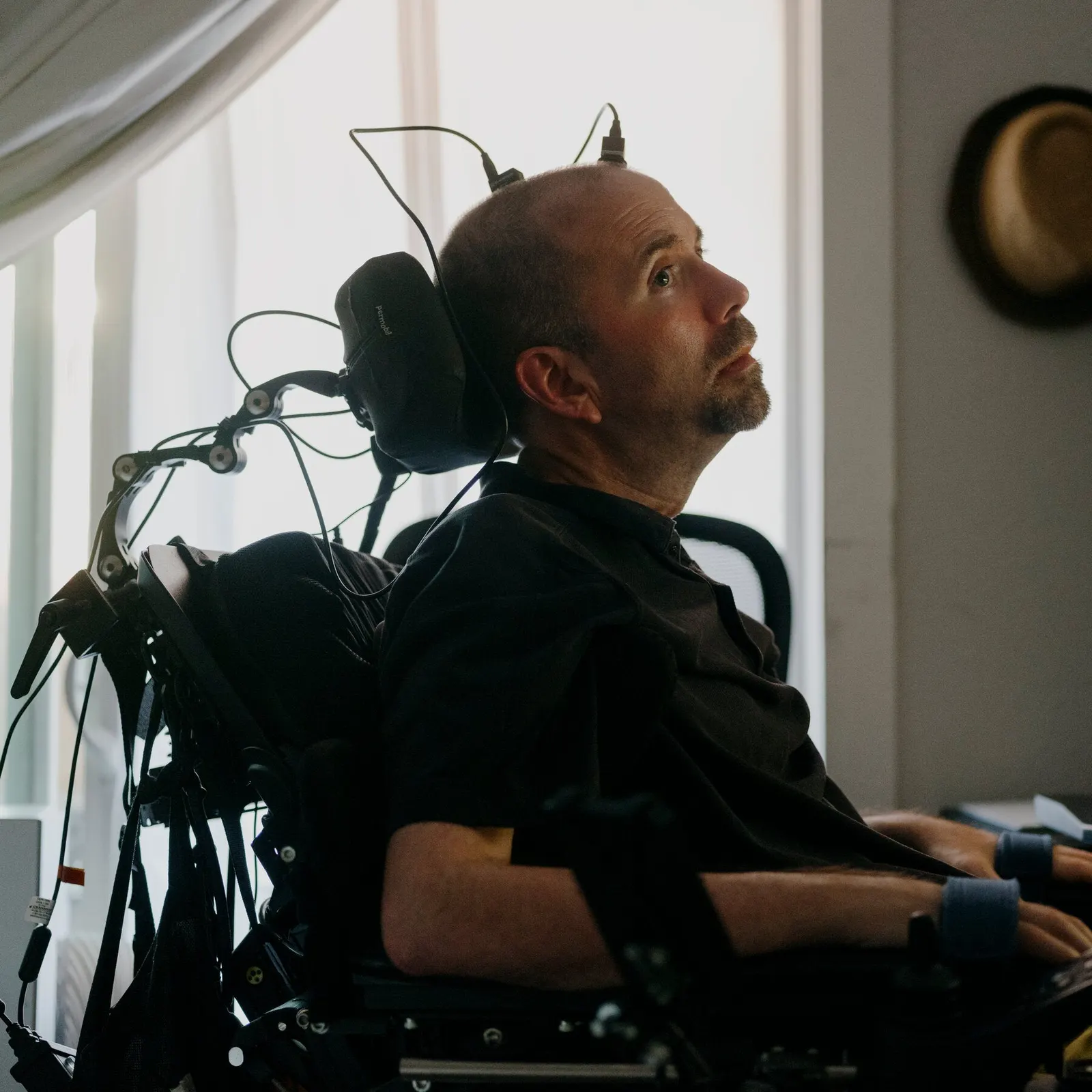
Researchers at the University of California, Davis, have developed interfaces that enabled two people with ALS to speak or sing, The New York Times reported. The work is due to be presented at a neuroscience conference in Washington.
UC Davis researchers enabled speech and singing through experimental brain interfaces in two ALS patients, The New York Times reported.
- A 46-year-old man’s brain signals became intelligible speech, the newspaper reported.
- A trained singer performed a musical scale through an implanted interface.
- Presentation is planned for the following week’s neuroscience conference in Washington.
What's new
- A man’s brain signals were converted directly into intelligible speech, according to The New York Times.
- A trained singer used an implanted interface to sing a musical scale, the newspaper reported.
- The UC Davis advances are scheduled for presentation in Washington the following week.
Researchers at the University of California, Davis, have developed experimental brain interfaces that enabled a man with ALS to speak and a woman with the disease to sing, The New York Times reported on November 14, 2026. The following week, the advances are set to be unveiled in Washington during a conference organised by the Society for Neuroscience.1
Two forms of vocal communication
The man, 46, had lost his voice to ALS. According to the newspaper, researchers decoded signals from his brain and converted them directly into understandable speech. The report describes an approach that produces speech from those signals rather than first turning them into written text.1
The woman, a 58-year-old trained singer, had been gradually losing her voice because of ALS. Presented with a musical-scale prompt on a screen, she sang the scale through an implanted brain-computer interface, the newspaper reported. Her demonstration concerned singing, while the man’s concerned spoken communication.1
Beyond composing a sentence
Brain implants combined with increasingly capable artificial intelligence have enabled people to communicate in case studies over several years, according to The New York Times. Earlier systems, however, converted brain signals into text before producing speech. The resulting wait made exchanges between speakers difficult, the newspaper reported.1
In the process described in the report, surgically implanted electrodes detected electrical activity when a participant tried to speak. Software interpreted that activity as phonemes, the sound units that make up words. Participants then used a cursor click to signal that they had completed a sentence.1
A computer-generated version of each participant’s voice delivered the response. That sequence allowed a composed answer to be spoken, but the newspaper’s account also emphasises that communication involves the pace, rhythm and stress of speech, rather than only the content of a completed response.1
An outside assessment
Speaking to The New York Times, University of Michigan biomedical engineer Cindy Chestek, who had no role in the study, described the system as sufficiently useful: “Good enough for real communication. It’s good enough to sing.”1
The newspaper frames the work as a move from demonstrating that brain-computer interfaces can function toward making them useful in everyday communication. That assessment, and the detailed accounts of both patients’ results, come from its reporting ahead of the planned conference presentation.1
Why it matters
For European readers, the relevance is the communication problem described in these cases: ALS had removed or progressively reduced the patients’ voices. The reported work addresses both understandable speech and singing, while earlier systems introduced delays into conversation.1
Videos
Version history
- version 1 ·