World · United States of America
Tennessee prison chief to resign after failed Christa Pike execution attempt
Governor Bill Lee said Frank Strada, the state corrections commissioner, is leaving his post this month while Pike remains unconscious and in critical condition. Tennessee has halted executions through 2026 and ordered an independent review.
Listen to the story
Short version
Tennessee corrections commissioner Frank Strada will resign following the failed execution of Christa Pike. Pike remained unconscious, critically ill and on a ventilator.
- Strada will step down as corrections commissioner this month.
- Lee ordered an independent review and halted executions through 2026.
- The Supreme Court lifted a federal appeals court’s temporary stay.
- Pike’s lawyers asked Lee to commute her sentence to life.
- Intravenous-line problems disrupted delivery of pentobarbital, her lawyers said.
Infographic

What's new
- Frank Strada will resign this month as commissioner of the Tennessee Department of Correction.
- Strada said his departure was in Tennesseans’ best interests while the failed execution is reviewed.
- A federal appeals court stayed Pike’s execution about 90 minutes before it was scheduled, but the U.S. Supreme Court lifted the stay.
- Pike’s lawyers asked Governor Bill Lee to let her spend the rest of her life in prison.
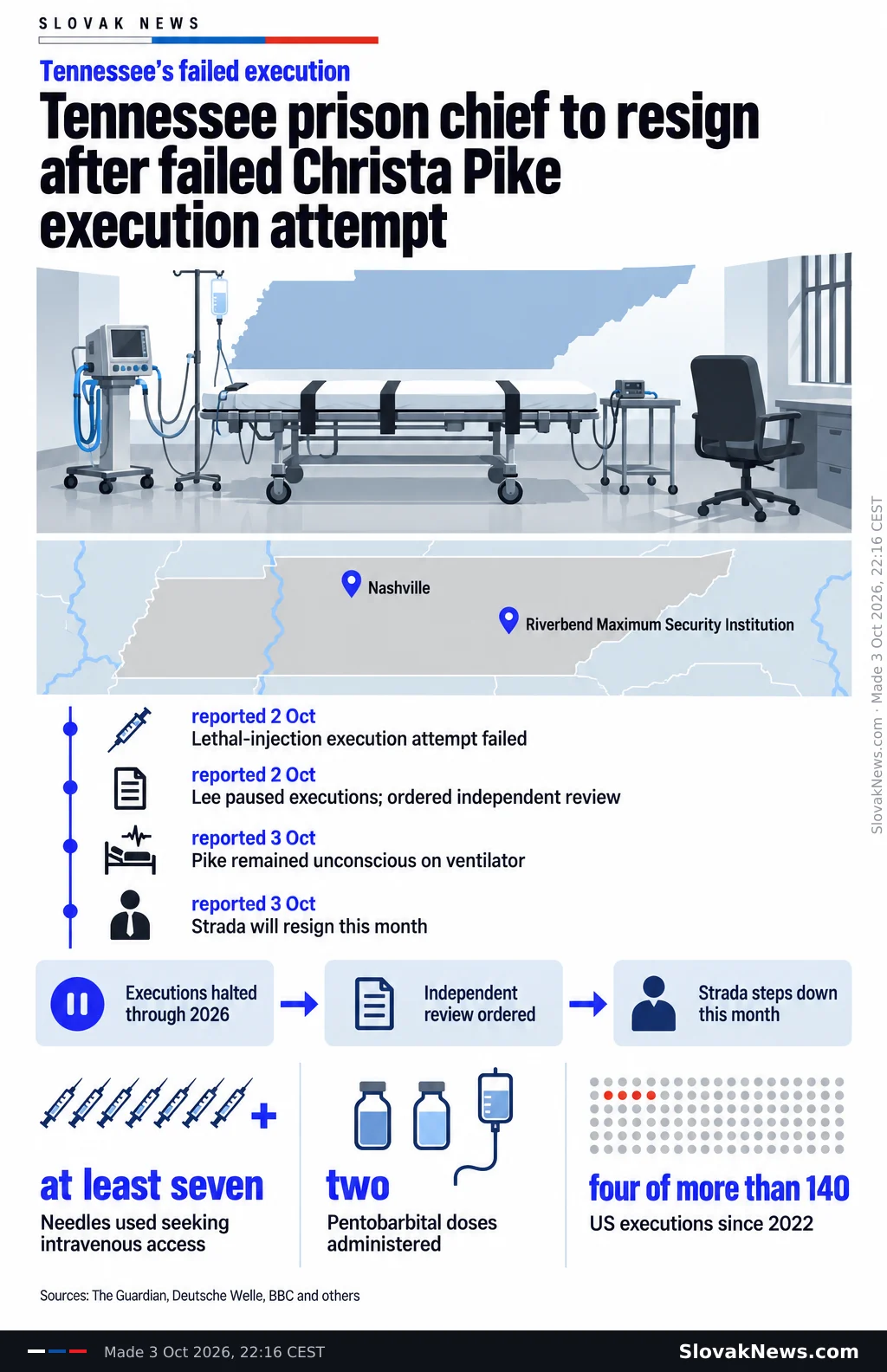
Governor Bill Lee said Tennessee’s corrections chief, Frank Strada, is due to leave office this month after the unsuccessful effort to execute Christa Pike. Pike remained unconscious, critically ill and on a ventilator after the lethal-injection procedure. Lee halted further executions through the end of 2026 and ordered an independent review.4569
Infographic
Intravenous access problems
Pike’s attorneys said the execution team failed to recognise that intravenous lines had been placed incorrectly or that veins had blown. They said pentobarbital consequently entered her body, at least in part, rather than being delivered into her bloodstream. The Japan Times reported that two doses were administered at Riverbend Maximum Security Institution in Nashville; other reports also said Pike received two doses during the attempt.1234
The BBC reported that prison officials used at least seven needles while trying to establish intravenous access and that one needle was bent at a 90-degree angle when removed. Pike’s lawyers had warned Tennessee officials and the courts before the execution that gaining intravenous access could be difficult, citing her small veins and thrombocytosis, the BBC said.356
The Guardian reported that witnesses heard Pike choking and struggling an hour after the first pentobarbital injection. A second dose also failed to kill her. The outlet described Pike as the first US death-row prisoner to survive after being injected with lethal drugs.1
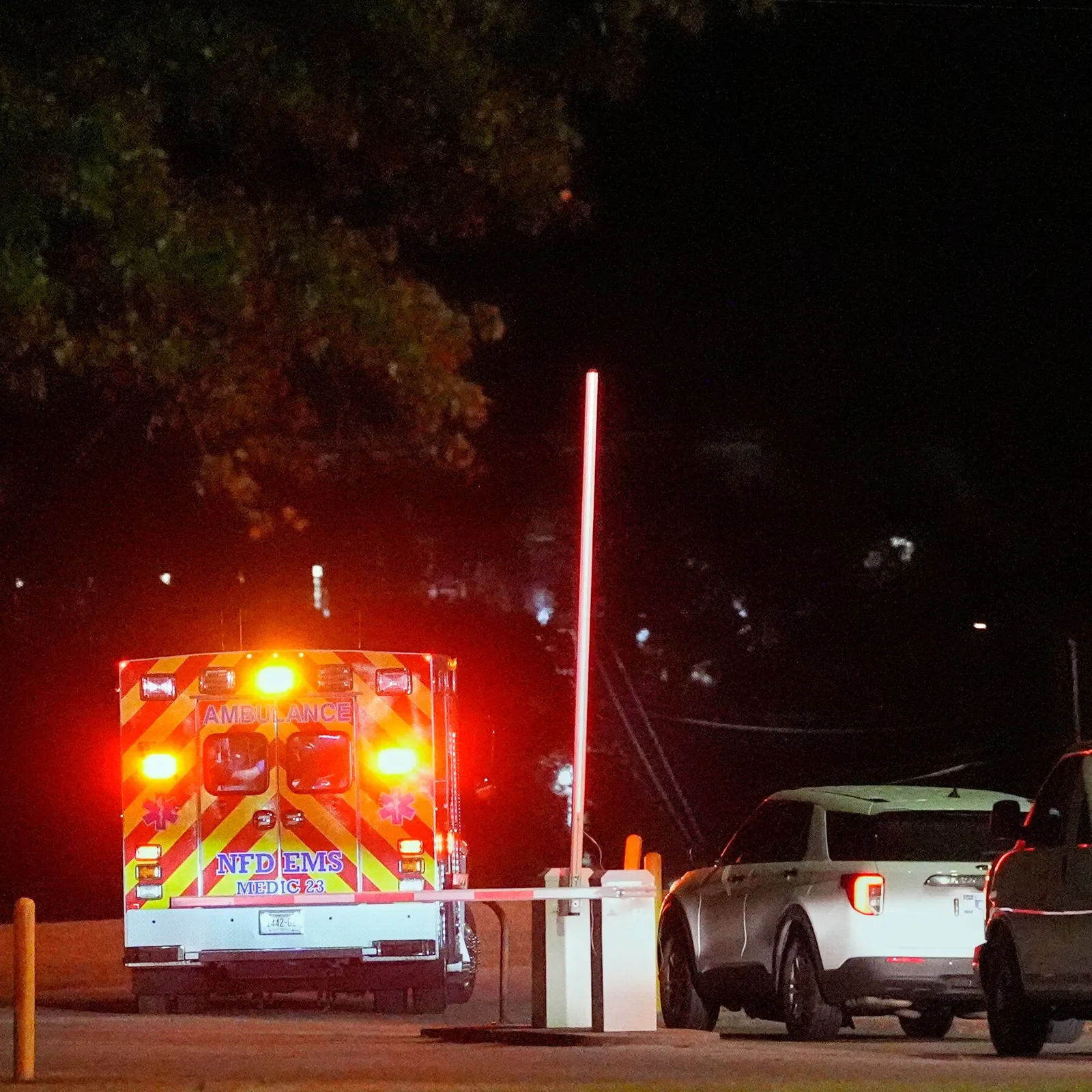
Reports on Oct. 2 and 3 said Pike remained unconscious, hospitalised and in critical condition, with significant injuries to both arms. She was intubated and connected to a mechanical ventilator at a Nashville hospital while medical staff worked to save her life and clear pentobarbital from her system. The Independent reported that the procedure caused severe burns and blisters on her arms.1345
Evidence request and state review
Pike’s attorneys submitted an emergency motion asking the court to instruct the Tennessee Department of Correction to retain physical, documentary and digital material related to the execution. They also sought commutation of her death sentence. The Independent separately reported that her lawyers asked Governor Bill Lee to let Pike spend the rest of her life in prison.2345
The Independent reported that a federal appeals court issued a temporary stay about 90 minutes before Pike was scheduled to die. The U.S. Supreme Court subsequently lifted the stay, allowing Tennessee to proceed with the execution attempt.4
Tennessee Governor Bill Lee called the case deeply disturbing but said the Department of Correction had followed the outlined protocol. He paused all additional executions in Tennessee through the end of 2026 and commissioned an independent inquiry. The episode was Tennessee’s second failed execution of the year, according to The Straits Times and CBC.1245
Murder conviction
Pike was convicted over the 1995 killing of 19-year-old Colleen Slemmer. Pike was 18 at the time of the killing and was sentenced to death in 1996, when she was 20. According to reports, Slemmer had a satanic emblem cut into her chest.1345
Had the execution been completed, Pike would have been the first woman put to death by Tennessee in more than 200 years. The Guardian reported that the previous execution of a woman in the state occurred in 1820, although that specific year was not independently supported elsewhere in the dossier.1245
According to The Independent, Pike refused the state-provided final meal and requested that the $20 allocated for it go toward pizza for unhoused people in downtown Nashville.4
Broader scrutiny of Tennessee executions
The Independent described Pike’s execution attempt as Tennessee’s second flawed procedure within four months and said the state had now suspended the death penalty for the second time since 2022. The Death Penalty Information Center told the outlet that Tennessee had conducted four of the more than 140 executions carried out across the United States since 2022.4
The Independent also reported that a review found Tennessee had repeatedly failed to follow its capital-punishment protocols after they were revised in 2018. It reported that required endotoxin tests were not performed in seven executions and one halted attempt, while the state’s unidentified lead executioner had no formal medical credentials.4
Scrutiny of corrections commissioner Frank Strada
Governor Bill Lee announced that Frank Strada will resign as commissioner of the Tennessee Department of Correction this month. Strada said his departure was in Tennesseans’ best interests as an independent review examines the failed execution.49
The Guardian reported that Pike’s lawyers described her execution as the fifth botched procedure under Frank Strada’s leadership across two states since 2022. Strada leads the Tennessee Department of Correction and previously served as a deputy prison director in Arizona, where he oversaw three executions in 2022.1
During those Arizona executions, officials made an incision near Clarence Dixon’s groin while trying to place an intravenous line, repeatedly struggled to find veins for Frank Atwood and inserted a catheter into Murray Hooper’s groin. The Death Penalty Information Center classified all three executions as botched. A subsequent Arizona review identified inadequate expertise and concerns about the intravenous team and drug efficacy.1
In Tennessee, officials called off Tony Carruthers’ execution in May after spending more than an hour trying to locate a vein. The Guardian also reported that Tennessee removed a requirement for execution-team members to practise catheter placement with saline. Pike’s lawyers cited Carruthers’ and Pike’s procedures alongside the three Arizona executions in challenging Strada’s record.1
Why it matters
Strada’s resignation is the first major leadership change since the failed execution and comes as Tennessee begins an independent review and its second execution moratorium in five years. Pike’s lawyers had already linked her procedure and four other executions classified as botched to Strada’s leadership in Tennessee and Arizona.149
Videos
Related stories

Version history
- version 5 · Tennessee corrections commissioner Frank Strada will resign this month as the state reviews the failed execution of Christa Pike.
- version 4 · New reporting says Pike was the first US death-row prisoner to survive lethal-drug injection and links her ordeal to four other problematic executions under Frank Strada’s leadership.
- version 3 · New reporting describes severe burns and blisters on Pike’s arms and places the failed execution within broader scrutiny of Tennessee’s execution record and protocol compliance.
- version 2 · New reporting says Pike remained critically ill on life support and identifies Riverbend Maximum Security Institution as the site where two pentobarbital doses were administered.
- version 1 ·