Climate · Democratic Republic of the Congo, Republic of the Congo
Forest loss falls globally as Congo Basin decline accelerates
A new assessment recorded a 15% fall in permanent forest destruction in 2025, but losses in the Congo Basin rose sharply. The reported progress remains insufficient to meet the 2030 pledge to end deforestation.
Listen to the story
Short version
Global forest destruction fell in 2025, but accelerating Congo Basin losses and projected El Niño risks threaten the progress.
- Seven million hectares of forest were destroyed in 2025.
- Global permanent forest loss fell 15% from 2024.
- Congo Basin losses reached 2.4 million hectares.
- The world remains off track for 2030.
- El Niño could intensify drought and fire risks.
What's new
- Seven million hectares of forest were permanently destroyed in 2025.
- Global permanent forest loss was 15% lower than in 2024.
- Congo Basin forest loss reached 2.4 million hectares.
- An intensifying El Niño could raise tropical forest fire and drought risks.
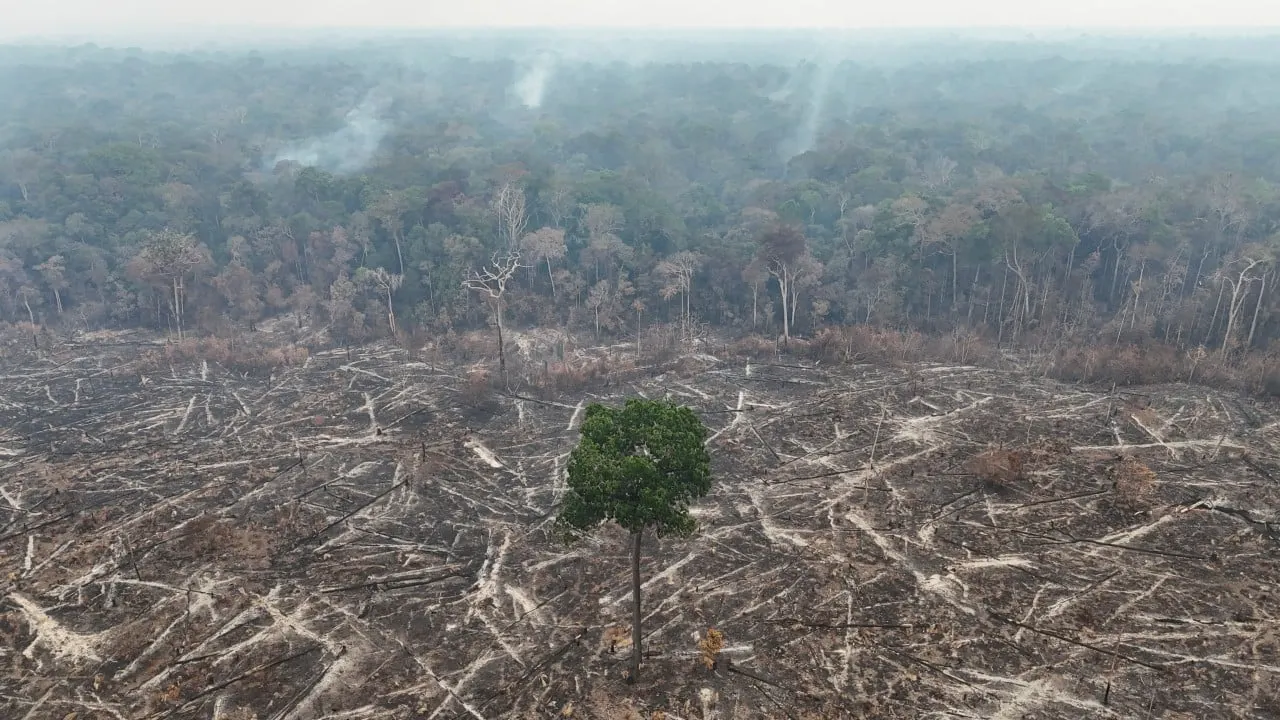
Worldwide permanent forest destruction declined in 2025, with seven million hectares lost, but the Congo Basin saw forest loss rise to 2.4 million hectares, nearly matching the Amazon, according to the Forest Declaration Assessment released on 14 October.1234
Global decline, but not enough
According to the assessment, which was produced by research organisations and NGOs working together, permanent forest loss in 2025 was 15% lower than a year earlier. The seven million hectares destroyed was described as roughly equivalent to the area of the Republic of Ireland. The reduction was the largest recorded so far this decade, according to reporting on the assessment.234
Erin Matson, a study co-author and lead consultant at Climate Focus, said the result was "encouraging but so far it’s the exception, not a new trajectory". The assessment concluded that the world is still not on course to fulfil the pledge to end deforestation by 2030, agreed at United Nations climate talks in 2021.123
Central African losses rise
The improvement at global level coincided with worsening conditions in Central Africa. Congo Basin rainforest loss reached 2.4 million hectares in 2025, close to the 2.5 million hectares recorded in the Amazon. Reporting on the assessment also said forest degradation in tropical Africa increased by 25%, while it declined by 34% worldwide.14
Sam Nguiffo, who established the Centre for Environment and Development, said economic priorities continued to shape how Central African forests were managed. He said: "The erosion of the forest, both in size and in number of species, reduces the space available for communities and fuels conflicts".14
Latin American reduction and future risks
Latin American forest loss fell by 33%, according to the assessment. Reporting linked the regional decline in part to Brazil’s deforestation action plan and stronger enforcement; separately, reporting said reduced agricultural and pasture expansion and federal enforcement supported the fall in commodity-driven deforestation in the Brazilian Amazon.14
The assessment warned that an exceptionally strong El Niño was intensifying. It said that, if projections for a historically strong 2026-27 event materialise, drought and fire risks would increase across tropical forest regions. Matson said it was unlikely that 2026 would bring reductions on the scale reported for 2025.123
Why it matters
The assessment concerns a global commitment to end deforestation by 2030, a target the report says remains out of reach. For readers in Europe, the reported trend shows that a global reduction in forest loss can coexist with accelerating losses in one of the world’s major tropical forest regions. The projected El Niño-related drought and fire risks also extend across tropical forest regions rather than being confined to one country.123
Version history
- version 1 ·