Culture · United Kingdom
Van Gogh sells for record $190.4 million after Fischer heirs reach agreement
Sotheby’s says the Fischer heirs and Blaquier-Arrieta family resolved their dispute before the auction. The sale set a record for Van Gogh.
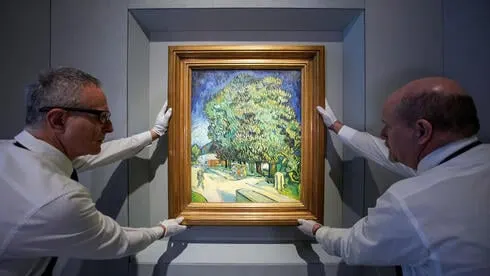
Van Gogh’s Châtaigniers en Fleurs sold for a record $190.4 million after a settlement. Sotheby’s says the two families reached an agreement allowing the sale.
- The price exceeded the $180 million presale estimate.
- The Fischer heirs had challenged the painting’s Nazi-era sale.
- Sotheby’s said its research had not established duress.
- The settlement’s detailed terms are not established in the reporting.
What's new
- Châtaigniers en Fleurs sold at Sotheby’s for $190.4 million, exceeding its $180 million estimate.
- The New York Times reports that the Wednesday sale followed a last-minute settlement and set a record for Van Gogh.
- Sotheby’s says the Fischer heirs and Blaquier-Arrieta family reached an agreement allowing the sale.
Vincent van Gogh’s Châtaigniers en Fleurs sold for $190.4 million at Sotheby’s in New York on Wednesday after a last-minute settlement, setting a record for the artist, The New York Times reports. Sotheby’s said the Fischer heirs and the Blaquier-Arrieta family had resolved the dispute that threatened the auction over allegations that Nazi persecution forced the painting’s sale in 1936.12
The disputed sale
Châtaigniers en Fleurs sold for $190.4 million at Sotheby’s in New York on Wednesday, setting a record for Van Gogh, The New York Times reports. The sale followed a last-minute settlement that ended uncertainty over whether the auction would proceed.12
Before the settlement, the heirs’ challenge included a demand for evidence about the earlier transaction. Ynetnews reported on November 16 that the family’s lawyer asked Sotheby’s to prove that the 1936 sale was at fair market value and would have taken place even without Nazi rule.3
Representatives of the heirs say the circumstances of the painting’s departure from the family require scrutiny. According to The New York Times, the Jewish heirs contend that Nazi persecution compelled the family to sell the work in 1936. The BBC described their position as a concern that the sale may have taken place under such pressure.12
According to the BBC, a lawyer acting for the Fischer heirs wrote to Sotheby’s about a sale in Amsterdam before the Second World War. The lawyer reportedly linked that transaction to financial losses suffered by the family’s publishing business under the Nazis. That account is the heirs’ explanation of the circumstances, rather than a finding accepted by Sotheby’s.1
Sotheby’s had said its inquiry found no evidence proving that duress prompted the painting’s sale. It subsequently announced that the Fischer heirs and Blaquier-Arrieta family had reached a mutually satisfactory resolution and that the work would be sold under their agreement. When it announced the resolution, the auction house recognized both the work’s complicated history under the Nazis and the Fischer family’s Holocaust suffering.1
Ownership across Europe
The landscape dates from 1890, according to The New York Times. Sotheby’s says it has examined the work’s ownership history from that year onward. Its account, reported by the BBC, places the painting in the collection of Samuel Fischer, a German publisher, in 1909.12
According to Sotheby’s, the work was placed in Paul Cassirer’s custody in Amsterdam in either 1932 or 1933. The BBC reported that it passed down within Fischer’s family after his death in 1934. The auction house’s account says Henriette and Marcel Kapferer took possession of the work in Paris in 1936.1
The BBC reported four subsequent owners before the painting was offered for auction this year. It was sold as part of the Blaquier-Arrieta Collection, having carried a presale estimate of $180 million, or £136 million.1
Ynetnews dates the painting’s entry into the Blaquier family’s collection to 1975 and reports that it has not been publicly displayed for 50 years. According to the outlet, the heirs of the Argentine sugar magnates decided to sell it alongside 11 other major works.3
A wider auction programme
The dispute comes during a week in which Sotheby’s planned to auction more than $1 billion in artworks, The New York Times reported. Industry experts told the newspaper that questions about the Van Gogh’s ownership history had already been circulating before the sale.2
Why it matters
For European readers, the dispute concerns an ownership history connecting a German publishing family with Amsterdam and Paris. It places the heirs’ account of Nazi-era financial pressure alongside Sotheby’s position that its research has not established a sale under duress.12
Videos
Version history
- version 3 · The update replaces uncertainty over the auction with the $190.4 million record sale and Sotheby’s announcement of an agreement between the families.
- version 2 · The update leads with the heirs’ demand for evidence about the 1936 sale and adds reporting that dialogue with Sotheby’s is underway while the auction remains uncertain.
- version 1 ·