World · Yemen, Saudi Arabia
Houthis Claim Riyadh Airport Strike as Saudi Coalition Launches Offensive
Yemen's Houthi movement said it hit Riyadh's King Khalid International Airport and other Saudi sites, as a Saudi-led coalition pressed a major military operation to retake Houthi-held territory.
Listen to the story
Short version
Houthis claim missile strikes on Riyadh airport and other Saudi sites as a Saudi-led coalition launches a major offensive to retake Houthi-held territory.
- Houthis claim strikes on Riyadh airport, Aramco refinery, other Saudi sites
- Coalition says it destroyed 324 Houthi targets, retook Mocha
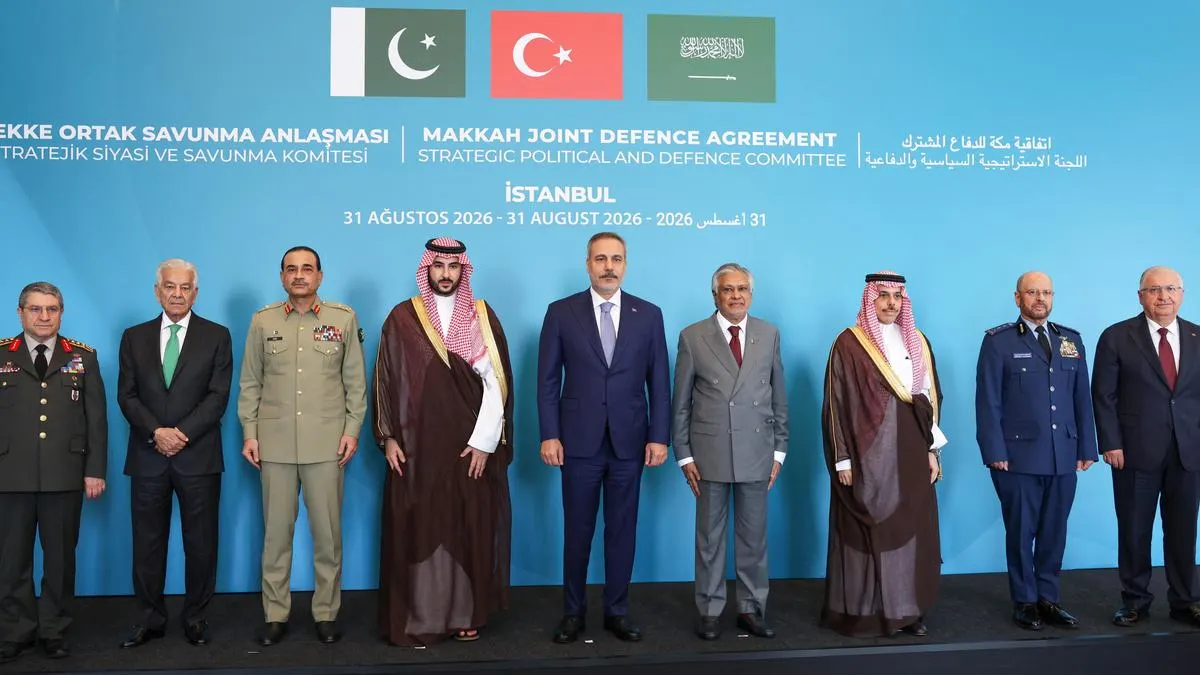
- Pakistan and Turkey pledge troops under Mecca defence pact
- Houthis warn airlines Saudi airspace is dangerous
- UN and EU react to escalating conflict
Infographic
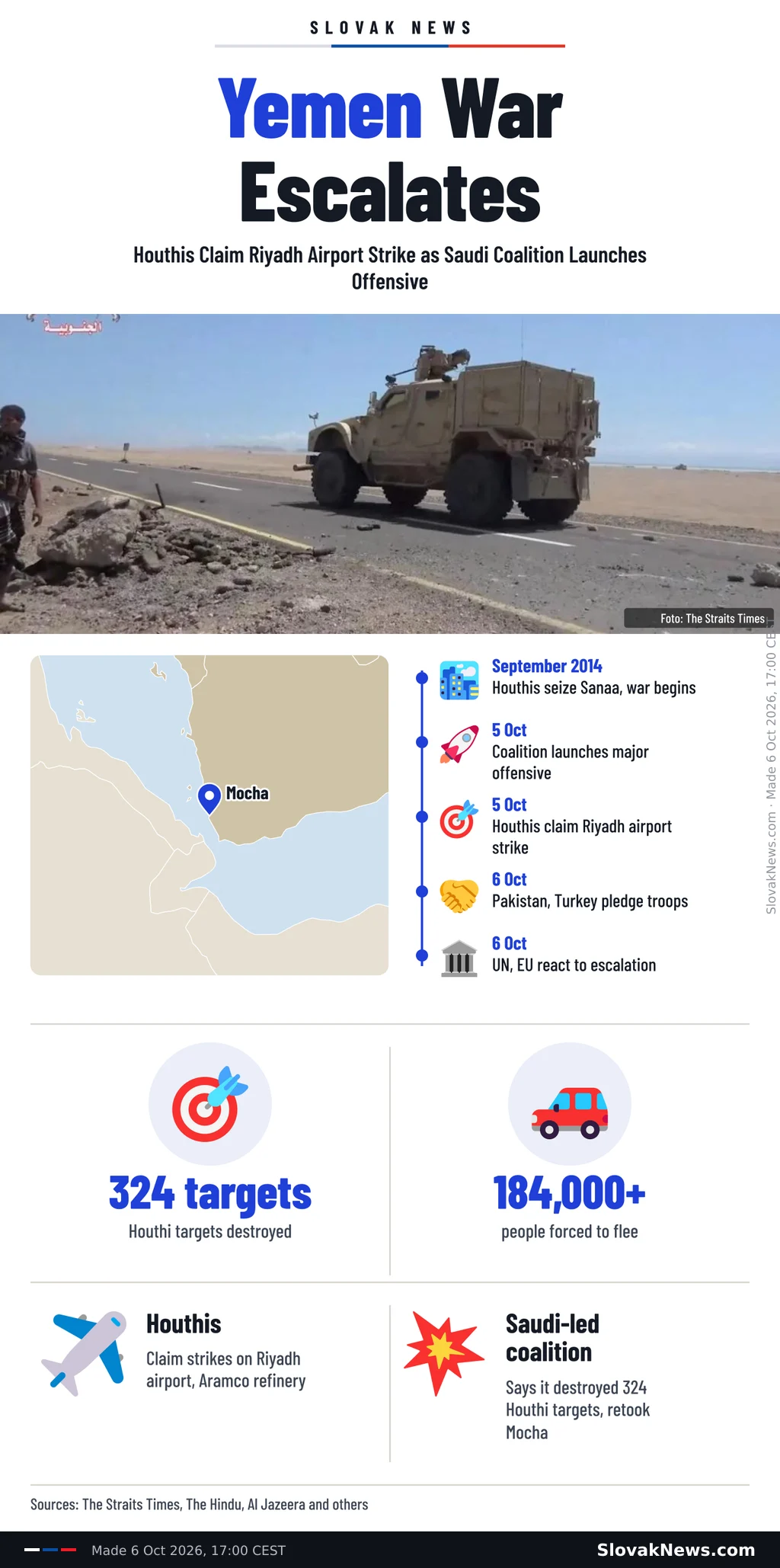
What's new
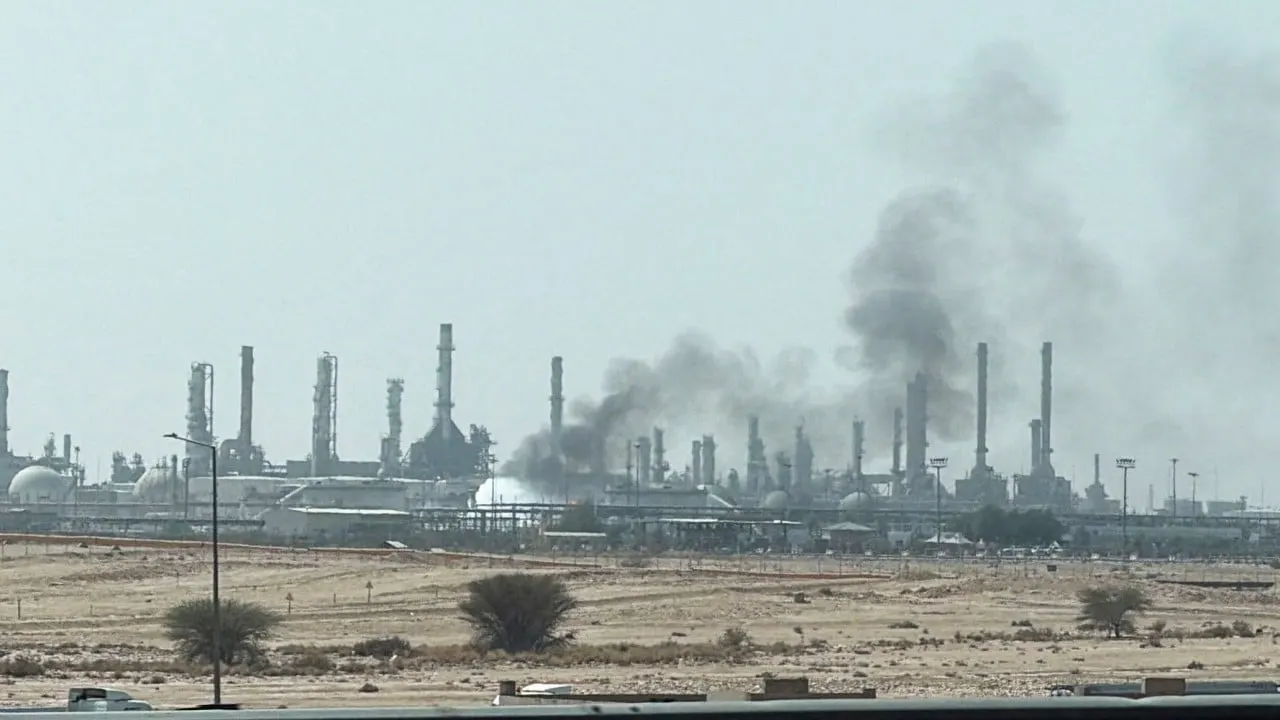
- Houthis claim missile and drone strikes on King Khalid International Airport, Aramco refinery and other Saudi sites
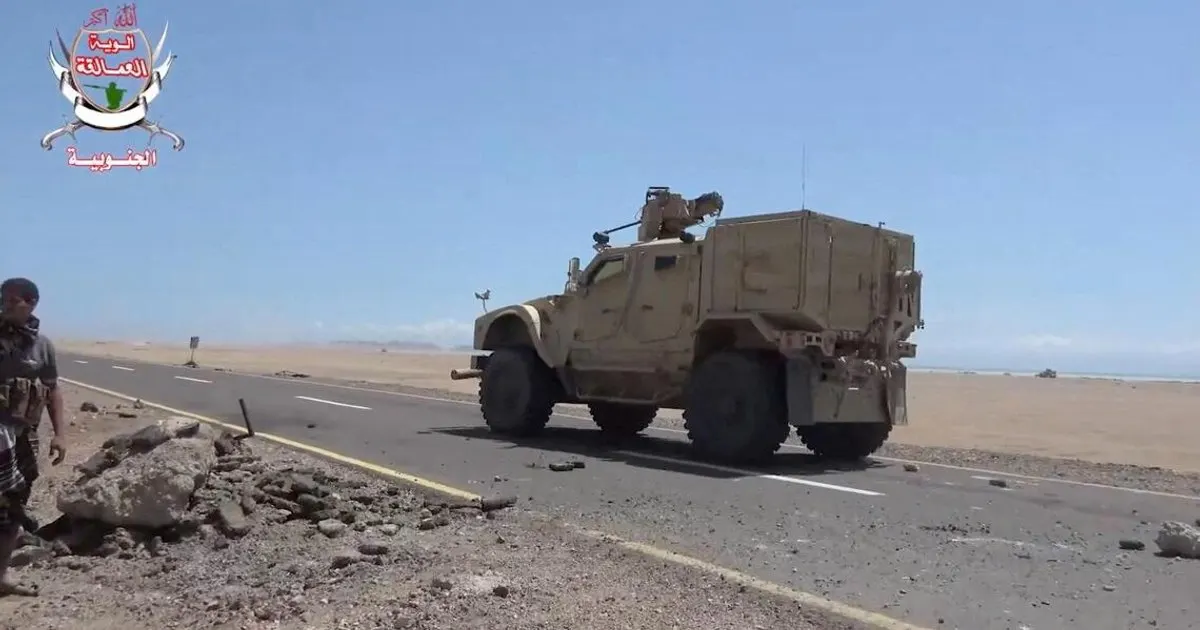
- Saudi-led coalition says it destroyed 324 Houthi targets and retook Mocha and Bab el-Mandeb Strait
- Pakistan and Turkey have committed to sending military forces into the kingdom under a reciprocal security arrangement
- Houthis declare Saudi airspace dangerous for civilian aircraft, exempting Mecca and Medina
Yemen's Houthi movement said on October 5 that it struck Riyadh's King Khalid International Airport, the Aramco refinery and other Saudi sites, as a Saudi-led coalition launched a major offensive aimed at retaking territory the group seized along the Red Sea coast in September.124
Infographic
Strikes on Saudi territory
According to Houthi military spokesman Yahya Saree, the group carried out three separate operations employing ballistic missiles, cruise missiles and drones, the first of which struck King Khalid International Airport. The airport in Riyadh experienced flight delays and gate closures, according to one account of the attack.96
Al Jazeera reported that Saudi officials confirmed two airports came under attack Monday night, leaving at least three people hurt. Saudi civil aviation officials confirmed damage at Jazan and Najran airports, with three people wounded, and Abha International Airport was struck by what Saree described as a precise and direct ballistic missile hit that disrupted air traffic, according to the American Partisan account.36
The Houthis cautioned that civilian infrastructure would be increasingly targeted in retaliation for what they called a Saudi blockade, directly warning carriers: "We reiterate our warning to all international airlines regarding the consequences of continuing to operate flights within Saudi airspace." A group identifying itself as the Humanitarian Operations Coordination Center declared that the airspace above Saudi Arabia would effectively become a Houthi operational zone, though the group clarified that this exclusion does not cover Mecca and Medina.68
Coalition offensive in Yemen
The Saudi-led coalition said it had destroyed 324 high-value Houthi targets using 100 fighter jets and carried out more than 1,000 strikes against Houthi positions. Coalition spokesman Turki Al-Malki reported that forces eliminated arms storage sites, facilities holding explosive-laden boats and naval mines in Hodeida, while also foiling a planned assault on shipping lanes south of the Red Sea.124
A Yemeni government official reported that troops had fully secured Bab al-Mandab and Mayun Island as the campaign continued, and per the Saudi-backed narrative, allied forces also retook the port city of Mocha. The Houthis, by contrast, insisted they retained all the territory they had recently captured, with Saree asserting that their forces maintain complete command over every ground gain they have made.41
Conflict coverage has reported that upwards of 184,000 people have been forced from their homes due to the fighting. Houthi forces had seized swathes of Red Sea coastline in September before the coalition offensive began.12
Pakistan and Turkey's role
Both Pakistan and Turkey have agreed to send forces into the kingdom, an arrangement described as the Mecca mutual defence pact. Pakistani forces have provided training to Saudi military personnel since 1967, and a formal 1982 arrangement established the posting of Pakistani soldiers within the kingdom; a CIA assessment declassified from June 1985 estimated that between 13,000 and 14,000 Pakistani nationals were serving in Saudi's army at that time. During the 1990-91 Gulf War, Pakistan dispatched a sizeable force to Saudi Arabia, and more recently in April, Saudi officials verified that Pakistani military units, including fighter jets and support planes, had landed at King Abdulaziz Air Base. Pakistan has never disclosed how many troops it has in the kingdom.3
Under Article 92 of Turkiye's constitution, parliament must ratify troop deployments abroad, and Turkiye's parliament has yet to ratify the pact. A spokesperson for Iran's Foreign Affairs ministry expressed hope that accounts of Pakistani forces being sent for the Yemen conflict would prove inaccurate.3
Regional and international reaction
Per the American Partisan account, Jordanian Foreign Minister Ayman Safadi declared his country's complete support for Saudi Arabia in standing against Houthi hostilities. European Commission President Ursula von der Leyen stated that the strikes continue to destabilize the region, fuel additional violence, and threaten worldwide energy security, while affirming the EU's solidarity with Saudi Arabia and its Gulf allies.6
The United Nations expressed deep concern about the situation. An attack on October 4 halted pumping through the East-West pipeline, at a time when global oil stockpiles are described as scarily thin.1012
Why it matters
The Bab al-Mandeb Strait and the Red Sea coastline at the centre of the fighting are key chokepoints for oil and cargo shipping to Europe, and disruption to Saudi pipeline and refinery operations comes amid thin global oil stockpiles. Escalation involving Pakistani and Turkish forces under a mutual defence pact also raises the prospect of a wider regional conflict with implications for European energy security and diplomacy.125
Related stories

Version history
- version 1 ·