World · Mexico
Four soldiers and seven attackers reported killed in Meza Flores capture operation
New reporting says eight alleged criminals were arrested in the operation targeting the alleged cartel leader. Sinaloa authorities say the subsequent violence has subsided.
Listen to the story
Short version
New reporting says four soldiers and seven attackers died in the Meza Flores capture operation. Sinaloa authorities say the situation is under control.
- The Jerusalem Post reports eight alleged criminals arrested.
- Mexican forces captured Meza Flores in Guasave with US intelligence assistance.
- Meza Flores and two relatives reportedly went to prosecutors in Mexico City.
- Washington seeks his extradition, according to the BBC.
Infographic
What's new
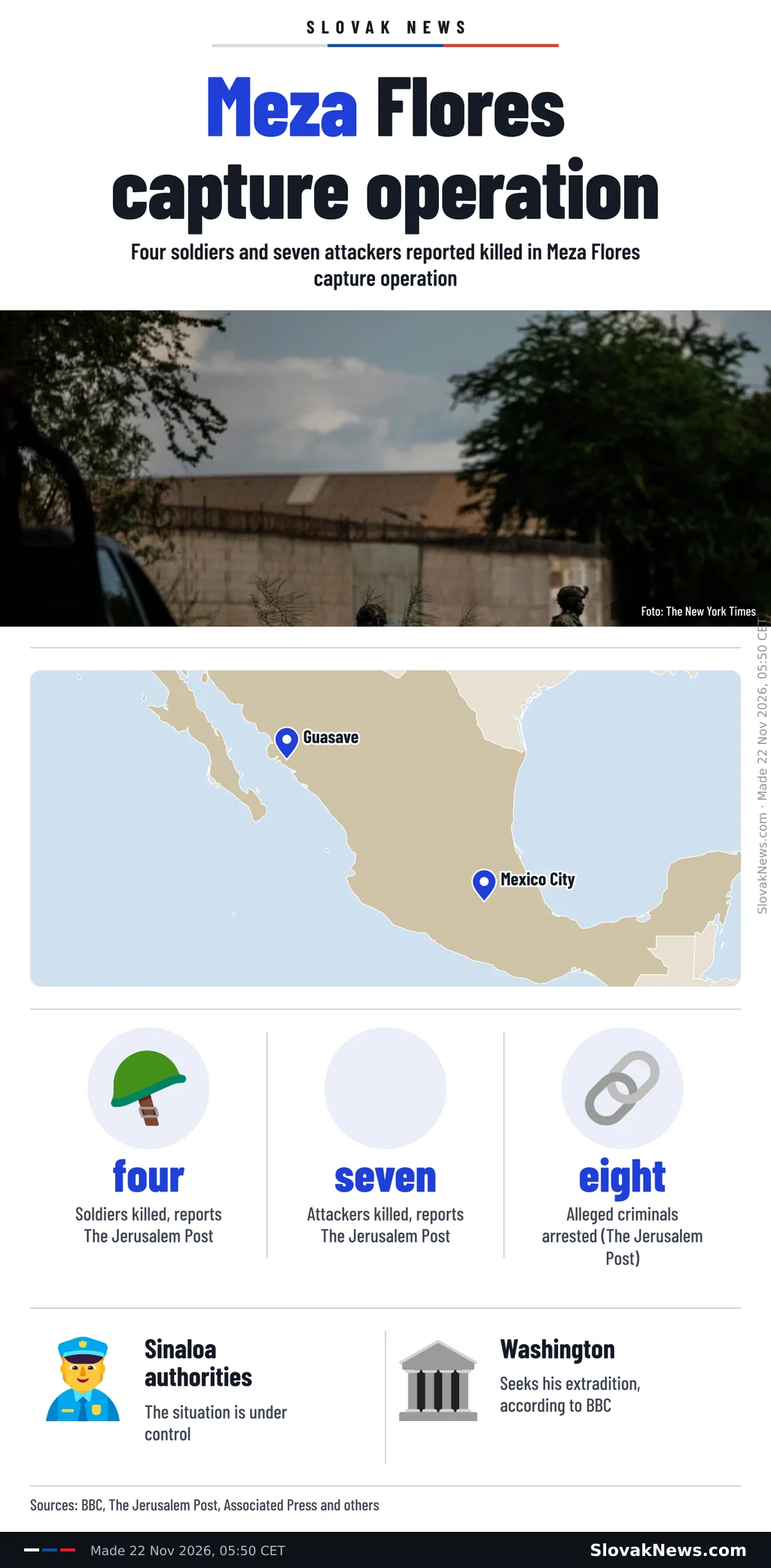
- The Jerusalem Post reports that four Mexican soldiers and seven attackers died during the operation.
- Eight alleged criminals were arrested, according to the same report.
- Meza Flores, his cousin and his brother-in-law were taken to Mexico City and handed to prosecutors, the newspaper reports.
- Sinaloa authorities say the situation is under control after clashes and burning roadblocks.
Four Mexican Army soldiers and seven attackers were killed during the operation that captured alleged cartel leader Fausto Isidro Meza Flores, according to November 22 reporting by The Jerusalem Post. The newspaper reported eight arrests and said violence in Sinaloa had substantially subsided after armed clashes and burning roadblocks.2
Infographic
Gunfire during the operation
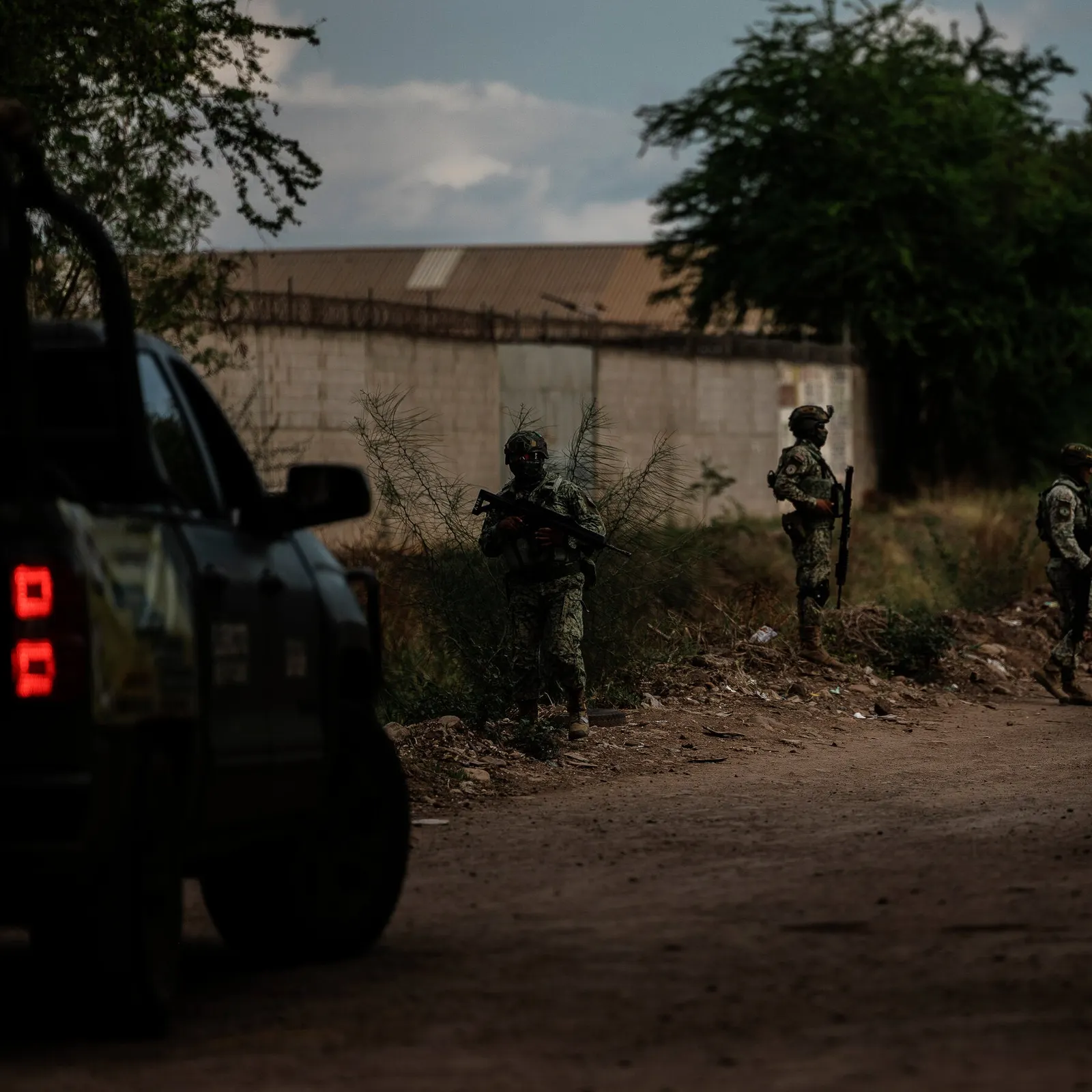
According to The Jerusalem Post, the operation left four infantry troops from the Mexican Army dead, while security personnel killed seven assailants and detained eight suspected criminals. The newspaper also said authorities confiscated two hand grenades, a grenade launcher and a .50-caliber firearm.2
Mexico’s defence secretariat said the troops established a perimeter before entering the property. Its account, reported by the BBC, said the force relied on “stealth and surprise” and encountered gunfire and explosives before moving inside. The Associated Press also reported that intelligence assistance came from the Trump administration.13
The Guardian reported that the military arrested Meza Flores along with two men identified as Germán N and José N. Its account described civilians fleeing and cars burning during the gun battle in Guasave. The BBC’s account identified a lieutenant among those detained with Meza Flores.15
The Jerusalem Post reported on November 22 that Meza Flores, his cousin and his brother-in-law were taken to Mexico City and handed over to prosecutors. It described the cousin as second-in-command in the Beltrán Leyva organisation and the brother-in-law as Meza Flores’s financial operator. The BBC previously reported that Meza Flores and a lieutenant were flown to the capital, and that he was wanted in Mexico for alleged organised crime offences and sought for extradition by the United States.12
The operation triggered armed clashes, burning roadblocks and other violence in Sinaloa, according to The Jerusalem Post. The newspaper reported that the violence subsequently subsided substantially. State authorities said the situation was under control and residents could return to normal activities.2
Charges and the organisation
The New York Times identified Meza Flores as the man known as El Chapo Isidro. According to the BBC, he was 44 and headed the Meza Flores Organisation, also called the Guasave Cartel. The Associated Press described his progression from a small-scale trafficker to an alleged cartel leader.134
According to The Jerusalem Post, Meza Flores held a leadership role in the Beltrán Leyva cartel and had recently joined forces with Los Mayos, a faction of the Sinaloa Cartel. These descriptions add to the BBC’s account of his leadership of the Meza Flores Organisation.12
The BBC reported that US drug-trafficking charges against Meza Flores dated to 2012, with further charges brought in 2019. He was accused of involvement in a 2005–2019 plot to produce and distribute marijuana, methamphetamine, heroin and cocaine. Those allegations are separate from the circumstances of his capture.1
He was added to the FBI’s Ten Most Wanted list in 2025, according to the BBC. The broadcaster reported that the FBI accused him of supplying the United States with fentanyl, cocaine, heroin and other drugs. It also reported accusations made in 2025 involving kidnapping, extortion and torture.1
According to the BBC, Meza Flores formed his own cartel in 2013 following a division between rival factions. His organisation fought the Sinaloa Cartel over territory. The BBC further said that Mexican officials attributed 20 million fentanyl tablets confiscated in 2024 to his organisation.1
Cooperation with Washington
The capture comes within a relationship in which Mexico has accepted closer cooperation with the United States while opposing the presence of US troops on Mexican territory, according to the BBC. The broadcaster reported that stopping drugs crossing the southern US border was a central election promise of Donald Trump.1
The New York Times reported that US and Mexican authorities shared intelligence to track Meza Flores. In The Jerusalem Post’s account, Ronald Johnson said the exchange of strategic intelligence helped make the operation possible. The newspaper also reported that a US counter-cartel task force worked with other US agencies on information leading to the capture.24
Why it matters
The reported deaths highlight the human cost of the capture, while intelligence sharing illustrates US-Mexican cooperation against alleged drug-trafficking networks. The BBC reports that Washington seeks Meza Flores’s extradition; the dossier establishes neither an extradition timetable nor a European connection to the alleged trafficking.124
Videos
Version history
- version 2 · Adds reported casualties, arrests, transfers to prosecutors and easing violence, expands the intelligence-cooperation account, and corrects source references affected by dossier renumbering.
- version 1 ·