World · Mexico
Mexican drug lord Miguel Ángel Félix Gallardo dies in custody at 80
Félix Gallardo died on Sunday at a private hospital in Guadalajara after being transferred from prison following a medical emergency.
Miguel Ángel Félix Gallardo died aged 80 in a Guadalajara hospital while still in custody.
- A medical emergency prompted his transfer from Puente Grande prison.
- Multiple organ failure was the reported cause of death.
- He was arrested in 1989.
- The BBC reported that his arrest broke apart his drug organisation.
What's new
- Félix Gallardo died aged 80 while still a prisoner.
- He had been transferred from Puente Grande prison to a Guadalajara hospital.
- Multiple organ failure was reported as the cause of death.
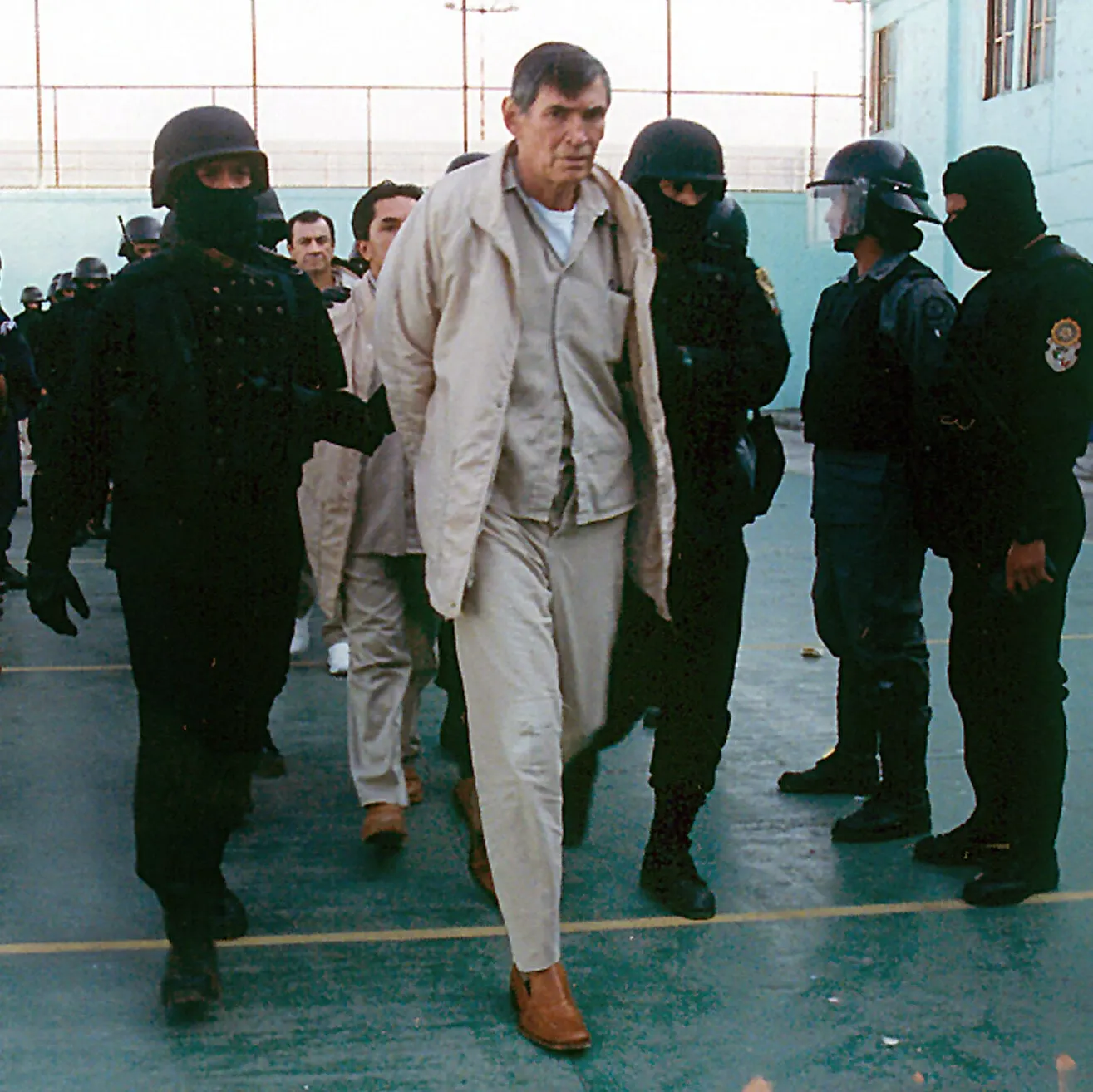
Miguel Ángel Félix Gallardo, the Mexican drug lord arrested in 1989, died aged 80 on Sunday, November 15, while still in custody at a private hospital in Guadalajara. Mexican authorities reported his death after a medical emergency prompted his transfer from the Puente Grande prison complex.12
Hospital transfer
The New York Times reported that Félix Gallardo died at about 2 p.m. on Sunday, with multiple organ failure given as the cause, citing medical personnel. The Jalisco state public security authority provided information about his transfer from prison to the private hospital, where he received treatment.1
His death came after decades behind bars. Although he remained a prisoner, the location of his death was the hospital rather than the prison complex from which he had been moved. The account published by The New York Times on November 16 described the transfer as a response to a medical emergency.1
Jorge Eduardo Montiel, a spokesman for Jalisco's secretary of public security, said a religious observance was planned there with family members attending. “A small religious ceremony will be held at the hospital in the presence of his relatives,” he said, according to The New York Times.1
Cartel leadership and arrest
The BBC reported that Félix Gallardo led the Guadalajara Cartel during the 1980s and that his arrest caused his drug organisation to break apart. The New York Times dated that arrest to 1989 and described him as having contributed to the development of the modern drug trade.12
His standing at the time of his arrest was reflected in the description given by Enrique Alvarez del Castillo, then Mexico's attorney general. In 1989, Alvarez del Castillo called Félix Gallardo the “No. 1 narcotics trafficker in Mexico”, according to The New York Times.1
DEA accusations
According to The New York Times, the United States Drug Enforcement Administration accused Félix Gallardo of responsibility for the abduction, torture and killing of undercover agent Enrique (Kiki) Salazar Camarena. That account identifies the accusation as the agency's; it is not an independent finding about his responsibility.1
The Washington Post separately reported that Félix Gallardo became the DEA's highest-priority wanted suspect in Mexico following the torture and murder of a DEA agent in 1985. Its coverage framed his death around that pursuit, while the BBC emphasised his cartel leadership and the consequences of his arrest.23
Why it matters
For European readers, the story concerns a figure whom The New York Times describes as contributing to the development of the modern drug trade. The BBC's account connects his arrest with the breakup of his organisation; the dossier does not establish a specific European consequence.12
Videos
Version history
- version 1 ·