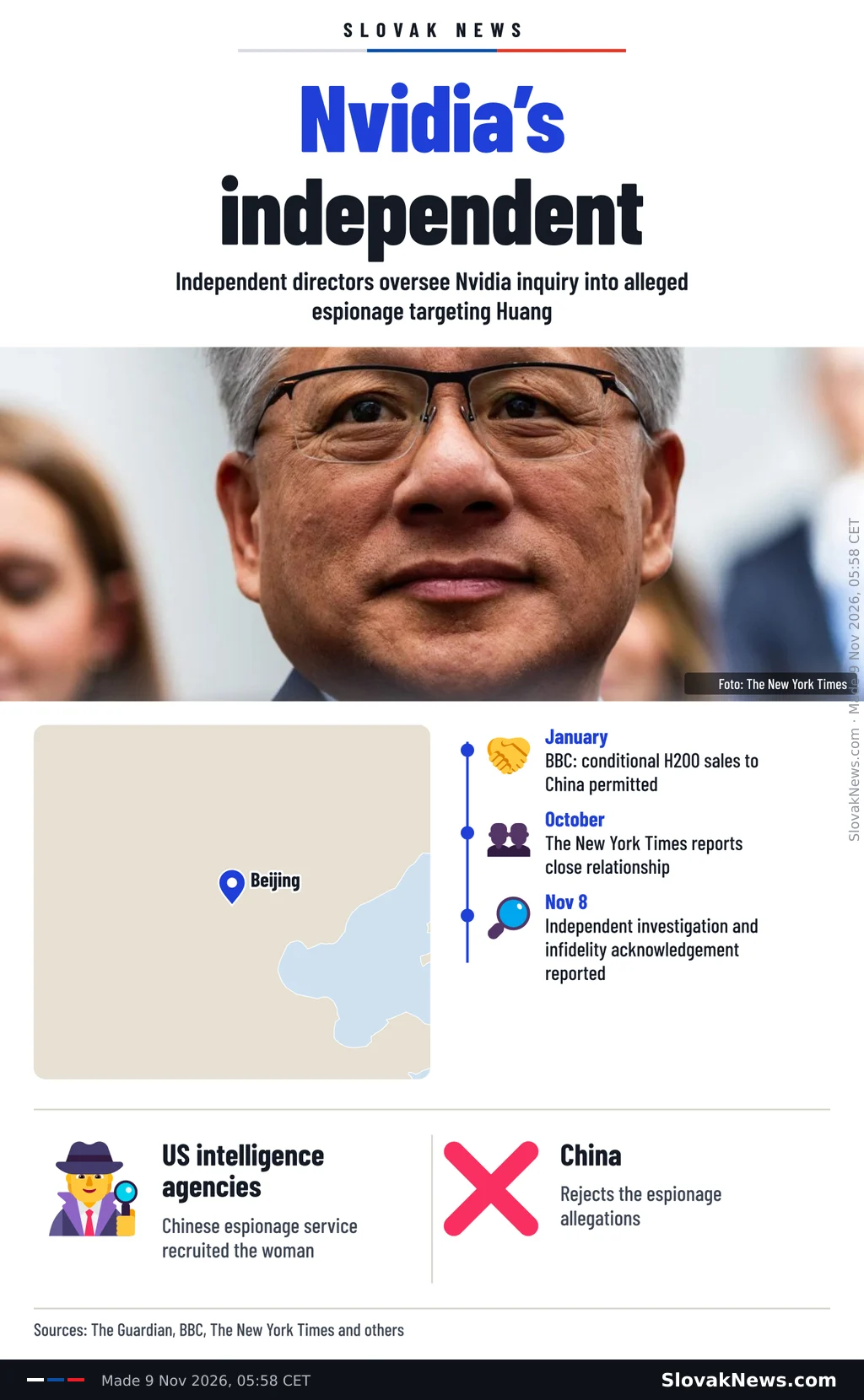
Independent directors oversee Nvidia inquiry into alleged espionage targeting Huang
A committee working with outside counsel will oversee the investigation, The Japan Times reports. Nvidia’s board says it has no reason to believe company secrets or US national security were compromised.
Listen to the story
Short version
Independent directors working with outside counsel will oversee Nvidia’s inquiry, The Japan Times reports. The board says it has no reason to believe secrets or US national security were compromised.
- The inquiry examines whether Huang was targeted by foreign espionage.
- Huang acknowledged a romantic relationship and infidelity.
- Reported US intelligence assessments allege Chinese recruitment; China rejects the espionage allegations.
- What information was allegedly passed to Beijing remains unclear.
- House Republican committee leaders have requested answers about Nvidia’s security safeguards.
Infographic
What's new
- The Japan Times reports that independent directors working with outside counsel will oversee Nvidia’s investigation.
- The investigation is looking into claims that a foreign intelligence effort singled out Jensen Huang.
- According to The New York Times, US intelligence agencies said China’s leading espionage service enlisted the woman involved.
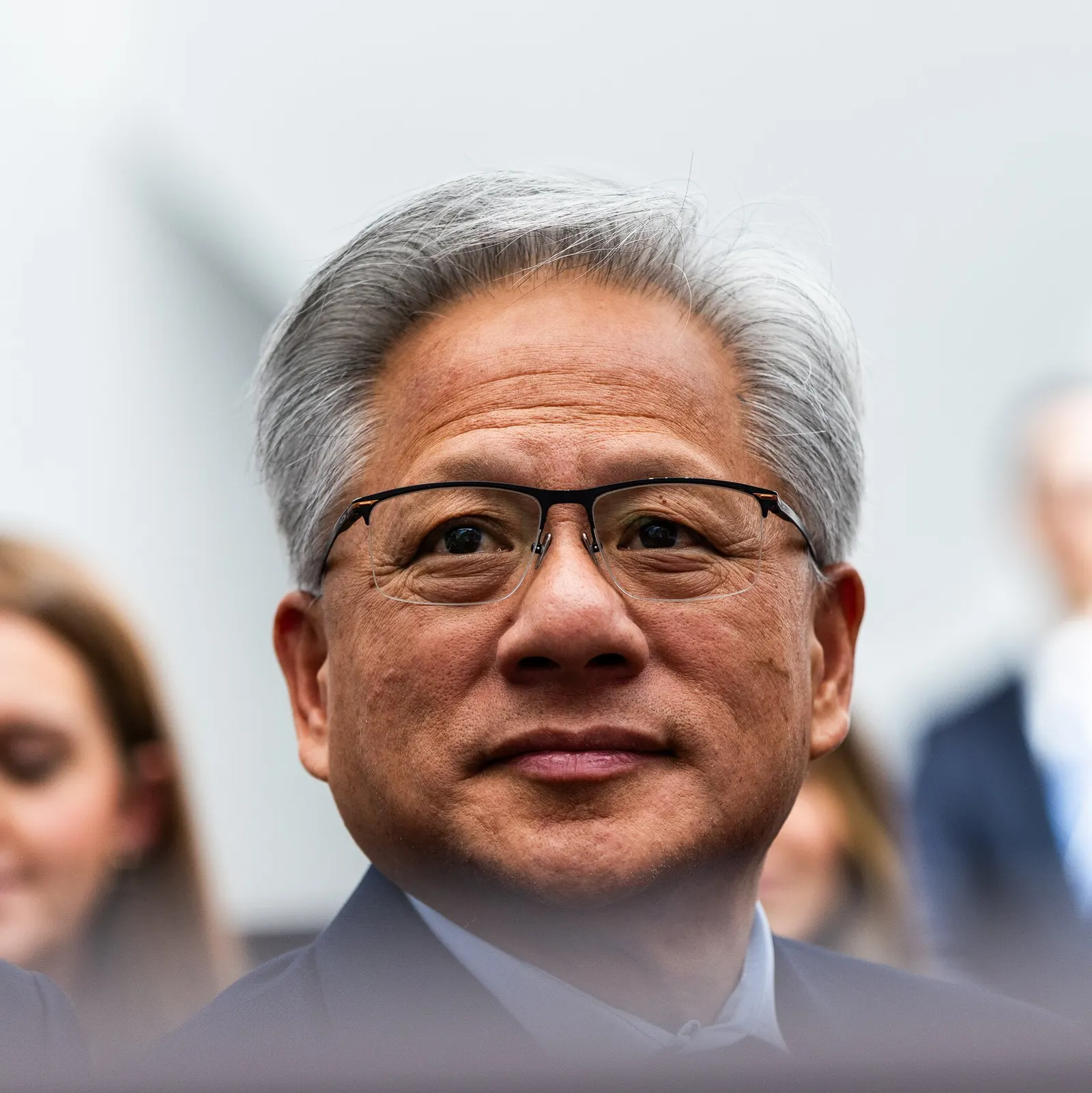
According to The Japan Times, Nvidia’s board has put independent directors in charge of the inquiry, with assistance from external lawyers, to determine whether a foreign intelligence operation singled out chief executive Jensen Huang. Huang has acknowledged a romantic relationship and infidelity; the board says it has no reason to believe company secrets or US national security were compromised.432
Infographic
Board backs Huang as inquiry begins
A committee of independent Nvidia directors working with outside counsel will oversee the investigation, The Japan Times reports. The inquiry examines whether Huang was targeted by a foreign espionage operation.4
Nvidia’s board said it had no reason to believe that either company secrets or US national security had been compromised. The Guardian reported that the investigation would consider all available information and that the board continued to express confidence in Huang and his leadership team.12
Huang acknowledged that his conduct had hurt his wife and children. According to the BBC, he accepted responsibility and said he had failed to meet his obligations to Nvidia’s employees, directors and shareholders. “I support the investigation and will cooperate fully,” he said.2
The Japan Times reports that Huang acknowledged his infidelity to employees. The New York Times also reports that he admitted a romantic relationship with a woman whom US intelligence agencies said had been recruited by China’s top spy agency.43
Intelligence allegations and unanswered questions
The BBC reported that US intelligence officials believed Alice Huang, a Chinese businesswoman linked to Singapore-based data centre company Megaspeed, was spying for China’s Ministry of State Security. It said US intelligence agencies had monitored her and concluded that she was acting for the Chinese government.2
According to the Guardian, American officials had suspected Alice Huang of smuggling Nvidia chips to China before determining that she was an intelligence asset passing commercial information to Beijing. The Guardian also said senior administration policymakers received a memo in the spring that was prepared by US secretary of state Marco Rubio and contained intelligence identifying her as a spy.1
Those reported intelligence assessments leave important questions unresolved. According to the BBC, neither the nature and value of the information Alice Huang allegedly passed to Beijing nor the date she allegedly started gathering intelligence was clear. It also reported that she had not responded to a request for comment from The New York Times.2
China rejected the allegation of an espionage operation against Nvidia’s chief as “groundless speculation”, according to the BBC. Megaspeed said the allegations were being treated seriously by its current leaders, who had retained external legal advisers to conduct an internal inquiry.2
Congress seeks security answers
Three House Republican committee leaders asked Huang to discuss Nvidia’s safeguards against espionage by foreign adversaries, the BBC reported. The Guardian described a request from Republican-led foreign affairs and intelligence committees for a briefing behind closed doors. The outlets gave different schedules: the following week in the Guardian and later in November in the BBC.12
Nvidia’s sales to China are also subject to US restrictions. According to the Guardian, export controls effectively prevent sales of its highest-tier processors to Chinese customers. The BBC reported that the Trump administration allowed conditional sales of H200 chips to China in January, after earlier restrictions prompted by concerns about an advantage for China’s technology industry over the United States.12
Why it matters
For European readers, the inquiry concerns security allegations at a US semiconductor company central to AI infrastructure. Congressional requests for answers and restrictions on chip sales to China place the case alongside questions about protection of commercial information and access to advanced technology.12
Videos
Related stories
consequence
follow-up

Version history
- version 2 · This update adds the inquiry’s independent-director oversight and outside counsel, Huang’s admission to employees, and the reported US intelligence allegation of Chinese recruitment.
- version 1 ·