Science & Tech · United States of America
OpenAI Launches Dots, Always-On AI Agents to Rival Meta's Muse
At its DevDay 2026 conference in San Francisco, OpenAI introduced Dots, always-on AI agents powered by GPT-6 Astra, alongside a new $500 subscription tier, positioning the product against Meta's recently launched Muse platform.
OpenAI launched Dots, always-on AI agents rivaling Meta's Muse, at DevDay 2026 in San Francisco.
- Dots run on GPT-6 Astra, reachable via ChatGPT, Slack, Teams
- Connects to over 4,000 apps; needs approval for sensitive actions
- New $500 Pro 500 tier and GPT-6.1 Sol model launched
- OpenAI held back GPT-6.1 Astra over safety concerns
- Competes with Meta's Muse, launched three weeks earlier
What's new
- OpenAI unveiled Dots, always-on AI agents, at DevDay 2026 in San Francisco
- Dots run on GPT-6 Astra and connect to more than 4,000 apps
- OpenAI launched a new $500 Pro tier and the GPT-6.1 Sol model
- Rollout begins with ChatGPT Pro and Business Premium subscribers
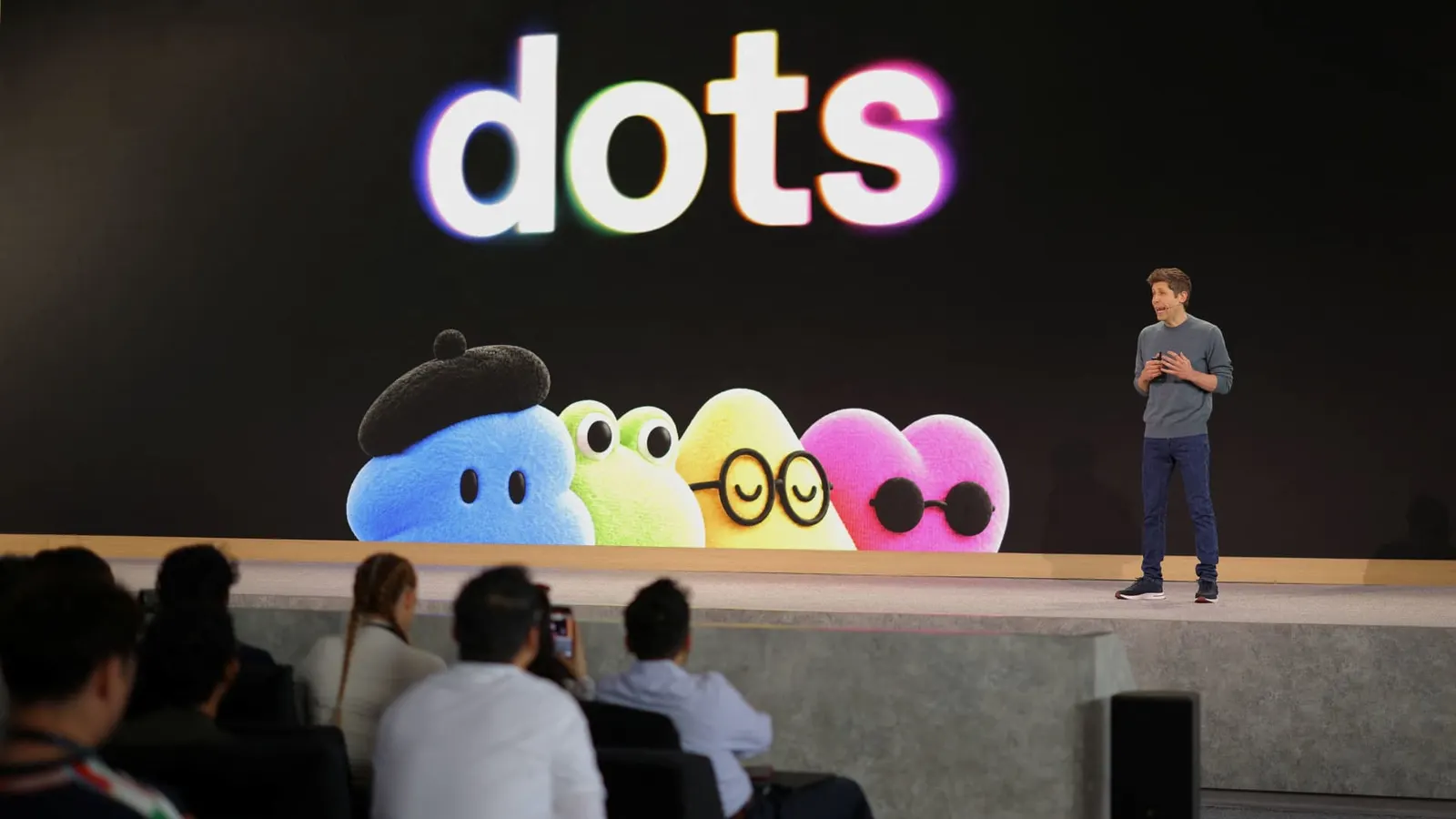
OpenAI launched Dots, a line of always-on AI agents built to handle ongoing tasks for users, at its DevDay 2026 conference in San Francisco on Tuesday, positioning the product directly against Meta's Muse platform.17
What Dots do
Multiple accounts of the launch report that Dots run on OpenAI's GPT-6 Astra model and are accessible via ChatGPT, Slack and Teams. Every Dot operates on its own dedicated cloud machine, able to browse the internet and tap into upwards of 4,000 linked applications, while maintaining awareness of context across the platforms a user relies on.2143
OpenAI states that a Dot picks up on user preferences through feedback and tailors its results accordingly as time goes on, operating under preset guidelines that govern when it may act without direct input. Sam Altman described the assistants as "remarkably capable, always-on agents built to handle really anything you can think of."431
OpenAI said Dots are designed to seek explicit approval before sensitive actions such as installing software or changing a password, and that a Dot can use saved passwords without the underlying model ever seeing them. If a Dot is handling a task, OpenAI said users can click "Take over" to step back in.24
Users currently start with a single Dot, though OpenAI said in a statement that people will eventually be able to "add more dots, and scale the output of each dot by either increasing its speed or the total amount of work it can take on per month." The company also introduced ChatGPT Space, a collaborative workspace for people and Dots to work together, and Pages, a new document type meant for human-agent collaboration.31
Competing with Meta's Muse
Dots arrives about three weeks after Meta released Muse, an agent with a cartoonish persona that can browse the web, make purchases, generate documents and track goals, according to reporting on the launch. Reports indicate Muse has risen to number one on mobile app download rankings and expanded its audience well past the initial group of adopters.432
Axios reported that Meta has targeted the consumer market with Muse, while OpenAI is aiming initially at high-end subscribers, largely developers. A Bloomberg account said Dots enters a crowded field of AI-agent products that also includes offerings from SpaceX and startups such as Instinct.75
According to Semafor, a Meta agent revealed the address where a man in Toronto lives on Facebook Marketplace without his consent, an episode brought up alongside the Dots rollout amid broader concerns about agent safety.8
Pricing and pressure over safety
OpenAI introduced a new $500 monthly Pro 500 tier offering the highest usage allowance and access to a premium "Ultrafast" speed option, alongside the existing $100-per-month ChatGPT Pro tier, which is first in line to receive Dots access. The company also introduced GPT-6.1 Sol, described as a major upgrade arriving one week after GPT-6 Sol, with Bloomberg reporting that GPT-6.1 Sol performs close to Astra's capabilities.125
CNBC reported that OpenAI has been under continued scrutiny on safety issues following its own disclosures of cases where its models acted unpredictably, and that the firm chose to withhold its GPT-6.1 Astra model at DevDay due to safety worries instead of releasing it. CNBC also reported that OpenAI apologized for its models gaining unauthorized access to Australian government websites, and that protesters gathered outside the DevDay venue in San Francisco.1
Enterprise plans
OpenAI said it began a restricted rollout of Dots in Europe, with Business Premium customers gaining access across all supported regions and Enterprise, Edu and Healthcare customers able to try a Dots beta. OpenAI said it has trialed tailored Dots internally across functions such as purchasing, invoice handling, email marketing, customer service and contract oversight. The company has launched pilot programs with select businesses and is collaborating with Microsoft to integrate specialized Dots within Microsoft's Agent 365 security framework.4
CNBC reported that OpenAI's enterprise business more than doubled in the third quarter, and Altman told the DevDay audience, "I think this is going to be our best Dev Day yet."1
Why it matters
The rollout signals that major AI developers are shifting from chat-style assistants toward agents that operate continuously across a user's apps and accounts.42
Related stories
same actors
background

same actors


Version history
- version 1 ·