Business · United States of America
Pentagon Awards Boeing $20 Billion F/A-XX Navy Fighter Contract
Boeing beat Northrop Grumman to build the U.S. Navy's next-generation carrier-based stealth fighter, its second sixth-generation win after the Air Force's F-47.
Boeing has won a roughly $20 billion Pentagon contract to build the Navy's F/A-XX next-generation carrier fighter, beating Northrop Grumman, which is expected to protest the decision.
- Contract worth about $20 billion, potentially hundreds of billions long-term
- Boeing's second sixth-generation fighter win after Air Force's F-47
- Northrop Grumman shares fell about 4 percent; expected to protest
- F/A-XX replaces Super Hornets and Growlers starting in the 2030s
- Boeing's defense unit posted losses in both 2024 and 2025
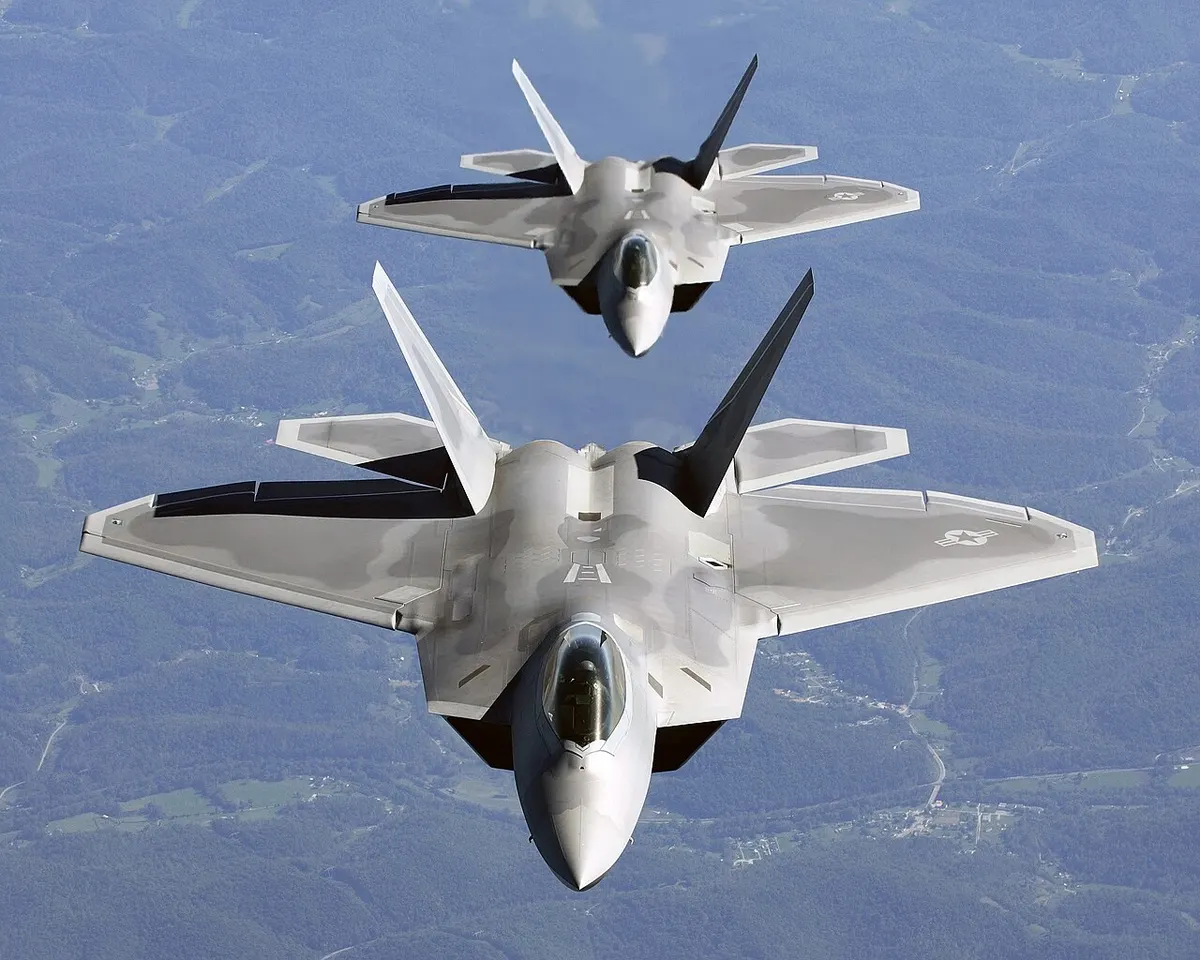
What's new
- Pentagon confirmed Boeing as winner of the F/A-XX competition on Sept 29-30, with the contract covering full-scale development and multiple test aircraft
- Boeing stock rose about 3 percent to $192.49 in pre-market trading while Northrop Grumman fell roughly 4 percent to $482.94
- Northrop Grumman, seeking to become a fighter-jet prime for the first time since the F-14 Tomcat, is widely expected to formally protest the decision
- Boeing's defense unit posted a $128 million operating loss in 2025 and a $5.4 billion deficit in 2024, fueling analyst debate over the company's turnaround
- Award follows a 2025 Pentagon attempt to freeze the program that Congress overturned
The Pentagon announced on September 29 that Boeing has been selected to build the U.S. Navy's F/A-XX, a next-generation carrier-based stealth fighter, in a contract valued at roughly $20 billion, officials said.168
A second sixth-generation win
Boeing prevailed over Northrop Grumman to secure the F/A-XX award, coming months after Lockheed Martin was dropped from the contest in March 2025 for failing to meet the program's design standards. The award marks Boeing's second selection for a sixth-generation fighter under the current administration, after the company won the Air Force's F-47 program in March 2025.1237
Before capturing the F-47 and F/A-XX deals, Boeing had mostly withdrawn from fighter jet production, despite decades of experience manufacturing carrier-based planes for the Navy. Steve Parker, president and chief executive of Boeing Defence, Space & Security, said the company had invested in new facilities to support both programs at once. Parker said building two advanced fighters simultaneously had always been the company's intention, and that Boeing had invested with that goal in mind. he added that the company is equipped to run several next-generation combat aircraft programs at the same time.125
Boeing's win comes as its defense unit works to reverse years of losses, including a $128 million operating loss in 2025 and a $5.4 billion deficit in 2024, with no annual profit since 2021, according to an analysis by Trader Edge.6
Boeing's manufacturing work will be centred on a secure facility in St. Louis, Missouri, which Boeing says is the country's biggest facility of its kind and is close to finishing an expansion project. Details of the F/A-XX program remain classified under U.S. national security and export laws.10863
Delays and capacity concerns
The award follows a turbulent year for the program. In mid-2025 the Pentagon sought to put F/A-XX on indefinite hold over worries about engineering capacity, but lawmakers preserved its funding, earmarking $750 million through that year's tax and spending legislation plus another $1.4 billion for fiscal 2026. Officials had also raised questions about whether Boeing could execute the F-47 and Navy fighter programs simultaneously.123
Timelines for the decision shifted repeatedly. In April 2026, Chief of Naval Operations Admiral Daryl Caudle, along with Defense Secretary Pete Hegseth and Acting Navy Secretary Hung Cao, publicly committed to announcing a winner by August. By late September, Caudle told Aviation Week he was no longer certain when the decision would come, shortly before the Pentagon confirmed Boeing's selection.3
Caudle said the outcome ultimately turned on which contractor had the industrial capacity to deliver. "I know these things are expensive, and I know the defense industrial base is compressed, but we have got to figure out how to walk and chew gum here with aircraft," he said. Air Force General Dale White had separately reiterated concerns about industrial capacity for running the F/A-XX and F-47 programs concurrently.311
Pentagon officials had raised concerns that the U.S. aerospace sector might not be able to handle building both the Air Force jet and the Navy jet simultaneously, worries that contributed to the earlier bid to halt F/A-XX funding.7
Replacing the Super Hornet fleet
The jet is meant to succeed the Navy's F/A-18E and F/A-18F Super Hornets along with EA-18G Growler electronic-warfare planes, with entry into service planned for sometime in the 2030s. The Navy separately plans to buy more than 270 F-35C jets for its carrier fleet. Officials have cited China's swift rollout of advanced combat jets, including sixth-generation types, as a reason the Navy must act fast, warning that a slower pace could leave it without a modern carrier fighter through the 2030s and beyond.1276
Pentagon undersecretary Michael Duffey described the program as central to future capability. Duffey said F/A-XX stands as a central element of the nation's effort to preserve peace through strength. he said the aircraft would control contested airspace, extend the military's operational range, and provide a decisive edge in combat. Acting Navy Secretary Hung Cao described the award as a milestone, saying it ushers in a new era for the U.S. Navy. Navy, calling the sixth-generation jet a major leap forward in air dominance.3
Northrop Grumman, which lost the competition, said it had offered "a highly survivable, digitally advanced" sixth-generation design and was awaiting further details on the Navy's decision. Its shares fell about 4 percent to $482.94 in pre-market trading, while Boeing's stock rose roughly 3 percent to $192.49, according to Trader Edge and MarketWatch. Northrop, which is seeking to become a fighter-jet prime contractor for the first time since the F-14 Tomcat, is widely expected to formally protest the award, Breaking Defense reported.5612
Why it matters
The contract reshapes the balance of the U.S. defense industry around Boeing, which now holds both the Air Force and Navy's next-generation fighter programs.12
Videos
Version history
- version 2 · Added detail on Boeing's financial turnaround, precise stock moves, Northrop Grumman's expected protest, and capacity concerns tied to Boeing's expanding aircraft portfolio.
- version 1 ·