World · United Kingdom
Joanne Young calls for consent law changes after four men convicted
The jury rejected arguments that the men relied on her husband's assurances of consent. Young wants the government to examine how the law protects women.
Joanne Young wants scrutiny of consent law after four men were convicted of abusing her. The jury rejected their reliance on her husband's assurances.
- Four men were convicted at Winchester crown court.
- Philip Young pleaded guilty to rape and other charges.
- Young says nobody can give consent for another person.
- The Ministry of Justice says the law already requires personal consent.
What's new
- Four men were convicted after a three-week trial at Winchester crown court.
- Joanne Young has urged the government to prioritise scrutiny of consent law.
- The convicted men were refused bail ahead of sentencing.
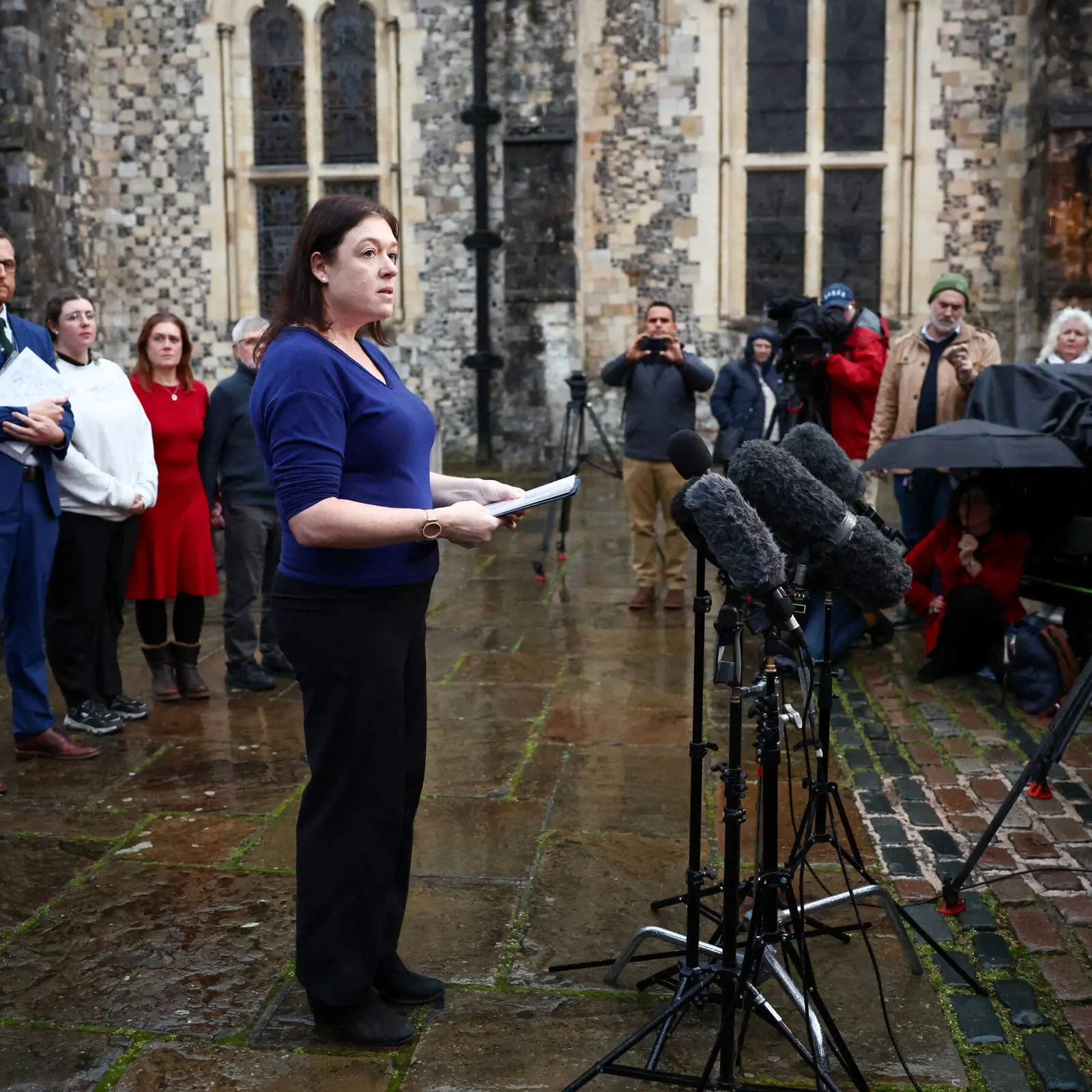
After a Winchester crown court jury found four men guilty of sexually abusing her, Wiltshire rape survivor Joanne Young urged changes to consent law; the verdicts were reported on November 19. According to the Guardian, her husband drugged her and arranged for strangers to abuse her.1
The verdicts and the defence
The convictions followed a three-week trial. The defendants argued that they believed Young had agreed to the sexual activity because of assurances from her husband, Philip Young, according to the Guardian and the New York Times. The jury rejected that defence.12
The Guardian reported that Philip Young advertised his wife on dating and swinging websites, portraying the encounters as a shared sexual preference. Instead, the newspaper reported, he had sedated her until she could not respond. The abuse continued for more than a decade, according to its account.1
Philip Young pleaded guilty to 56 charges, including 14 counts of voyeurism, 11 of rape and 11 of administering a substance with intent, the Guardian reported. According to the newspaper, Dean Hamilton separately pleaded guilty to four charges: one for rape, two for sexual assault and another for assault involving penetration.1
The Guardian identified the four men convicted as Connor Sanderson-Doyle, Norman Macksoni, Mohammed Hassan and Richard Wilkins. Their convictions covered offences including sexual assault, assault by penetration and rape. Mr Justice Saini refused them bail and said they faced “significant custodial sentences”.1
Whose consent counts
Young, who waived her right to anonymity, wants the government to prioritise the issue, according to the Guardian. “At no point did anyone ask me for my consent,” she said. Her call focuses on ensuring that agreement cannot be supplied by another person.1
The Sexual Offences Act 2003 defines consent through a person's choice and their freedom and capacity to make it. As the Guardian explained, the law does not establish third-party consent as a valid defence. The Ministry of Justice likewise said that nobody could agree to sexual activity for somebody else.1
Prosecutors framed the case around whether someone could reasonably have sex with a woman they did not know without first checking her agreement, the Guardian reported. Crown Prosecution Service specialist prosecutor James Foster said Philip Young could not consent for his wife and that each defendant had participated in the abuse.1
The Crown Prosecution Service described the verdicts as England's first jury convictions of multiple defendants for organised sexual assault facilitated by drugs. Wiltshire police warned that UK figures could substantially understate such offences: victims may not realise they were drugged, and their recollections may be incomplete.1
Why it matters
The case raises questions about the understanding and application of consent law in England. It also has a European investigative connection: Wiltshire police received advice from investigators in the French case involving Gisèle Pelicot, according to the Guardian.1
Version history
- version 1 ·