Sport · Senegal
Senegal restored as Afcon champions after CAS upholds appeal
The Court of Arbitration for Sport has reinstated Senegal’s victory over Morocco. Morocco’s federation says it will pursue further legal challenges.
Listen to the story
Short version
CAS has reinstated Senegal as 2025 Afcon champions, overturning the award of the title to Morocco.
- The panel unanimously restored Senegal’s original 1-0 victory.
- CAS upheld the referee’s authority to resume the match.
- CAF says it will implement the ruling.
- Morocco’s federation intends to pursue further legal challenges.
What's new
- CAS unanimously upheld Senegal’s appeal and restored the final result.
- CAF said it would implement the award.
- Morocco’s federation announced plans to challenge the ruling.
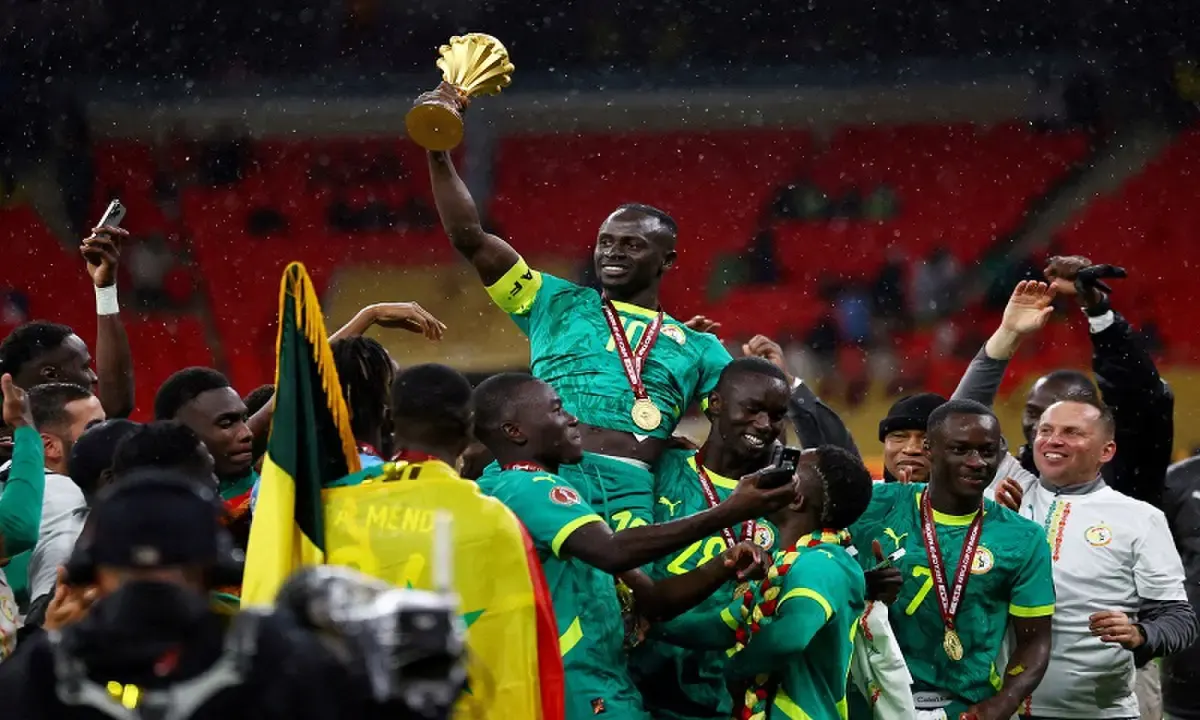
On 24 November 2026, the Switzerland-based Court of Arbitration for Sport upheld Senegal’s appeal, returning the 2025 Africa Cup of Nations title to the team by reinstating their win over Morocco in January’s Rabat final.256
The referee’s authority
The unanimous ruling set aside the CAF Appeal Board’s decision awarding Morocco the title. The initial result–a 1-0 Senegal win following extra time–has therefore been restored. CAF said the award also confirmed its disciplinary board’s decision of 11 February 2026 and that it would take the measures needed to implement the outcome.356
The three-member panel based its conclusion on the authority of the referee over decisions taken during a match. CAS found that deciding whether play should resume or stop belonged to the referee, and that his decision to restart could not be displaced by Senegal’s breach of the competition rules.12
Dawn reported that CAF cited provisions 82 and 84 in the Afcon rules as the basis for reversing the result. The panel found those provisions did not apply in this case: the referee’s restart decision demonstrated that the conditions needed for the match to continue had been satisfied.3
From the final to arbitration
The dispute followed Senegal’s departure from the pitch after Morocco were awarded a penalty. The Guardian reported that coach Pape Thiaw withdrew the players in protest after the penalty decision and a disallowed Senegal goal. They subsequently returned, and the match resumed.23
Brahim Diaz failed to score the penalty after the restart, and Pape Gueye scored Senegal’s winner in extra time. The BBC reported that goalkeeper Edouard Mendy saved Diaz’s attempt. In March, CAF accepted Morocco’s appeal, replaced the match result with a 3-0 walkover and awarded Morocco the championship.123
Senegal’s federation challenged that decision at CAS. The hearing took place behind closed doors in Lausanne in October; the BBC gives the date as 8 October. Following the ruling, the Senegalese federation welcomed the outcome as an affirmation of sporting fairness.12
Morocco seeks further challenge
Morocco’s federation said it would pursue further legal avenues. According to the Guardian, it argued that CAS had not accounted for recent IFAB and FIFA positions concerning players leaving the pitch without permission. The newspaper said an appeal against a CAS ruling may be brought before the Swiss supreme court solely for a narrow range of procedural reasons.2
The Moroccan federation also alleged that arbitrator Ulrich Haas had held a private telephone conversation with Senegalese federation president Abdoulaye Fall. Fall denied that the call occurred, while Haas denied direct contact with parties to the proceedings. The challenge commission found insufficient evidence at that stage to postpone the decision.12
CAF said it respected the award and would implement it. According to the BBC, the full reasoning behind the CAS decision will be published unless the parties seek confidentiality. Morocco’s announced intention to continue its legal challenge therefore accompanies a ruling that restores Senegal as champions.16
Why it matters
For European readers following the legal dispute, the ruling centres on the authority of match officials and the limits of subsequent review. Any challenge to CAS at Switzerland’s supreme court would be restricted to limited procedural grounds, according to the Guardian.2
Videos
Version history
- version 1 ·