Climate · United States of America
SS United States prepared for sinking off Florida as artificial reef
The ocean liner is being converted into an underwater habitat and diving attraction. A separate museum is planned to preserve its history.
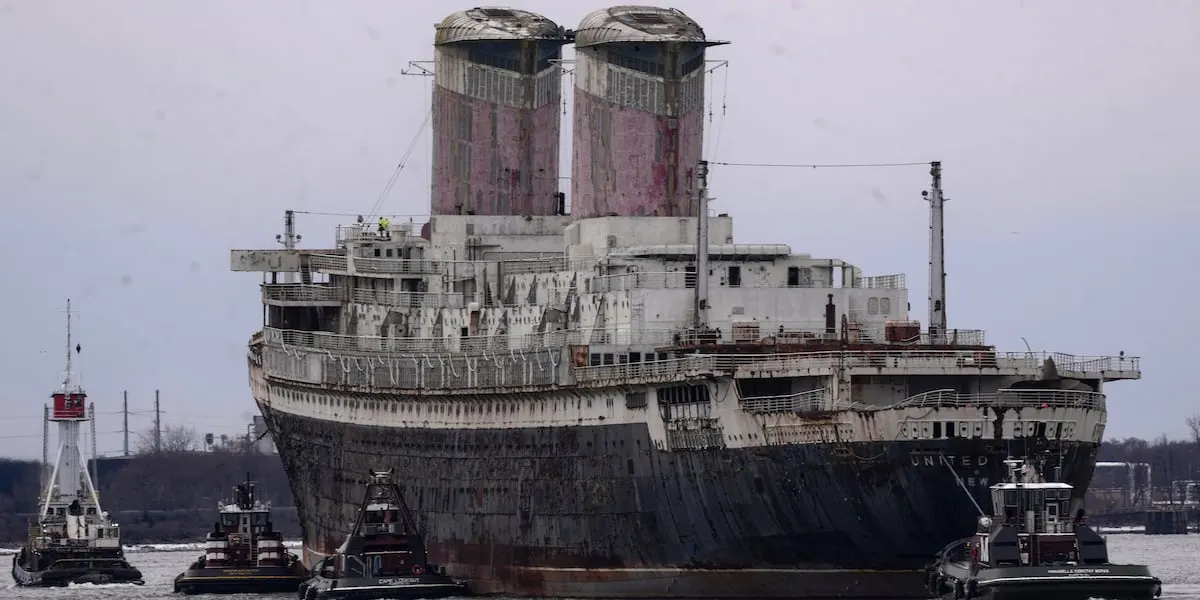
The SS United States is being prepared to become an artificial reef off Florida, with a separate museum planned ashore.
- The sinking will use flooding, not explosives.
- AP puts the project’s cost at $13.5 million.
- The liner is longer than the Titanic.
- A land-based museum will preserve its history.
What's new
- AP reported on Nov 12 that workers had prepared openings to flood the liner.
- The planned site is about 25 miles southwest of Destin, according to AP.
- The ship’s smokestacks have been removed for a museum, AP reported.
The SS United States is being prepared for deliberate sinking off Florida’s Panhandle to become an artificial reef, according to an Associated Press report published on Nov 12, 2026. The report places the planned resting site about 25 miles southwest of Destin, in roughly 180 feet of water.3
Flooding rather than explosives
The liner, which is longer than the Titanic, is intended to provide habitat for marine life and an underwater destination for visitors. AP puts the project’s cost at $13.5 million and says it is designed to draw both divers and fishing enthusiasts.23
The sinking will proceed without explosives. According to AP, federal environmental and explosives regulations prevent Okaloosa County and its contractor from using them. Instead, valves will be opened to allow water into the hull. The Guardian also described the planned method as controlled flooding.123
Workers have removed seawater tanks, made openings in decks and taken out more than 400 portholes, AP reported. The Guardian reported that preparation also included removing internal fittings and toxic materials. The BBC reported that the ship was moved to Alabama the previous year to be cleaned and undergo remediation work.123
AP says the ship’s upper deck is expected to sit about 60 feet below the surface, making it accessible to less experienced divers. The same report places about 500 existing artificial reefs near the planned location. It describes the project as intended to create the world’s largest artificial reef, a designation that remains unconfirmed in the dossier.123
From Atlantic service to a Philadelphia berth
The vessel carried passengers between the United States and Europe from 1952 to 1969, including royalty and celebrities, according to the BBC. AP reports that more than 3,000 workers built it in Virginia during 1950 and 1951, and that its maiden voyage carried 1,700 passengers.23
According to the Guardian, no passenger liner has surpassed the ship’s July 1952 eastbound Atlantic crossing, so it retains the blue riband. According to that report, United States Lines removed it from service in 1969 as passenger numbers fell and air travel expanded.1
The ship subsequently spent almost three decades docked in Philadelphia, the BBC reported. Efforts to turn it into a museum or floating hotel did not succeed, and the SS United States Conservancy repeatedly sought unsuccessfully to preserve it above water, according to the broadcaster.2
The Guardian reports that Philadelphia port authorities doubled the daily berth charge to $1,700 in 2021. A court ordered the vessel’s eviction in 2024, and Okaloosa County bought it for $1 million later that year, according to the newspaper.1
Preserving a record ashore
A museum on land is planned to tell the ship’s story. AP reports that its 65-foot smokestacks have been removed for that purpose, while the Guardian says plans include other objects from the liner and a pier supporting diving trips.123
Susan Gibbs, president and co-founder of the SS United States Conservancy and granddaughter of the ship’s designer, William Francis Gibbs, said the vessel would remain intact as a marine habitat. “While she will soon rest beneath the waves, her story will live on,” she told the Guardian.1
Why it matters
For European readers, the ship represents a passenger link across the Atlantic: it carried travellers from the United States to Europe between 1952 and 1969, according to the BBC. The planned reef and land-based museum offer different ways to encounter that history after efforts to preserve the vessel above water failed.2
Videos
Related stories

Version history
- version 1 ·