Climate · Thailand
Bangkok Floods Disrupt Thai Airways, Honda; Cabinet Approves 2 Billion Baht Aid
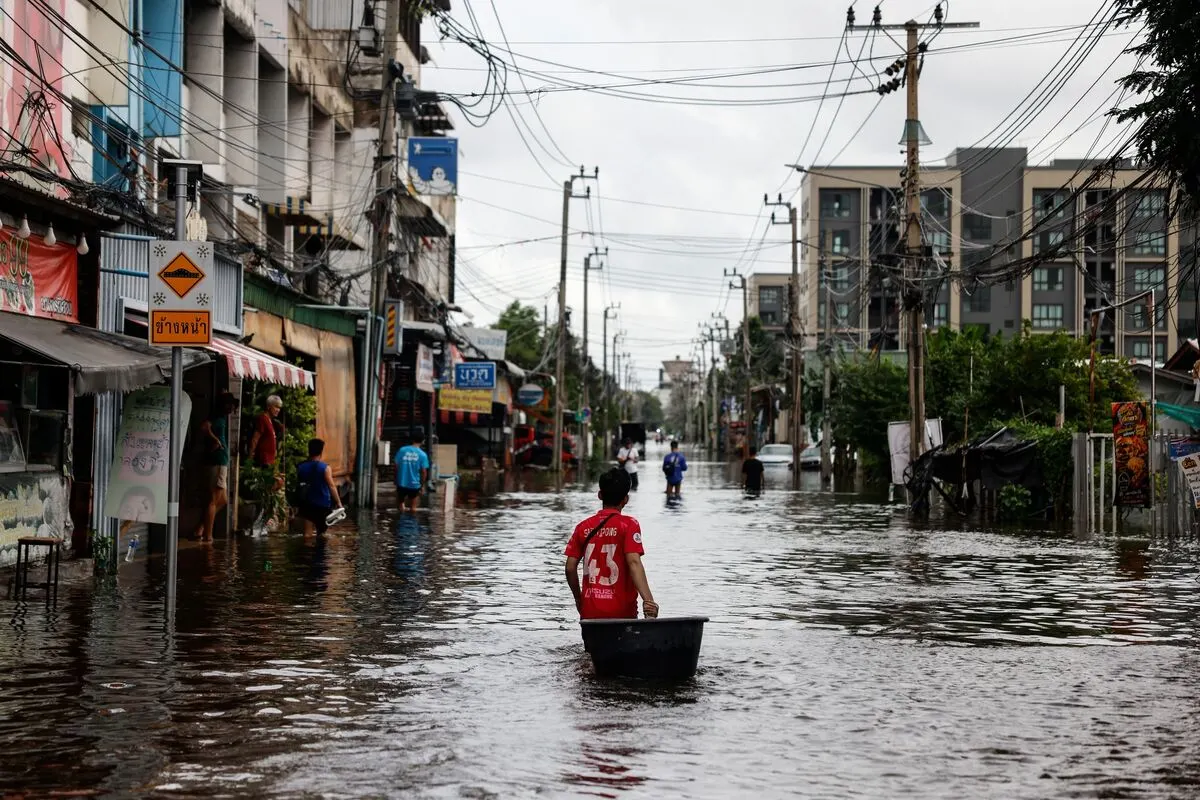
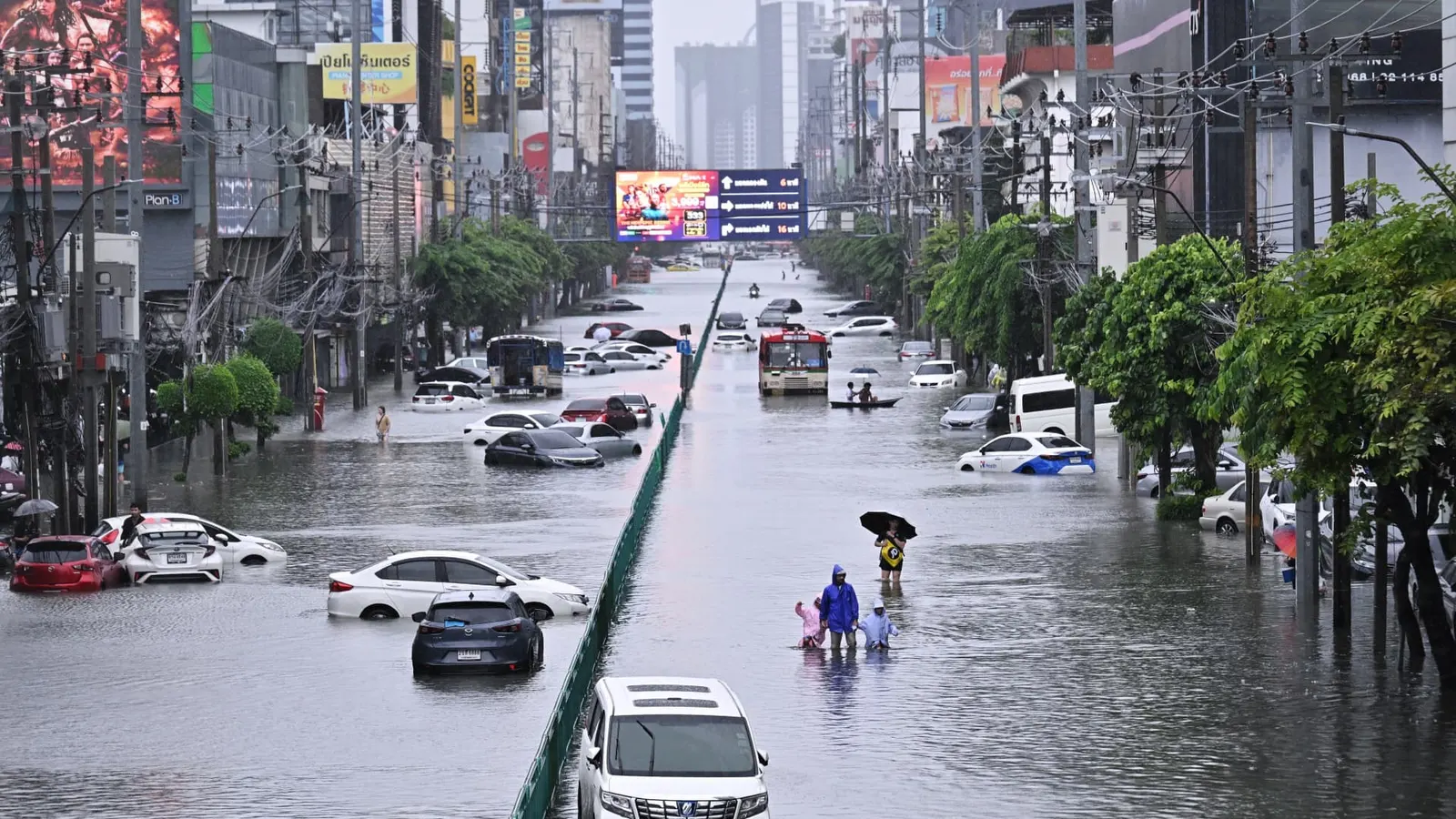
Heavy rain that flooded Bangkok has canceled dozens of flights, slowed auto production and left hundreds of thousands of people affected, prompting scrutiny of Thailand's new flood-warning system.
Heavy rain flooded Bangkok, disrupting Thai Airways flights and Honda output, prompting a 2-billion-baht aid package and scrutiny of Thailand's flood-warning system.
- Bangkok got about 300-320mm of rain in two to three days
- Thai Airways canceled dozens of flights; soldiers helped with baggage
- About 700,000 people and 329,000 households affected, 8+ deaths
- Cabinet set to approve 2 billion baht in flood aid
- New 'One Map' warning system now under public scrutiny
What's new
- Thailand's cabinet set to approve 2 billion baht in flood aid and discuss long-term recovery plans
- Thai Airways canceled dozens of flights and drafted in soldiers to clear a baggage backlog
- Officials say standing water should clear within three days if rain does not return
- Bangkok's new 'One Map' disaster-data system faces its first real-world test
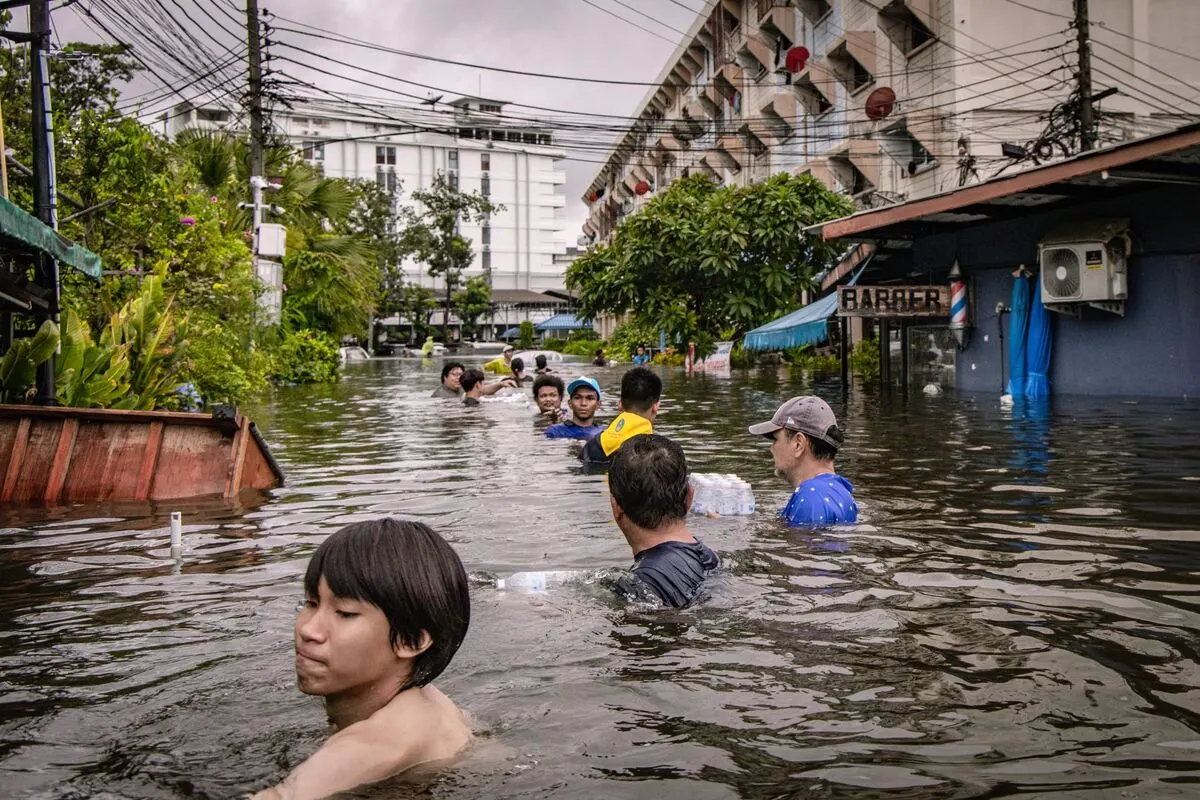
Bangkok's flooding over the past week has disrupted Thai Airways flights, slowed Honda's production and affected hundreds of thousands of people, and Thailand's cabinet was preparing on September 29 to sign off on a 2 billion baht relief package for those hit by the floods.24
Airlines and industry disrupted
Bangkok was hit by roughly 320mm of rainfall across two to three days last week, with the resulting floodwaters disrupting everything from city streets to airline schedules and car manufacturing. Thai Airways International scrapped 22 domestic and international flights, blaming a shortage of staff and blocked routes to Suvarnabhumi Airport, where baggage handling was badly hampered. Honda was among the companies affected as well, with Bloomberg noting that the financial impact of the prolonged rainfall was continuing to grow.3462
The Thai Air Force sent 69 personnel on Monday to support ground operations at the airport. The South China Morning Post reported that a minimum of 21 flights between Hong Kong and Bangkok were affected, including 10 arrivals and four departures that were held up for over an hour on Sunday. Hongkongers in Bangkok said "the central tourist hub was less affected by the flood" than other parts of the city.3
Thai Airways reported scrapping upwards of a dozen flights running through Wednesday, bringing in extra personnel and having soldiers pitch in with airport baggage duties. City officials reported that about 329,000 households and roughly 700,000 people had been affected by the flooding, and at least eight deaths had occurred nationwide since mid-September.5
Government response
Thailand's cabinet was preparing to sign off on 2 billion baht for those affected by the floods while also taking up longer-term flood management and recovery strategies. Authorities have been draining affected neighborhoods and delivering supplies to stranded residents. Officials said standing water in Bangkok is expected to clear within three days provided there is no additional rainfall.246
One Map system under scrutiny
Per the South China Morning Post, Bangkok saw nearly 300 millimetres fall within roughly two days at the peak of the storm — a total comparable to the city's typical monthly rainfall for all of September. All 50 districts of Bangkok were declared disaster-affected areas. According to The Nation Thailand, the floods stemmed mostly from heavy local downpours rather than upstream water flowing into the city, marking a first real trial for the government's recently introduced One Map platform, which pulls together data from four agencies to fix chronic gaps in information-sharing among government bodies.13
Deputy Prime Minister Songsak Thongsri, who leads the National Water Resources Committee, said "heavy rain was expected during September 24–26 but that official assessments did not point to a mega flood." Earlier, on September 23, he had said "some online claims of a catastrophic flood risk could unnecessarily alarm the public." The Nation Thailand observed that unofficial weather sources can often get information out quicker and in more accessible terms than government statements.1
Ahead of the anticipated heavy rain, Bangkok Governor Chadchart Sittipunt had directed that levels be drawn down in key canals — Khlong Lat Phrao, Khlong Prem Prachakorn, Khlong Saen Saep and Khlong Prawet Burirom — while the city redirected water toward Nong Bon retention zones and operated pumping stations at full output. Thai Kao Mai Party leader Suchatvee Suwansawat raised concerns publicly, asking "why canals had not been brought to their lowest possible levels earlier," and contending that "pumping after canals were already overflowing was too late" and that "water had not moved efficiently through the canal network towards major pumping stations."1
Set up in 2017, the Office of the National Water Resources was tasked with overseeing national water policy and cutting down on overlapping agency efforts, building on earlier flood- and water-management bodies that the Yingluck Shinawatra government had created in the wake of the 2011 floods. The Nation Thailand wrote that "the policy question raised by the flooding is how effectively those resources are connected from forecast to warning," noting that shifts within the Interior Ministry's leadership and the switchover between fiscal years could have hurt coordination efforts.1
Why it matters
The disruption to Thai Airways and to Honda's operations illustrates how flooding in a major regional transport and manufacturing hub can ripple into international travel and supply chains, including routes and goods linked to Europe. The scrutiny of Thailand's flood-warning systems also raises broader questions about how governments coordinate data and public communication during extreme weather events.21
Videos
Related stories
Version history
- version 1 ·