World · United States of America, Japan, Russian Federation
US to Store Typhon Missile System at Okinawa's Kadena Base
The U.S. Army plans to move its Typhon and HIMARS rocket systems from Kanoya Air Base to Kadena Air Base in Okinawa starting mid-October, drawing protests from local officials and Russia.
The U.S. will temporarily store its Typhon missile system at Kadena Air Base in Okinawa from mid-October, prompting local and Russian protests.
- Typhon fires Tomahawk missiles up to 1,600 km
- Move from Kanoya to Kadena set for mid-October
- Kadena mayor filed formal protest against plan
- Russia and China sent protest notes to Japan
- U.S. says no permanent deployment or personnel increase planned
What's new
- Okinawa Defense Bureau announced the storage plan on Sept. 25
- Kadena Town mayor Hiroshi Toyama called the storage plan unacceptable
- Russia's Deputy Foreign Minister said Moscow does not trust Japan's removal pledge
- Russia and China both sent protest notes to Japan over the deployment
The U.S. Army will temporarily store its Typhon missile system and HIMARS rocket launchers at Kadena Air Base in Okinawa Prefecture starting in mid-October, after the equipment is flown from Kanoya Air Base in Kagoshima Prefecture aboard U.S. Air Force Globemaster III aircraft, according to U.S. and Japanese officials.12
According to the Japan Times and CGTN, the Typhon system is made up of missile launchers, munitions and a unit that oversees battery operations, and it is capable of launching both SM-6 interceptors and Tomahawk cruise missiles as far as 1,600 kilometers. Stars and Stripes reported that the system fills a capability niche sitting between the Army's shorter-range precision weapons and its more distant hypersonic missile arsenal.123
Stars and Stripes reported that the 3rd Multi-Domain Task Force sent an undisclosed number of Typhon systems to Kanoya Air Base for both the June Valiant Shield drills and the Orient Shield exercise, which wrapped up this year while Japan and Russia remained at odds over the islands of Etorofu, Kunashiri, and Shikotan along with the Habomai islet chain. A U.S. Army photo caption stated that a live-fire strike "validated combined joint targeting and command-and-control interoperability between 3MDTF and combined-joint forces," according to the Japan Times.12
Stars and Stripes reported that Kadena will not receive any operational units or additional staff, and that officials clarified the storage arrangement does not amount to a permanent presence of the missiles in Japan. The Japanese Defense Ministry said the American side had explained that storing the equipment at Kadena is not a permanent deployment, according to TASS. U.S. Army Japan spokeswoman Maj. LeeAnn Sagucio declined to provide further details, Stars and Stripes reported.14
Local opposition
The Okinawa Defense Bureau announced the storage plan on Sept. 25, according to Tokyo Shimbun. Kadena Town Mayor Hiroshi Toyama visited the bureau to protest and submitted a written request demanding withdrawal of the plan, according to CGTN and Tokyo Shimbun. CGTN reported he described the plan as ignoring residents' feelings and called it completely unreasonable and unacceptable, adding that since officials have not stated how long the storage would last, he worries it could end up being indefinite.37
CGTN reported that the deployment has drawn strong protests from neighboring countries and that the plan disregards the feelings of local residents. According to Stars and Stripes, Kadena Town officials voiced opposition to having the weapons within town limits regardless of whether staffing levels rise, and said they intended to lodge an official complaint with the Defense Bureau.31
Russian and Chinese objections
Russian Deputy Foreign Minister Andrey Rudenko said Russia does not believe Japan will remove the Typhon systems after the exercises conclude. "The Japanese authorities promised us that they [the missiles] will supposedly be removed after the military exercises are over," he said, adding, "Regrettably, our confidence in the present government is minimal. That is the reason we cautioned that these actions would carry consequences," TASS quoted him as saying.4
Russian Foreign Ministry spokeswoman Maria Zakharova said drills involving the deployment of Typhon systems "threaten Russia's interests and security in the region," TASS reported, and separately called the deployment "absolutely unacceptable," according to Defense Mirror. Stars and Stripes reported that Zakharova likewise raised objections to stationing Typhon on Kyushu and to activity she described as provocative, saying that such military conduct close to Russia's eastern frontier cannot be tolerated. Russia sent a note of protest to Japan over the deployment, and China delivered a similar note, according to Sputnik.4615
Defense Mirror reported that because of where Kadena sits, the Typhon system would be positioned 650 kilometers from Chinese military installations along the coast and 750 kilometers from Shanghai. The Japan Times reported, in a claim not corroborated elsewhere, that the deployment brings portions of Chinese and Russian territory into the system's range.62
Deployment history
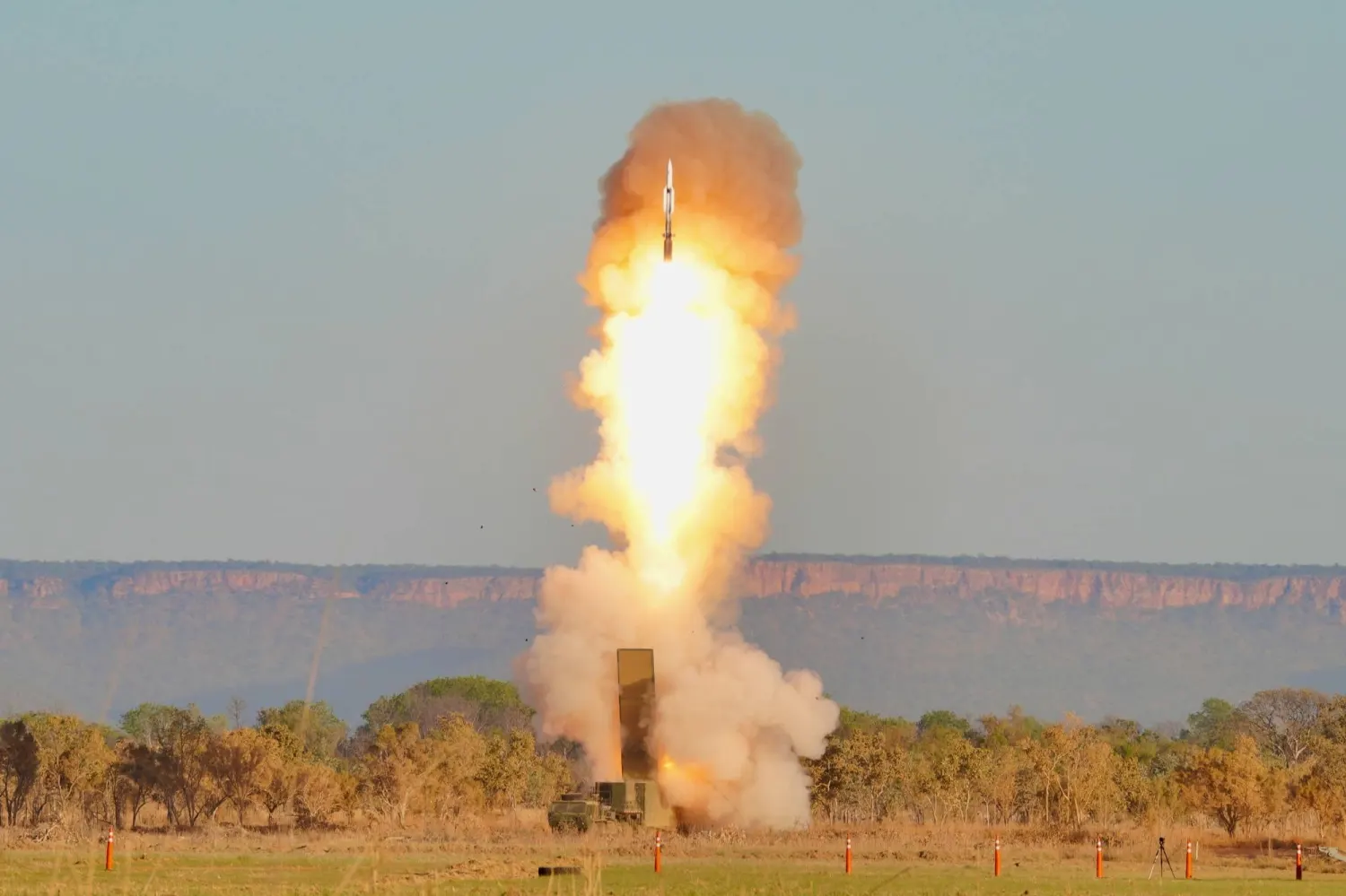
Stars and Stripes reported that the Army's initial test-firing of the Typhon system in the Western Pacific region took place in July 2025 at Australia's Bradshaw Training Area as part of the Talisman Sabre drills. In April, during the Balikatan exercise, the Army fired the system at a target roughly 400 miles distant on Luzon, the Philippines' primary island, marking the first time it had been used there. Japan's Ground Self-Defense Force has said the Orient Shield exercise is not directed at any specific country or region, according to Stars and Stripes.1
Why it matters
The deployment places a U.S. long-range strike system closer to Chinese and Russian territory at a moment of heightened Japan-Russia tension over disputed islands. For European readers, the episode illustrates how regional military exercises and rotational weapons deployments in the Indo-Pacific are drawing formal diplomatic protests from Moscow and Beijing, echoing disputes over missile placement seen in Europe.246
Videos
Version history
- version 1 ·