World · United States of America
US Senate passes energy permitting overhaul, sending bill to House
The measure passed 62-33 and would change federal reviews for energy infrastructure. Supporters cite lower costs, while environmental groups warn of more fossil-fuel development.
Listen to the story
Short version
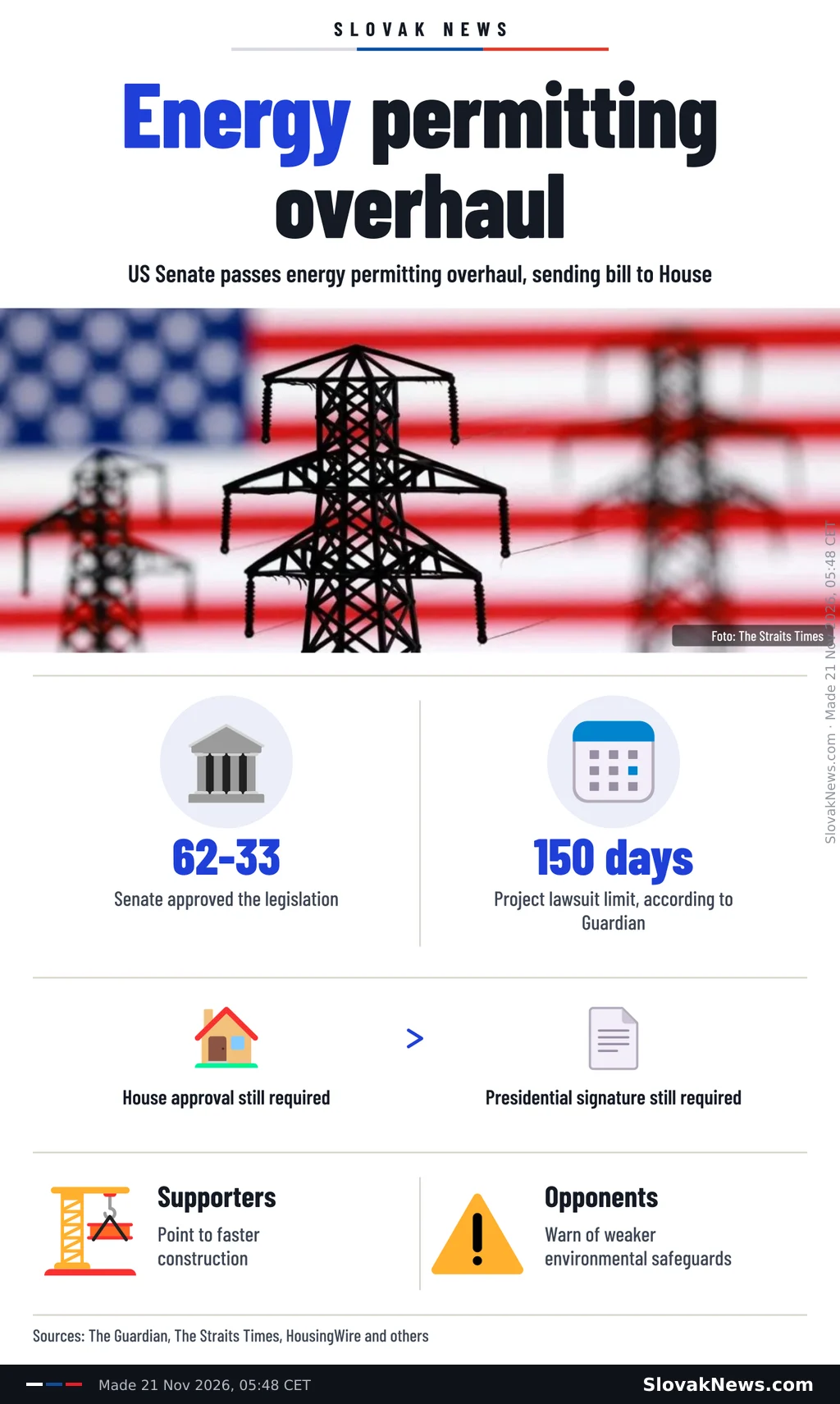
The Senate passed an energy permitting overhaul by 62-33 and sent it to the House. Supporters cite faster construction; opponents warn of weaker environmental safeguards.
- Datacenters would cover their own grid and power costs.
- The Guardian reports a 150-day limit on project lawsuits.
- Environmental groups warn of expanded fossil-fuel development.
- House approval and a presidential signature are still required.
Infographic
What's new
- The Senate approved the permitting package by 62-33.
- The legislation now goes to the House of Representatives.
- Large datacenters would have to cover their own grid and power costs.
The US Senate has approved legislation to change federal permitting for energy infrastructure, voting 62-33 in a decision reported on November 20, 2026. The measure now goes to the House of Representatives, according to the Guardian and the Straits Times, with provisions intended to accelerate projects and require large datacenters to cover their electricity-related costs.1235
Infographic
Changes to reviews and legal challenges
Senator Jon Husted’s office says the 2026 legislation, known as the American Affordability and Jobs Act and backed by both parties, aims to speed up infrastructure authorisations and bring down energy prices. The Guardian reports that its reach includes power plants and transmission lines, alongside changes to environmental laws and restrictions on court challenges.15
According to the Guardian, the bill would set a 150-day window for lawsuits challenging new projects and make it harder for future administrations and judges to withdraw or change permits. The Straits Times says the measure would also limit when federal authorities could withdraw approvals from projects under construction or already in operation.12
HousingWire reports that the package would narrow the projects covered by National Environmental Policy Act reviews, permit qualifying alternative assessments, reduce duplication and introduce tighter deadlines. It would also shorten Clean Water Act reviews and Endangered Species Act consultations. Under the existing environmental review framework, agencies must consider project effects and allow public comment before approval, according to the Guardian.13
Large datacenters would be required to pay their own power and grid costs, the Guardian reports. Husted’s office said language he sought was intended to stop those facilities from transferring energy-infrastructure expenses to Ohio households, farmers and small businesses.15
Support across parties, objections over safeguards
The legislation’s leading advocates include Shelley Moore Capito, Mike Lee, Martin Heinrich and Sheldon Whitehouse, who lead the Senate’s energy and environment panels. HousingWire reports that 47 Republicans and 15 members of the Democratic caucus supported the package; Republicans Josh Hawley and Mike Rounds opposed it.134
The Guardian reports support from groups representing both clean-energy and oil-and-gas developers. Housing groups also praised the vote. HousingWire reports that the National Association of Home Builders expects the package to make developing land less expensive, shorten approval wait times and expand access to federal programmes that finance housing.13
Environmental organisations argue that faster renewable-energy development would not offset the additional emissions and pollution associated with expanded fossil-fuel projects, according to the Guardian. The newspaper also reports Ira Matt’s objection that tribal nations were not consulted in drafting the legislation and that it would weaken federal consultation requirements.1
The Guardian reports that Republicans blocked Jeff Merkley’s attempt to obtain votes on several amendments and that no amendments from rank-and-file senators were adopted. Maria Cantwell said the effects had not been adequately considered. The White House supports the legislation, but House approval and a presidential signature remain the next steps.12
Why it matters
For European readers following US energy and climate policy, the package combines faster infrastructure approvals with disputed environmental consequences. According to the Guardian, Rhodium Group estimates it could reduce pollution by up to 1.5 billion tons by 2040, while environmental groups warn that it would encourage fossil-fuel extraction and use.1
Videos
Version history
- version 1 ·