Sport · United States of America
US Senate Passes Protect College Sports Act 77-22
The bipartisan bill would give the NCAA new authority over athlete pay and transfers, but its path through the House remains uncertain before the November midterms.
Senators approved the Protect College Sports Act by 77-22, though its prospects in the House remain unclear ahead of the November midterms.
- Senate passed bill 77-22, sending it to the House
- Bill gives NCAA new authority over athlete pay and transfers
- Caps revenue-sharing with players and conference size at 20 schools
- Trump and major conferences back it; some Democrats and civil rights groups oppose it
- House unlikely to vote before Nov. 3 midterms
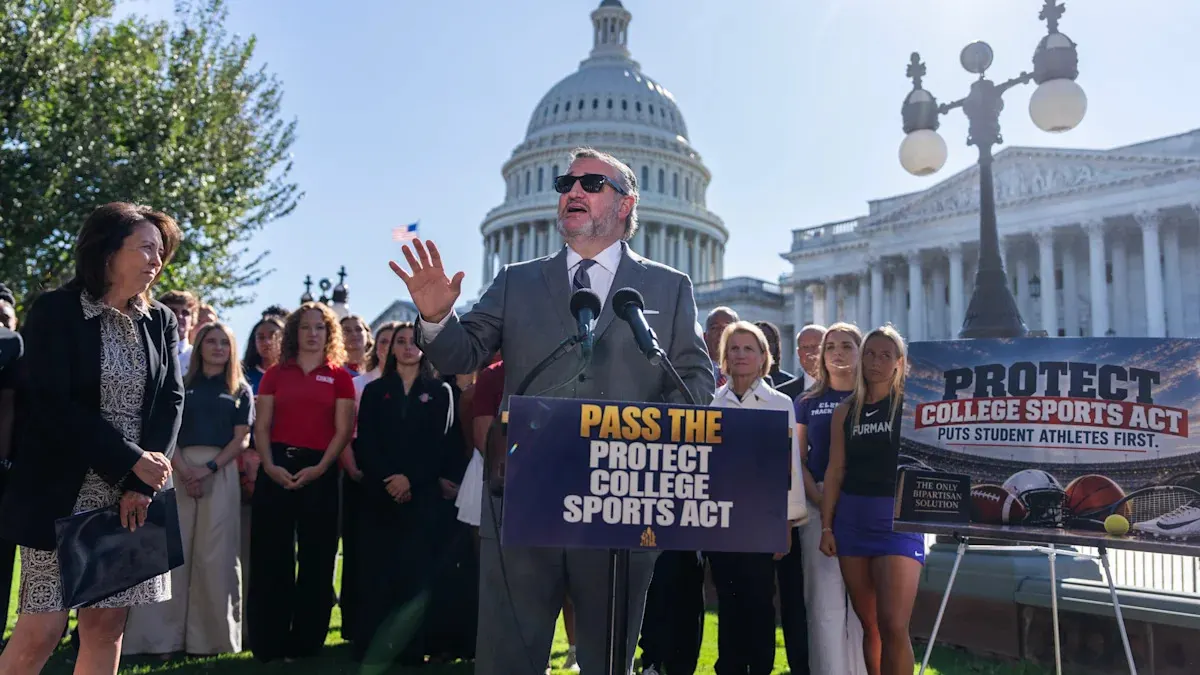
What's new
- Senate approves bill 77-22, sending it to the House
- Bill would codify a 2025 court settlement and cap revenue-sharing with athletes
- House Republicans want SCORE Act provisions added, including barring employee status for athletes
- Trump praised the bill and created a college sports task force
By a 77-22 margin, senators approved the Protect College Sports Act on Monday night and forwarded the bipartisan measure to the House, where a floor vote before the November 3 midterms appears unlikely.7510
What the bill would do
The legislation would grant the NCAA new authority over athlete payment rules and a limited antitrust exemption, according to The Guardian, allowing it to enforce a cap on revenue schools can share with players. It would codify a cap letting schools share up to $21.5 million with athletes, with an additional $27.5 million available through a retention fund, according to the same account.1
Under the bill, players would be restricted to one free transfer over five years and to five years of total eligibility, and conferences would be capped at 20 programs. Schools switching between power conferences would have to compete as independents for three academic years, though that requirement would end in 2031, according to ESPN.352
The bill would also regulate name, image and likeness deals, capping agent compensation on such deals at 5 percent, and could allocate up to $5 million toward women's and Olympic sports, though NPR reports those safeguards would lapse nine years out for large schools and after four years for midsize ones.36
Origins of the bill
Sponsors say the measure follows more than a year of Senate negotiations that intensified after a 2025 court settlement, according to The Guardian, and comes after a 2021 Supreme Court ruling against the NCAA in NCAA v. Alston. Congress introduced more than 40 college sports bills in 2020 in an attempt to establish national rules.15
Backers point to sharply rising costs across the sport: recruiting expenses rose 322 percent, sports equipment costs 300 percent and coaching salaries 370 percent between 2005 and 2023, while medical and gameday costs rose about 250 percent and travel costs more than 200 percent over the same period, according to NPR and ESPN. NPR also reports that more than 100 women's and Olympic sports programs have been cut by schools since 2023.23
The bill passed the Senate Commerce Committee in June and won endorsements from the SEC and Big Ten in August after the two conferences demanded changes, including a higher athlete payment cap, before agreeing to back it, according to The Hill.7
Support and opposition
Senator Ted Cruz, a co-sponsor, argued the measure was necessary because only Congress could fix the sport's problems. "It would be nice if college sports could somehow magically fix itself, but this is a matter of law, federal law, and only Congress can fix it," he said, adding that high ratings and full stadiums did not mean the system was healthy.7
President Trump backed the bill on social media, warning that inaction "is out of control, and will lead to bankruptcies and disaster for many Colleges," and that it would also harm women's and Olympic sports if nothing were done. He later established a task force on college sports, according to The Hill.7
Democratic senators Chris Murphy and Cory Booker voted against the bill. Murphy said the legislation "protects a system of exploitation," while Booker called it "a win for large, wealthy interests controlling college sports," according to CNN. NAACP president Derrick Johnson said the bill "does little to actually protect the student-athletes who make this multi-billion-dollar industry possible," and the Congressional Black Caucus and AFL-CIO also opposed it, according to CBS Sports and CNBC.956
NCAA president Charlie Baker praised the bipartisan vote but said "there is much work left to do in the House to ensure student-athlete benefits are codified into federal law." CFBPA executive director Jason Stahl said the bill was drafted without athlete input, according to CBS Sports.75
Uncertain path in the House
The bill now moves to the House of Representatives, which holds a narrow Republican majority and is not expected to take it up before the November midterm elections, according to CBS Sports and the Senate Commerce Committee. Trump pressed House leaders to return to Washington in October, according to CBS Sports.5107
The House previously attempted its own college sports legislation, the SCORE Act, which fell apart once the Congressional Black Caucus opposed it and was subsequently withdrawn from the floor by Republican leaders in December 2025, according to CBS Sports. Yahoo Sports reports that many House members now want the Senate bill revised to include SCORE Act provisions, including one that would prevent college athletes from being classified as employees, reflecting longstanding tension between the two chambers over the issue.511
Why it matters
The bill would reshape how hundreds of thousands of US college athletes are paid, transfer and compete, testing how far federal law can regulate a fast-growing commercial sport.31
Videos
Version history
- version 1 ·