Science & Tech · United States of America
AI political ads draw about $80 million in 2026 US midterms
Researchers found that most tracked advertisements did not disclose their use of artificial intelligence. Republican candidates and allied groups accounted for most of the ads and spending examined.
AI-generated political advertising attracted about $80 million during the 2026 US midterms, with Republican sponsors accounting for most activity. Most tracked ads lacked an AI disclosure despite a growing patchwork of state rules.
- Almost 170 AI political ads drew about $80 million.
- Republican sponsors accounted for 83% of tracked spending.
- Only 31% of advertisements disclosed their use of AI.
- State rules showed little relationship with actual disclosure.
- Seventy-eight per cent of voters favoured restrictions on deceptive AI content.
What's new
- Almost 170 AI-generated political ads drew about $80 million in spending.
- Only 31% of tracked ads disclosed their use of AI.
- Republican sponsors accounted for 83% of the measured spending.
- Political deepfakes are increasingly becoming the subject of legal disputes.
Researchers with the Wesleyan Media Project reported on October 5 that almost 170 distinct AI-generated or AI-enhanced political advertisements had attracted about $80 million in spending during the 2026 US midterm campaigns, appearing on television and social media across 35 states.13
Spending concentrated among Republican sponsors
Republican candidates and pro-Republican groups sponsored 80% of the advertisements tracked by the researchers and accounted for 83% of the associated spending. The researchers found that Republican sponsors were substantially more likely than Democratic candidates and groups to use AI in their political advertising.13
The tally changed as researchers continued monitoring the campaign. The Associated Press reported a count of 164 AI-generated or enhanced ads on September 25, while The Washington Post reported on September 30 that the count was moving towards an estimated 180, with spending remaining near $80 million.25
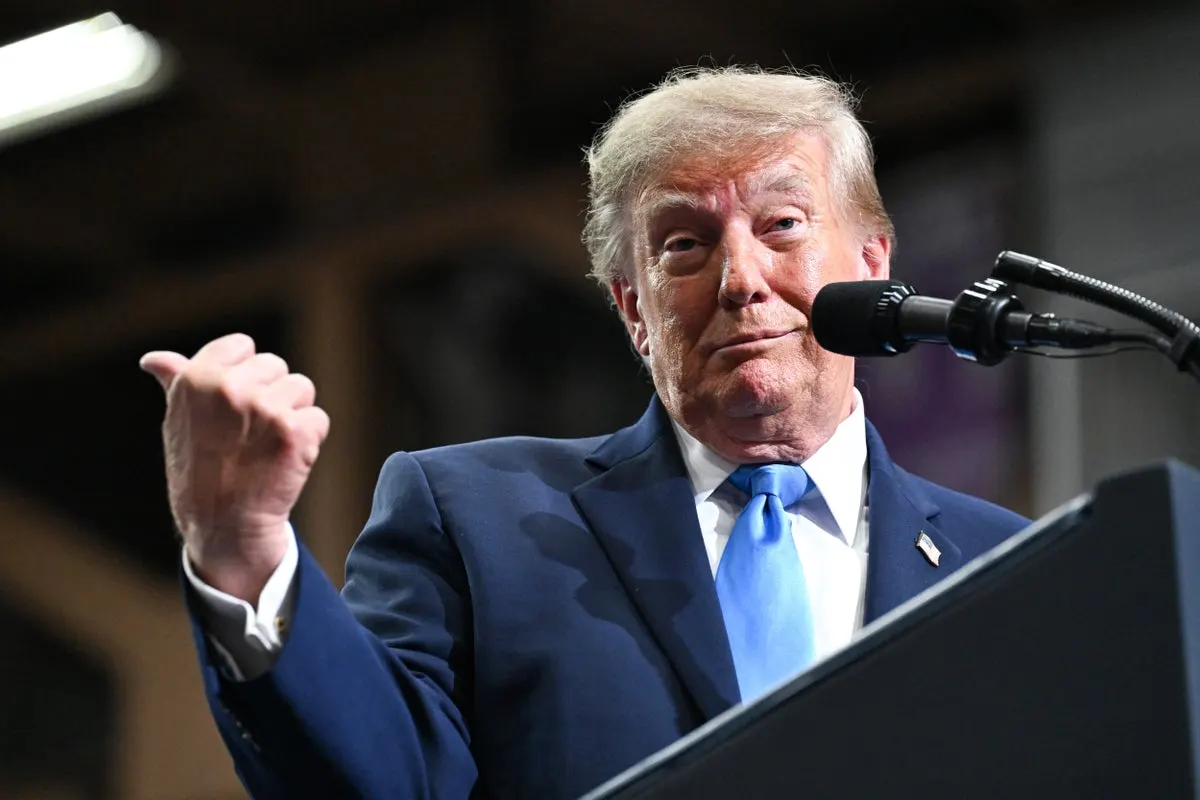
At least five tracked advertisements featured Alexandria Ocasio-Cortez. Other examples identified in the research included synthetic depictions of Donald Trump, Nancy Pelosi, Barack Obama and Kamala Harris, as well as an advertisement showing Liz Cheney, Mitt Romney and Mike Pence carrying pitchforks on the White House lawn.13
Most advertisements carried no disclosure
Across the 35 states covered by the research, 31% of the advertisements disclosed their use of AI. Those disclosed ads represented 22% of the tracked spending. The Associated Press separately reported that 69% of the 164 advertisements in its snapshot lacked an AI notice.123
The researchers said the presence of state regulation had little relationship with whether advertisers used disclaimers. The Associated Press reported a disclosure rate of 29% in states with relevant rules, compared with a reported 32% in states without them, although the dossier leaves the precise 32% figure unresolved.123
The Associated Press said an AI ad showing Zohran Mamdani and Kathy Hochul carried no disclosure, even though New York has a law requiring one. By comparison, an ad supporting Oklahoma Republican gubernatorial candidate Chip Keating used AI-enhanced imagery and carried a disclosure.123
State rules face tests
Although Minnesota generally bans political-ad deepfakes, the state aired an ad in May 2026 that used artificially created footage of Democratic Senate candidate Peggy Flanagan. Researchers said it was uncertain whether the advertisement breached the law because Minnesota requires synthetic material to meet a high threshold of realism.13
Axios reported that disputes over political deepfakes were moving beyond warnings towards complaints and cease-and-desist demands. It cited cases involving Derrick Van Orden, Vikki Goodwin and Jessica Bichler, and highlighted an AI-generated portrayal of James Talarico used by Ken Paxton as a central example.4
Axios reported that about 31 states have rules governing political deepfakes, including disclosure requirements in at least 28, but no comparable federal standard applies to political ads. Separately, the DISCLOSE Act sought to add campaign-finance reporting requirements for super PACs, labour unions and corporations; in 2022, it received procedural support from Senate Democrats and two independents.134
Voters favour restrictions
Polling cited by the researchers found that 78% of registered voters supported banning AI-generated material that makes deceptive claims about candidates. Axios reported that synthetic political advertising can weaken trust even when viewers recognise that the material is fake.134
Why it matters
For European readers, the US campaign provides a documented example of disclosure rules failing to ensure that AI-generated political material is consistently labelled. The Associated Press found that most advertisements in its tally lacked a disclosure and reported an undisclosed advertisement in a state that already had a relevant law.2
Related stories
Version history
- version 1 ·