Science & Tech · Seychelles
Study examines 194-year-old Jonathan’s genetic markers
Researchers have sequenced the genome and analysed the epigenome of Jonathan, an Aldabra giant tortoise living on St Helena. They reported genetic and epigenetic patterns associated with longevity, while cautioning that the work does not establish why he has lived so long.
A new study examined genetic and epigenetic features of Jonathan, a tortoise estimated to be 194 years old. Researchers found longevity-associated patterns but said they could not prove these caused his long life.
- Jonathan lives at Plantation House on St Helena.
- The study was published on 8 October.
- His genome contained 287 unique gene variants.
- Researchers compared him with four other tortoises.
- The findings do not establish cause and effect.
What's new
- A study of Jonathan was published on 8 October.
- Researchers sequenced his genome and analysed his epigenome.
- The researchers found 287 genes carrying versions not seen in the other tortoises.
- Researchers said the findings cannot prove the cause of his longevity.
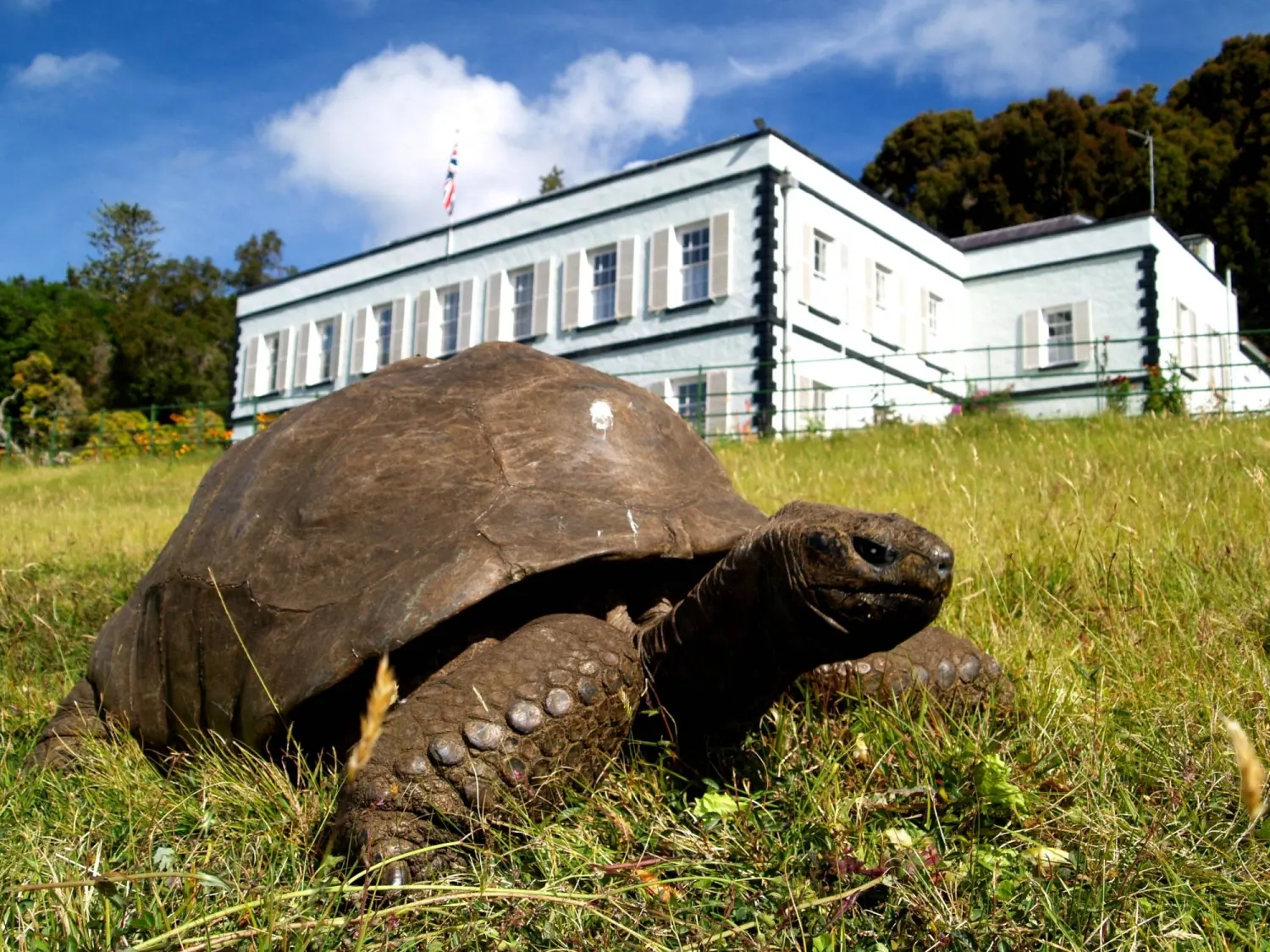
Researchers have examined the genome and epigenome of Jonathan, a male Aldabra giant tortoise estimated to be about 194 years old, at Plantation House on the South Atlantic island of St Helena. The study, published on 8 October, investigated biological features that may be connected with his exceptional lifespan, though its authors said it could not determine what caused it.12
Genetic and epigenetic analysis
Jonathan is described as the world’s oldest-known terrestrial animal, although his age is an estimate. Researchers sequenced his genome and compared his epigenome – chemical markers involved in regulating genes – with those of four other Aldabra tortoises. Benjamin Vaisvil, a researcher affiliated with Kallel and co-lead author of the Science Advances study, said Jonathan has stronger documentary support for his age than other Aldabra tortoises reported to have reached a similar age.12
According to Vaisvil, the team found genomic changes in systems connected with DNA repair, mitochondrial activity, insulin regulation and telomere function. The researchers also identified 287 genes containing variants unique to Jonathan; some of these variants were linked to tumour suppression and DNA repair. The study further reported that he carried extra copies of a gene encoding a protein that targets ageing and cancerous cells.1
Jonathan’s methylation entropy was lower than that of all the sampled tortoises apart from the five-year-old juvenile, the epigenetic assessment showed. Methylation entropy is a measure of disorder in a biochemical process, and the regions showing lower entropy regulated genes that influence longevity, according to the study. The researchers said the overall patterns broadly corresponded with those seen in research on exceptionally long-lived people.1
Limits of the findings
The authors stressed that the observations do not demonstrate a cause of Jonathan’s lifespan. “We cannot say for certain that what we found is the reason for his longevity,” Vaisvil said. The Japan Times reported that Jonathan’s age may reflect genetic traits as well as an ability to keep important cellular systems operating in a comparatively youthful manner, while the study also pointed to his tropical island setting and managed diet as possible contributing factors.13
Aldabra giant tortoises are known to live beyond 100 years, according to the study’s reporting. Jonathan was brought to St Helena in 1882 as a fully grown animal and placed at Plantation House, the governor’s residence, where he remains. Cataracts have left him mostly blind, and Guinness World Records gave him “icon” status in the year of the article.1
Joe Hollins, Jonathan’s longtime veterinarian and a study co-author, called him “a gentle giant”. Hollins said the tortoise recognises his voice and handling, associating his arrival with food rather than affection. Jonathan’s precise origins are not established in the dossier; Aldabra Atoll and the Granitic Seychelles are both listed as possible places of origin.1
Why it matters
The research provides a rare case study of a very old terrestrial animal whose genetic material can be compared with that of other tortoises. For readers in Europe, its relevance lies in the broader scientific effort to understand biological processes associated with ageing, rather than in a demonstrated treatment or method for extending human life.2
Version history
- version 1 ·