Science & Tech · United States of America
Anthropic chief rejects claim he wants humans to yield free will to AI
Dario Amodei says AI governance must protect democratic legitimacy and self-determination. His response comes as AI companies automate more of their research and model development.
Amodei denies supporting a surrender of human free will to AI. He says democratic legitimacy and self-determination must remain priorities.
- Axios reported Amodei’s denial on November 25.
- TechCrunch described his response as a rebuttal to rivals.
- Anthropic reports extensive use of Claude in coding.
- Amodei raised possible restrictions on autonomous AI self-improvement.
What's new
- Amodei rejected the claim that he supports relinquishing human agency to AI.
- He said efficiency and security should not override legitimacy or self-determination.
- He also raised the possibility of restricting AI systems’ autonomous development of successors.
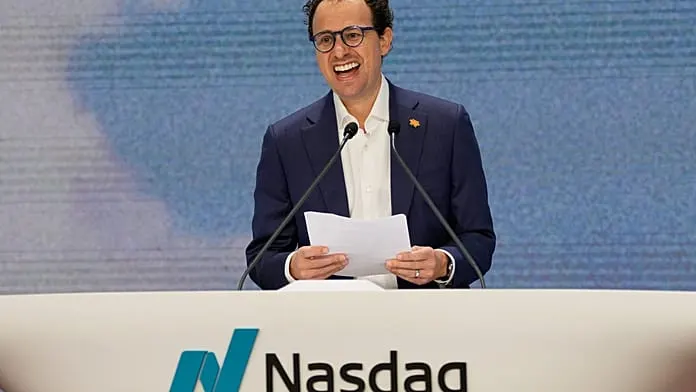
Anthropic chief executive Dario Amodei rejected the suggestion that he wants people to relinquish their free will to artificial intelligence, in a response posted on X and covered by Axios on November 25. His comments followed an Axios article about the debate over AI and human control, according to The Straits Times.12
A dispute over human authority
Axios reported that Amodei favours AI governance that protects democratic legitimacy and people’s ability to determine their own future, rather than putting efficiency or security first. TechCrunch described his response as a rebuttal to accusations from rivals that he supports giving up human agency to AI.23
In the statement reported by The Straits Times, Amodei said: “We should never sacrifice legitimacy or self-determination at the altar of efficiency or security”. Euronews placed his remarks within a widening discussion about preserving human autonomy as AI systems become more capable.14
The Straits Times also recounted earlier comments in which Amodei supported giving AI control in situations involving lives and safety. It reported that, in 2024, he predicted AI systems would take leadership roles and direct people or other AI systems. Those earlier positions concern the authority AI might exercise; his latest statement rejects the claim that he favours surrendering human free will.12
Development under human oversight
The question of control also extends to how AI systems are developed. TechCrunch reported that leading AI companies are automating more of their research and model-building work. According to The Straits Times, Anthropic said each version of Claude helps speed up development of the version that follows.13
Anthropic said Claude produced more than 90% of contributions to its codebase in September, The Straits Times reported. That figure describes the company’s reported coding contributions, while Amodei separately said Claude was not expected to be able to safely create successive frontier models entirely on its own.1
Amodei also said restrictions might be desirable on recursive self-improvement, the process through which AI models independently create new versions of themselves, according to The Straits Times. His comments address both the use of AI in current development work and limits on allowing that work to proceed autonomously.1
Other executives weigh in
The Straits Times reported that Meta chief AI officer Alexandr Wang opposed transferring society’s direction to AI. OpenAI chief executive Sam Altman, speaking in November, said that offering a cure for cancer at the cost of all future agency, control and voice would amount to “a terrible sales pitch”.1
Why it matters
For readers in Europe, the debate concerns whether people retain a voice in decisions made with AI. Amodei’s stated principle is that democratic legitimacy and self-determination should take precedence over gains in efficiency or security.24
Videos
Related stories
same actors
same actors

Version history
- version 1 ·