Asian stocks fall as AI investment concerns follow Wall Street sell-off
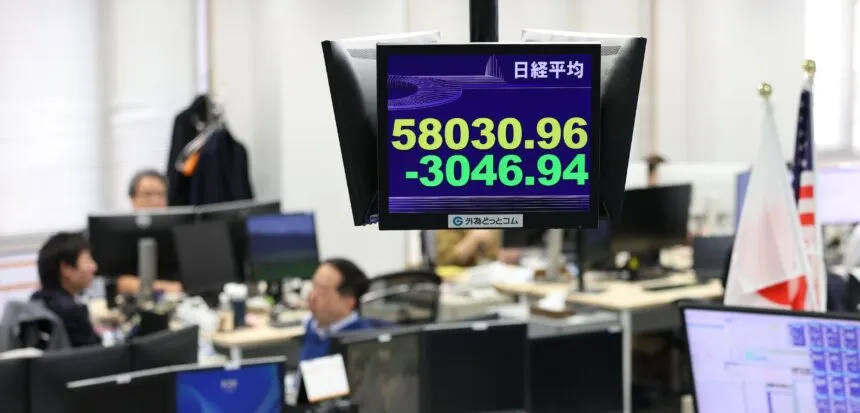
Markets in Japan, South Korea and Taiwan declined on November 6 after a US technology-stock retreat. Reports linked the losses to doubts about AI infrastructure spending and policy.
Asian equities fell after Wall Street’s technology sell-off, with reports citing concerns about AI investment.
- Reuters reported a 7% opening fall for Japan’s Nikkei.
- abc17news.com reported 6% closing losses in Japan and South Korea.
- Investors questioned AI spending, construction and regulatory prospects, Reuters reported.
What's new
- Reuters reported a 7% opening decline for Japan’s Nikkei 225.
- South Korean and Taiwanese benchmarks fell more than 8% before stabilizing, according to Reuters.
- abc17news.com reported closing losses of 6% in Japan and South Korea.
Asian stock markets fell on Friday, November 6, following a technology-led sell-off in the United States, as investors questioned the outlook for artificial intelligence investment. Japan, South Korea and Taiwan recorded declines, with Reuters linking the retreat to concerns about regulation, data-center construction and returns on AI infrastructure spending.123
Losses across technology markets
Reuters reported that Japan’s Nikkei 225 dropped 7% at the opening and that South Korean and Taiwanese benchmarks lost more than 8% before stabilizing. In its morning report, the Associated Press put the Nikkei’s initial decline at more than 6% and South Korea’s Kospi loss at 7.4%.23
The reports captured different stages of trading. abc17news.com reported that the Nikkei and Kospi each finished 6% lower, while Taiwan’s Taiex closed down 4.5%. Samsung Electronics shares fell 7.9% during morning trading, according to the Associated Press.13
The Asian declines followed a Thursday US market retreat that erased about $2.5 trillion in value and sent the Nasdaq down 5.5%, according to abc17news.com. The outlet reported that Asian technology businesses had benefited from demand for semiconductors used in large AI data centers.1
Questions over spending and policy
Reuters cited investor and analyst concerns about tighter AI regulation, slower construction of data centers and reduced confidence in the profitability of infrastructure spending. The Associated Press separately reported concerns that costly borrowing, political opposition and possible construction pauses could weaken future demand for chips, electricity and associated services.23
The political backdrop added to those concerns. According to abc17news.com, Democrats won control of both the House and Senate, and investors were concerned that Democratic representatives could delay or obstruct new AI infrastructure spending. Those concerns were about possible policy changes, rather than a reported decision to halt investment.1
Jung In Yun, founder and chief executive of Fibonacci Asset Management Global, attributed Friday’s losses to a likely reassessment of expectations for AI investment and policy, according to abc17news.com. Theodore Shou, a partner at Yiyi Capital, offered a different emphasis, saying AI shares had attracted excessive enthusiasm earlier in the year and were now adjusting.1
Governments monitor the decline
Japanese and South Korean officials acknowledged the volatility, abc17news.com reported. Japanese Prime Minister Sanae Takaichi said the government was closely following developments. “We will focus on steps to create a strong economy,” she said.1
South Korean Finance and Economy Minister Lee Hyoung-il held a meeting on the economic implications of the US elections, according to the same outlet. It reported that South Korean officials would prepare measures intended to prevent market overreactions, while acknowledging that effects on global markets could not be excluded.1
Why it matters
For European readers, the developments show how concerns about US technology spending are also affecting Asian markets. Reuters linked the selling to doubts over regulation, construction and profitability, while abc17news.com reported warnings that wider global-market effects could not be ruled out.12
Videos
Related stories
background

background


Version history
- version 1 ·