Science & Tech · People's Republic of China
DeepSeek Open-Sources Chip Tools to Cut Nvidia Reliance
The Chinese AI start-up released software modules built with Huawei for Ascend processors, part of a broader push by Chinese firms to reduce dependence on Nvidia's chips and software.
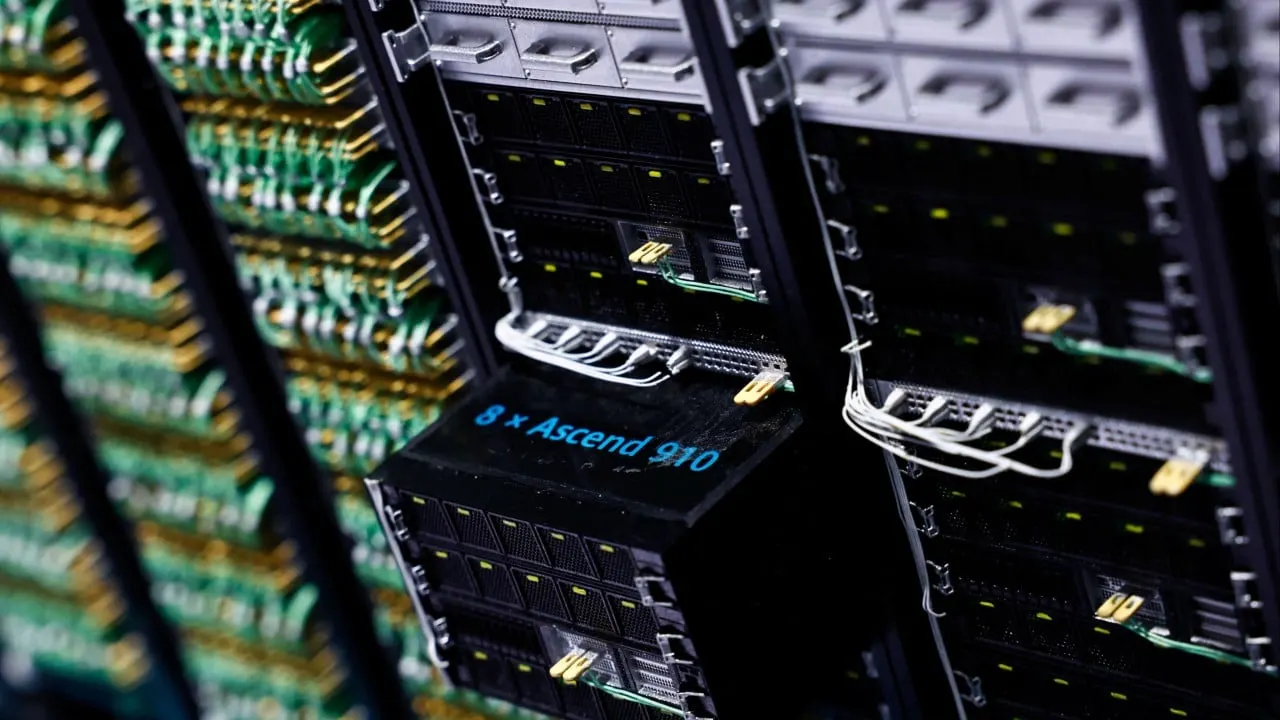
DeepSeek open-sourced six software tools, including a language called TileLang, to help developers build AI applications on Huawei's Ascend chips instead of Nvidia's.
- DeepSeek released six open-source modules for Huawei Ascend chips
- TileLang, likened to Nvidia's CUDA, now supports Ascend 950 chips
- Huawei published joint technical recipes in its CANN community
- DeepSeek reported performance figures for its V4.1-Flash model
What's new
- DeepSeek released six open-source software modules for Huawei's Ascend chips
- TileLang now supports Huawei Ascend 950 accelerators with native code generation
- Huawei published the joint work as technical recipes in its CANN community
- DeepSeek reported performance figures for its V4.1-Flash model on Ascend hardware
DeepSeek, the Chinese AI start-up, has open-sourced six software modules designed to run on Huawei's Ascend AI chips, according to Bloomberg and the South China Morning Post. The release, announced 30 September 2026, is intended to give developers tools to build AI applications on Huawei hardware instead of relying on Nvidia's chips and software.31
What was released
DeepSeek published the tools via its WeChat account, according to Bloomberg. The company described its goal as building an "independent and controllable software ecosystem for graphics processing units," according to a DeepSeek WeChat post cited by the South China Morning Post.13
Among the tools is TileLang, a programming language that Bloomberg described as China's answer to Nvidia's CUDA. According to the South China Morning Post, TileLang is designed to streamline development of high-performance kernels for GPUs and CPUs, though it still lists Nvidia as its primary back end. A GitHub project page cited by the South China Morning Post said TileLang now offers "native code generation, automatic scheduling, and synchronisation" for Huawei's Ascend 950 accelerators.13
DeepSeek said the language allows developers to work at a higher level while still targeting underlying hardware. "TileLang provides developers with a higher-level programming model while allowing code to target the underlying hardware," the company said, adding that "the language can simplify programming compared with lower-level approaches such as Nvidia's CUDA," according to Open Source For You.5
Huawei Central reported that the tools include compute and communication libraries supporting Huawei's AI chips, and that Huawei is offering full support for the new programming infrastructure. DeepSeek was quoted as saying that establishing a universal, easy-to-program high-level language capable of reaching full hardware performance is the first priority in building an independent GPU software ecosystem, and that TileLang would offer "a simpler programming model than Nvidia's CUDA."4
Additional components and performance claims
Pandaily reported that DeepSeek also open-sourced Ascend versions of two other components, DeepGEMM and DeepEP, alongside TileLang. These correspond to versions previously released for Nvidia hardware, according to Open Source For You, and DeepSeek's training operators reportedly have high-performance Ascend implementations, the outlet said.65
According to Pandaily, Huawei posted the collaborative project as technical guides within its CANN community, and the outlet noted that DeepSeek's V4.1-Flash model achieved a throughput of 2,469 tokens generated per second on each card, with a 5-millisecond latency per token, during offline testing. Both Open Source For You and Huawei Central reported that DeepSeek and Huawei collaborated on a supernode system built from 128 of the Ascend 950 chips.654
Techzine reported that DeepSeek and Huawei are developing freely available Ascend-based tools meant to rival Nvidia's CUDA ecosystem, while the New York Times reported that the pair have joined forces to create software for advanced chips, part of China's wider drive toward AI self-sufficiency.72
Context
The South China Morning Post reported that the release marks a step forward in China's push to end dependence on Nvidia, and linked the effort to US export curbs on advanced processors. Huawei Central noted that new-generation Ascend AI processors and supernode systems were launched during the 2026 Huawei Connect event.34
Version history
- version 1 ·