Culture · United States of America
Former Staff Allege Kennedy Center Delayed Known Repairs
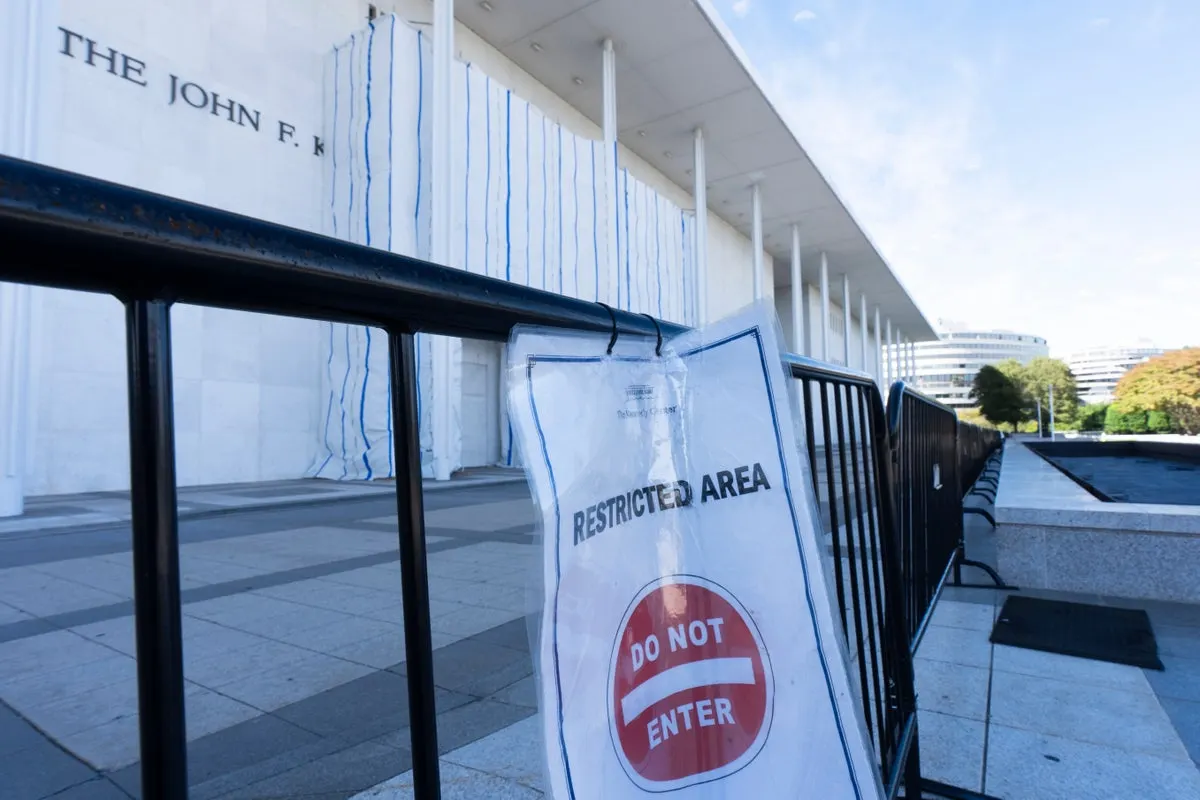
Former employees say the Kennedy Center shelved a funded plan to fix leaks that officials now cite as reasons for this month's closure, according to a whistleblower letter to Congress.
Listen to the story
Short version
Former Kennedy Center employees allege the venue delayed funded repairs later cited as reasons for its indefinite closure, a claim executive director Matt Floca denies.
- Whistleblower letter says repairs were delayed despite known issues
- Floca denies allegations, cites newly discovered summer damage
- Trump-aligned board voted to close the center indefinitely
- Judge blocked restoring Trump's name, ordered 30-day notice rule
- Whitehouse alleges deeper financial mismanagement in new documents
What's new
- Whistleblower letter says Kennedy Center delayed repairs later cited for closure
- Kennedy Center's Matt Floca denies halting priority repairs, cites new hazards found this summer
- Judge Christopher Cooper blocked return of Trump's name to the building
- Sen. Sheldon Whitehouse cites new documents alleging financial mismanagement
Former employees of the Kennedy Center allege that the Washington performing arts venue delayed a funded plan to address roof leaks that officials later cited as the basis for closing the building indefinitely this month, according to a whistleblower letter reported by The New York Times on Sept. 25.12
Allegations of delay
The whistleblower letter claims Kennedy Center officials had known about significant structural problems for a long time before framing them as newly discovered issues once the venue closed this month.12
Former staff members contend that management put off a plan meant to fix the leaks, which officials are now pointing to as a major safety concern.12
The letter–signed by attorney David Seide representing unnamed former staffers–asserts that Matt Floca, who serves as the venue's executive director and chief operating officer, failed to prioritize the roof problems and stopped a funded repair plan in April. Seide wrote that Floca had sought and obtained the necessary funding to fix the newly cited problems more than a year earlier, but that six months ago, despite having the money in hand, he halted the remediation process from proceeding.1
Floca's response
Floca has denied the allegations. He explained that fresh inspections of the leaks uncovered previously unknown dangers within the structure, stating that the center "has known for years that the roof overhang leaked," and adding, "What we did not know until this summer was how far the damage had spread inside it."1
Floca said the decision to reassign the repair work to a more comprehensive plan came after a contractor's quote came in at nearly three times the expected cost. He described the shift as "a change in the approach to procuring and delivering the work, not a determination that the work was unnecessary." In a September court declaration, Floca cited "acute risks to public safety" at the aging building, which the letter says had been known to him previously.1
Closure and legal dispute
This month, the Kennedy Center's board, aligned with Trump, approved an indefinite shutdown of the venue for repair work. Hours before that vote, Judge Christopher Cooper blocked plans to return President Trump's name to the building, after previously ruling that new lettering bearing Trump's name had been illegally added and ordering it removed. Cooper also ordered the center to give 30 days' notice before major physical changes to the building. Kennedy Center leadership must file a status report on the closure and emergency repairs no later than Friday.1
Trump, who installed his own leadership on the Kennedy Center's governing board, has threatened to demolish the building, according to the dossier.1
Funding and Senate inquiry
Lawmakers designated $257 million for the Kennedy Center within President Trump's tax and spending legislation, which he signed into law in summer 2025. Sen. Sheldon Whitehouse, the senior Democrat on the Senate Committee on Environment and Public Works, sent Floca a letter upon receiving the whistleblower complaint, claiming that the center's leadership "hoarded" funds Congress had allocated for repairs "while blaming previous leadership for the state of repairs."1
Whitehouse said his initial investigation had focused on "cronyism and corruption" under Trump's chairmanship, adding, "My initial investigation into misconduct at the Center focused on cronyism and corruption, with documents demonstrating considerable excessive and self-serving spending under President Trump's chairmanship." He said newly attached documents "seem to reveal deeper financial mismanagement." A representative for the committee's GOP majority had not responded to a request for comment by Saturday.1
Why it matters
It also illustrates how political control over cultural institutions can intersect with disputes over maintenance and transparency.12
Version history
- version 2 ·
- version 1 ·