Health · State of Palestine, Israel, United States of America
WFP cuts Gaza food assistance as funding falls and hunger persists
The World Food Programme says funding shortages have left about 500,000 people without its critical support in Gaza. It is seeking $450 million to sustain operations in Gaza and the West Bank for six months.
Listen to the story
Short version
WFP says funding shortages are reducing Gaza food assistance while hunger remains widespread.
- About 500,000 people have lost critical support, WFP says.
- An estimated 1.4 million people face acute food insecurity.
- WFP seeks $450 million for six months of operations.
What's new
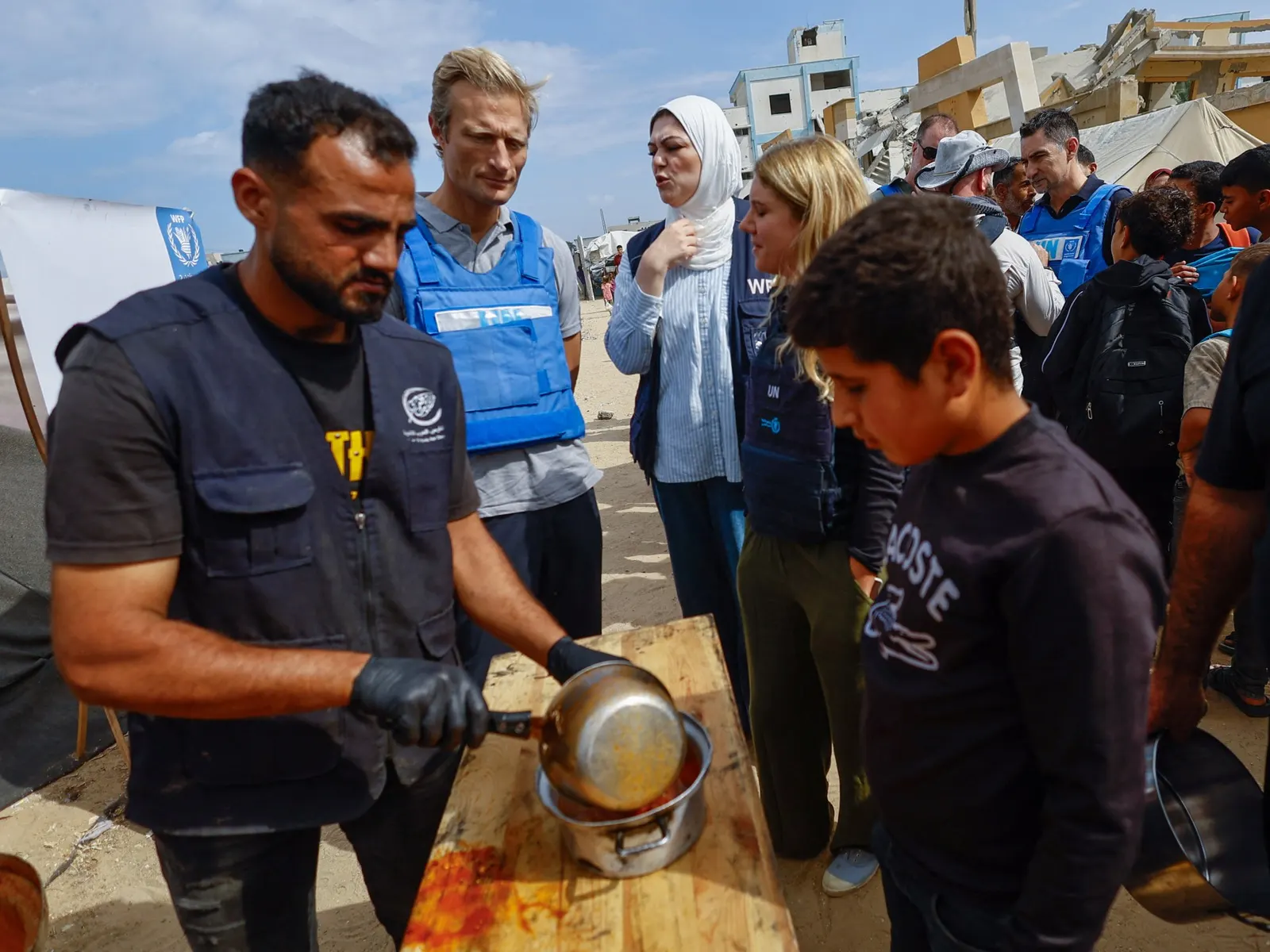
- WFP says Gaza food assistance has been reduced by around one-third.
- Monthly assistance will reach 1.1 million people rather than 1.6 million, Al Jazeera reports.
- Daily hot meals are being reduced from 250,000 to 150,000, according to WFP.
On October 19, 2026, the World Food Programme said a lack of funding had compelled it to cut food assistance in Gaza, causing roughly 500,000 people to lose vital support. The cuts come as WFP estimates that 1.4 million people in the territory face acute food insecurity.124
Less food and fewer recipients
The United Nations agency received less than half the funding for its Palestinian operations in 2026 that it had received in previous years. Its Palestine director, Shaun Hughes, told the BBC that financial constraints were driving the reductions, rather than a decline in need or an inability to reach people.124
Monthly assistance in Gaza will fall from 1.6 million recipients to 1.1 million, Al Jazeera reported. WFP said its monthly food assistance had reached roughly 1.6 million people following the October 2025 announcement of a ceasefire. The agency describes the reduction in its food assistance as approximately one-third.24
Those still receiving assistance will also get less. WFP says families are receiving one food parcel instead of two, alongside a smaller bag of wheat flour. Daily hot-meal provision is being reduced from 250,000 meals to 150,000. For families in difficult-to-reach areas near the Yellow Line, meals are now supplied on alternate days rather than every day.24
Cash support has also been reduced. The BBC reported that WFP lowered transfers to some Gaza residents in July; the agency's October account says the value of cash assistance for 75,000 families has been cut. These changes accompany reductions in monthly flour and food-box distributions.14
Hunger remains widespread
WFP estimates that 67 percent of Gaza's population, or 1.4 million people, are experiencing acute food insecurity at IPC Phase 3 or above. It says around 200,000 remain in Phase 4 emergency conditions, requiring immediate food assistance to prevent deaths from hunger. Only one child in five eats a sufficiently varied diet.24
The unemployment rate among Gaza's population exceeds 80 percent. Al Jazeera reports that people cannot afford fresh food or protein-rich foods even when these are available. The BBC reports that displacement still affects almost the entire 2.1 million population of Gaza, while two out of every three residents rely on food assistance to survive.124
Dalal al-Dahdouh, who the BBC described as living with her family of eight in the ruins of their Gaza City home, said: "The flour isn't enough and the food boxes aren't enough either." In al-Mawasi, mother of three Sawsan Bahloul told the broadcaster that community-kitchen portions had already been insufficient.1
Funding appeal covers Gaza and West Bank
WFP says it needs $450 million to sustain essential operations in Gaza and the West Bank for six months. It continues to support Gaza bakeries and, according to the BBC, nutritional assistance for about 300,000 women and children, as well as food snacks for about 200,000 children.14
Al Jazeera reported that the funding shortfall also affected the West Bank, where the number of aid recipients was halved to 200,000 in September after previously standing at 400,000. WFP says improvements in humanitarian access and aid distribution beginning in October 2025 have eased food insecurity in Gaza, although the agency cautions that this progress could easily be reversed. According to the agency, the latest IPC analysis warns that lower aid provision could sharply increase food-assistance needs.24
Why it matters
For readers in Europe, the funding appeal sets out the scale of resources WFP says it needs to sustain its Gaza and West Bank operations: $450 million over six months. The agency warns that reductions in assistance threaten food-security gains while 1.4 million people in Gaza still face acute food insecurity.24
Related stories
same place
same place
Version history
- version 1 ·