Science & Tech · Ukraine
Ukraine reports alert app hack after false nuclear and chemical warnings
False warnings appeared in Ukraine’s public alert app on Nov. 1, prompting the Air Force to deny any radiation threat. Russia separately reported an attack on its emergency notification app.
Listen to the story
Short version
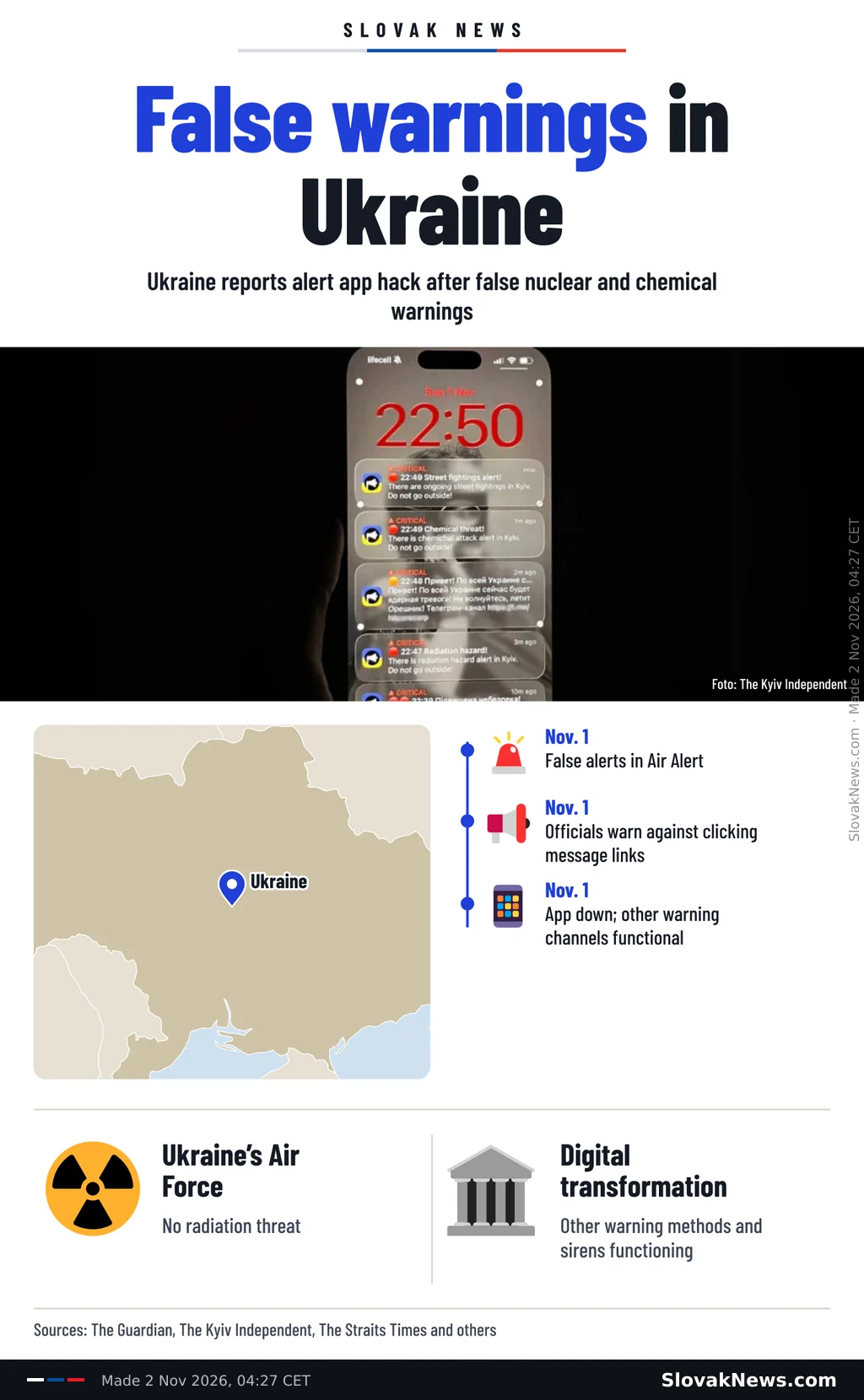
Ukraine reported a suspected alert-app hack after false warnings appeared on Nov. 1. The Air Force denied a radiation threat.
- False messages warned of nuclear, chemical and street-fighting threats.
- Officials said other public warning channels remained operational.
- Regional officials warned users against clicking message links.
- Russia reported a separate app attack; no connection was established.
Infographic
What's new
- Ukraine’s Air Force said the Air Alert app appeared to have been compromised.
- The digital transformation ministry said the app was not operating, but other warning channels remained functional.
- Russia’s emergencies ministry also reported an app attack; a connection was not established.
Ukraine’s Air Force reported a suspected hack of the public Air Alert app on Nov. 1, 2026, after users received false nuclear, chemical and street-fighting warnings affecting Kyiv and other parts of the country. The service said there was no radiation threat.123
Infographic
False notifications and official reassurances
The app briefly showed alerts about nuclear and chemical dangers, alongside warnings of street combat. It also falsely reported the launch of the Russian Oreshnik hypersonic missile. The Straits Times reported that the unusual notifications subsequently disappeared.13
The Air Force described the incident as an apparent compromise rather than announcing a definitive finding about who was responsible. “The air alert app appears to have been subjected to enemy influence,” it said. Its public response also explicitly rejected the radiation warning.3
The Kyiv Independent reported that its journalists received the notifications through the officially supported Air Alert application. The outlet said alerts also sounded in streets around Ukraine, including in western Zakarpattia Oblast. It placed the reported hack late on Nov. 1.2
Other warning channels remained available
According to The Straits Times, the Ukrainian digital transformation ministry reported that the application was out of service. The ministry said other ways of warning the public, including air raid sirens, continued to function. Its statement distinguished the application’s status from that of the other alerting systems.3
The Air Alert app was developed through collaboration between the digital transformation ministry and Ajax Systems, according to The Kyiv Independent. It is used to warn people about airstrikes, and was the application through which the outlet’s journalists reported receiving the false notifications.2
Regional officials also issued reassurances and advice. Ivano-Frankivsk governor Svitlana Onyshchuk said conditions in her oblast were calm and cited reports of a cyberattack on the notification app. Vinnytsia governor Natalia Zabolotna warned people not to follow a link in the message.2
The Kyiv Independent reported warnings that the incident could involve phishing through attached links. That possibility was presented as a warning, not an established explanation of how the application had been compromised.2
Russia reports a separate incident
Russia’s emergencies ministry separately said its mobile application had suffered a large cyberattack that allowed false information to be distributed to the public. The Straits Times reported that it was not immediately clear whether that incident and the disruption to Ukraine’s app were connected.13
Why it matters
For readers in Europe, the incident concerns a public warning service in Ukraine used to notify people of airstrikes. Officials distinguished the false app messages from other warning channels, which the digital transformation ministry said remained operational.23
Related stories
Version history
- version 1 ·