World · Russian Federation, Ukraine
Lavrov Says Russia Will Fight in Ukraine 'to the End'
Russia's foreign minister told the UN General Assembly that Moscow will not pause military action for talks, even as he held rare meetings with his German and US counterparts on the sidelines.
Russian Foreign Minister Sergey Lavrov told the UN Security Council and later a news conference in New York that Russia will not pause fighting in Ukraine and will continue its campaign until its goals, including what it calls demilitarisation and denazification, are met. He held a first-since-2022 meeting with Germany's Wadephul, who pressed for progress on Black Sea grain exports, and an hour-long meeting with US Secretary of State Rubio, who confirmed Trump had invited Putin to the December G20 summit in Miami.
Rubio said Russia and Ukraine had both shown interest in a limited ceasefire on grain and energy targets, though he said this would not end the war. Germany blamed Russia for a drone incident at Leipzig/Halle Airport and closed Russian facilities in Berlin, an allegation Russia's embassy called fabricated. Zelensky said Ukraine was ready for a Black Sea truce but warned of retaliation if no energy-attack ceasefire is reached before winter.
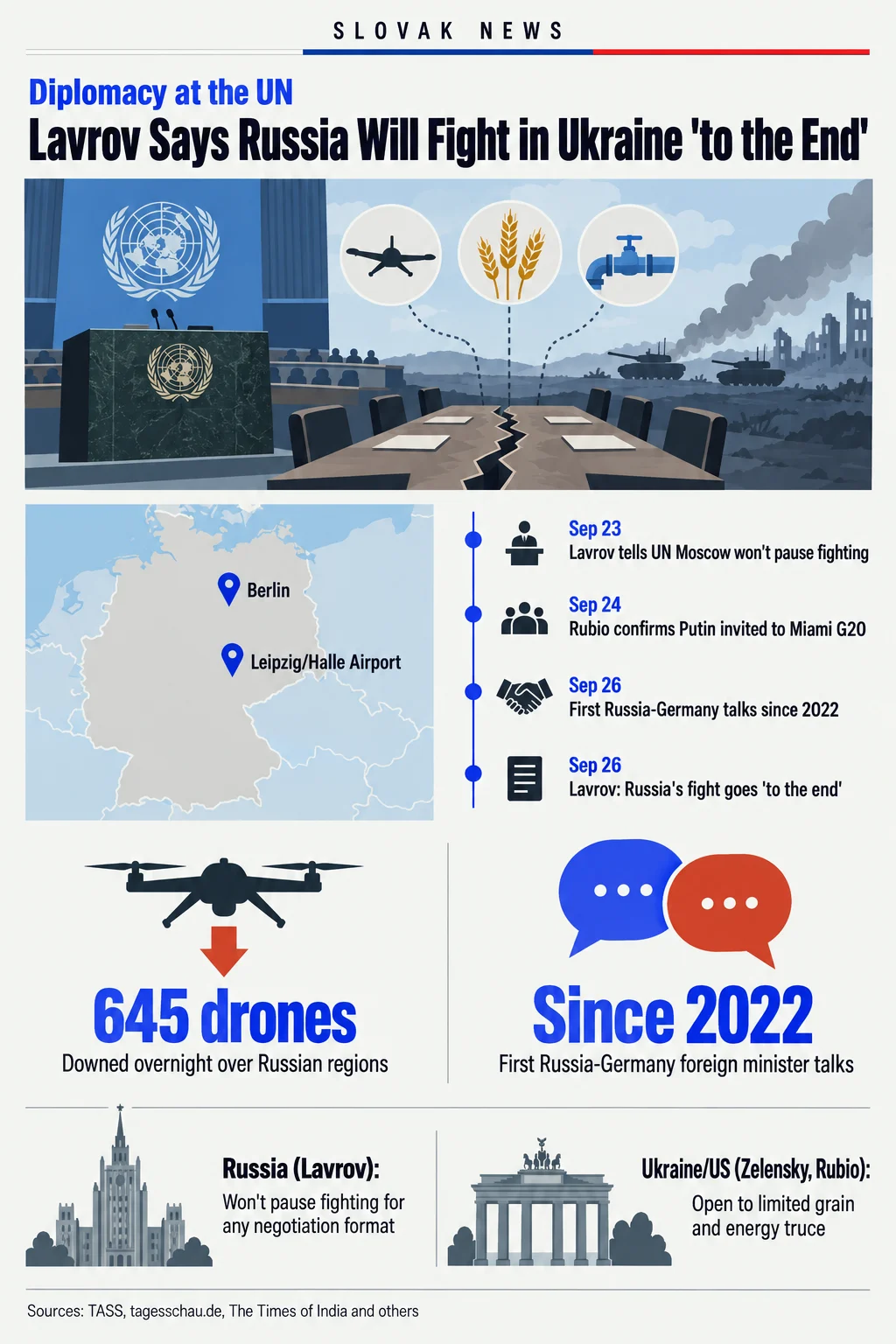
Infographic text
Lavrov said Russia will keep fighting in Ukraine until its goals are met, even as he met Germany's and the US's top diplomats at the UN.
- Lavrov: Russia won't pause fighting for any negotiations format
- First Russia-Germany foreign minister talks since 2022 held
- Rubio confirms Trump invited Putin to Miami G20 in December
- Russia and Ukraine show interest in limited grain/energy ceasefire
- Germany blames Russia for Leipzig drone incident, closes consulate
Listen to the story
Short version · read by a synthetic voice
What's new
- Lavrov met German Foreign Minister Wadephul, the first Russia-Germany top-diplomat talks since 2022
- Lavrov and Rubio held about an hour of talks; Rubio confirmed a US invitation for Putin to the Miami G20
- Lavrov told the UN Security Council Russia will not accept a pause in fighting
- Lavrov said at a press conference Russia's struggle will continue 'to the end' and its military goals will be met
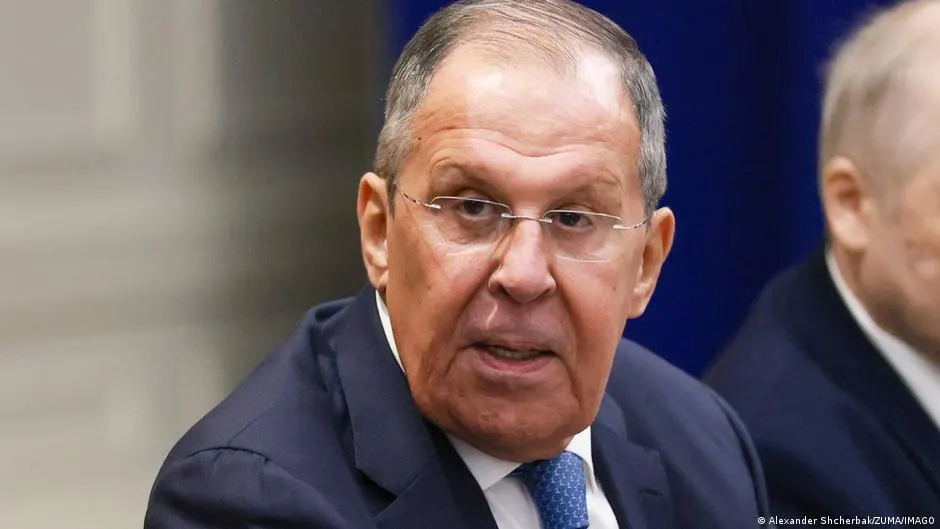
Russian Foreign Minister Sergey Lavrov said in New York during the 81st UN General Assembly high-level week that Russia will continue fighting in Ukraine until its goals are achieved, even as he held a first-since-2022 meeting with Germany's foreign minister and an hour-long session with US Secretary of State Marco Rubio.125
Meeting with Germany
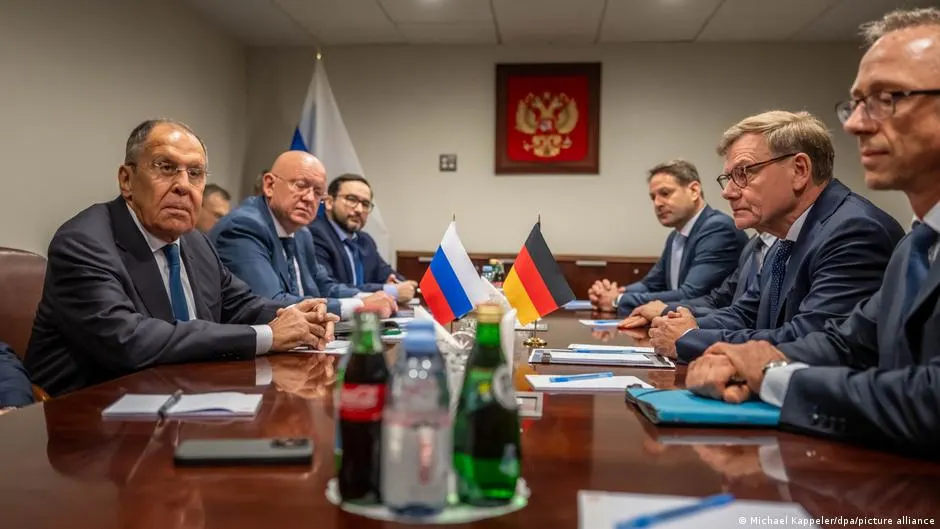
On the margins of the UN General Assembly, Lavrov sat down with German Foreign Minister Johann Wadephul for a meeting that the Times of India and Reuters both characterized as the two nations' first foreign-minister-level engagement since Russia's invasion of Ukraine began in 2022. Wadephul pressed Lavrov to make every effort toward securing a Black Sea grain-export deal, arguing that a practical breakthrough on that front could pave the way for additional tangible progress.34
Lavrov said Russia had already discussed proposals for safe Black Sea navigation with India, Egypt and Turkey. Wadephul restated Germany's stance on the conflict, called on Moscow to halt what he described as a hazardous escalation targeting Germany, Europe and NATO, and insisted episodes like the suspected Leipzig/Halle airport drone incident would not diminish Germany's backing of Ukraine. Earlier this month Germany blamed Russia for that incident and said it would shut down a Russian consulate and a cultural centre in Berlin, while Moscow's embassy rejected the claim as a staged provocation, the Times of India and Reuters reported.34
After the meeting, Lavrov told the German press agency dpa that he saw no progress, and said Germany had requested the meeting the previous day at the last minute. Maria Zakharova had earlier said it was the German side that asked for the talks. Another account circulating on the margins of the UN gathering held that Lavrov had signalled readiness for talks through third states and that Wadephul agreed to a meeting for the first time; German commentator Arnd Henze suggested the conversation could be linked to serious diplomatic efforts behind the scenes, with a possible window for concrete negotiations opening before the December G20 meeting in Miami.2
Talks with Washington and the G20 invitation
Before addressing the Security Council, Lavrov met Rubio for about an hour, in what Deutsche Welle described as the fifth meeting between the two countries' foreign-policy chiefs since 2025. Rubio said at the UN General Assembly that Washington remained ready to play a constructive role in achieving a ceasefire, and confirmed that Trump had invited Putin to the G20 summit in Miami in December, adding he hoped Putin would accept.5
Rubio noted that both Moscow and Kyiv had signaled openness to a narrow ceasefire limited to grain and energy targets, while cautioning that such an arrangement would fall short of ending the war even if it softened some of its worldwide economic fallout. According to Reuters, Ukraine and its partners were working urgently to lock in narrow deals covering energy infrastructure and Black Sea shipping ahead of the winter season.74
Lavrov's position on ending the war
Speaking to the Security Council, Lavrov said Russia would not pause military actions for negotiations with Ukraine in any format, arguing that Europe wanted a pause so Kyiv could gain a respite and replenish depleted military arsenals. He said Russia was ready for negotiations to achieve a stable, just peace only if demands including the demilitarisation and 'denazification' of Ukraine were met.54
Speaking to reporters afterward, Lavrov said Wadephul's prepared remarks contained nothing he had not already heard, and asserted that Russia's fight for what he termed truth and justice would continue until the finish, with the special military operation's objectives fulfilled. He charged Western nations with arming Ukraine and assisting in guiding drones and missiles toward civilian populations and infrastructure.12
According to TASS, Lavrov said security threats to Russia, which he attributed to Kiev, would be eliminated and that peaceful life would be restored. He said Europe was displaying what he termed unabashed backing for Nazism in Ukraine, pointing to unnamed analysts who claim Europe is constructing a 'Fourth Reich.' He further asserted that German Chancellor Friedrich Merz had repeatedly voiced an ambition to restore Germany's status as Europe's foremost military power, and alleged that several European countries were erasing the memory of those who defeated Nazism, both from school textbooks and by tearing down monuments. These claims rest on the TASS account alone.1
Military details
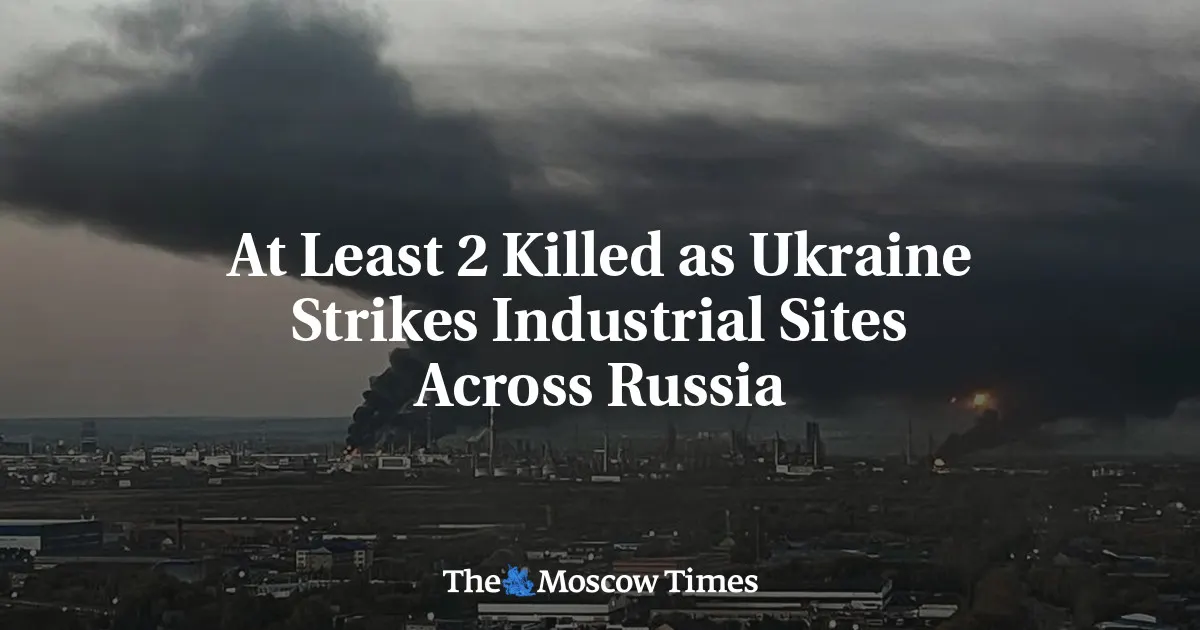
Citing Russian military sources, TASS reported that Russian air defenses shot down 645 drones overnight across Russian regions, the Black Sea and the Sea of Azov, and that fixed-wing Ukrainian drones were intercepted above multiple Russian territories and Crimea. Lavrov additionally indicated Russia could consider moving S-400 missile systems from Turkey to another friendly nation should such a request come in, adding that no such request had so far been made.1
Ukraine's position
Addressing world leaders at the United Nations, President Volodymyr Zelensky said Ukraine would retaliate and inflict a harsh winter on Russia absent an agreement to halt energy-related strikes, cautioning that "Ukrainians understand that this winter could be very harsh for us. But in response, we will have no choice but to make it painful for Russia too." Separately, at a Crimean Platform summit, he said Kyiv stood ready for a maritime truce in the Black Sea, stating Ukraine was prepared "to ensure safe shipping and food security in the Black Sea if Russia is ready to take real steps towards de-escalation too." Reuters noted that senior diplomats from Britain, France and Denmark issued sharp denunciations of Russia's war, and that major wheat-importing nations across Asia, the Middle East and Africa faced difficulty obtaining supplies amid rising global wheat prices.4
Why it matters
The rare direct contacts between Moscow, Berlin and Washington, alongside Lavrov's public rejection of a pause in fighting, indicate that any near-term de-escalation is likely to remain limited to specific issues such as grain and energy infrastructure rather than a broader ceasefire. For Europe, the outcome affects both security planning around alleged Russian hybrid attacks and the stability of Black Sea grain routes that shape global food prices.24
How the story unfolded
The story's events over time. Click a person, place or related story.
What we know
- Russia rejected any pause in military action against Ukraine.
- Lavrov and Wadephul met for the first time since 2022, focused on Black Sea grain exports.
- Lavrov and Rubio met, and the US formally invited Putin to the Miami G20 in December.
- Germany blames Russia for a drone incident at Leipzig/Halle Airport and closed Russian diplomatic facilities in Berlin.
- Ukraine has said it is open to a maritime truce and blames Russia for the war's consequences.
What we don't know yet
- Whether Putin will accept the G20 invitation.
- Whether a Black Sea shipping or energy-truce agreement will be reached before winter.
- Whether Lavrov's claims about a European 'Fourth Reich' and Nazism reflect any independently verified assessment.
- Whether the Wadephul-Lavrov meeting will lead to further diplomatic contacts.
Timeline
- Sep 23Lavrov told the UN Security Council that Europe wanted a pause to arm Kyiv and that Moscow would not accept a temporary halt in hostilities.4
- Sep 23Lavrov held talks with Rubio, after which Rubio said Russia and Ukraine had voiced interest in a limited ceasefire on grain and energy targets.47
- Sep 23Zelensky warned Moscow at the UN that Ukraine would strike back and make winter painful for Russia absent an energy-attacks truce.4
- Sep 23Zelensky told a Crimean Platform summit that Kyiv was ready for a Black Sea maritime truce.4
- Sep 24Lavrov stated Russia would not pause military actions for negotiations with Ukraine in any format.5
- Sep 24Rubio said the US invited Putin to the December G20 summit in Miami and hoped he would accept.5
- Sep 26Lavrov and Wadephul held the first Russia-Germany foreign minister talks since 2022 on the sidelines of the UN.34
- Sep 26Lavrov delivered his UN General Debate speech, accusing European states of warmongering, and later told a press conference Russia's fight would continue to the end.21
Quotes
Unser Kampf für Wahrheit und Gerechtigkeit wird bis zum Ende geführt
Sie hätten mich einfach anrufen und mir sagen können 'Lesen Sie meine Erklärung'.
Europe, whatever it thinks, just wants to get a pause, and it wants to use it to pump the Kyiv regime with weapons,
Ukrainians understand that this winter could be very harsh for us. But in response, we will have no choice but to make it painful for Russia too,
Related stories
Version history
- version 1 · 27 September at 07:59