Climate · State of Palestine
Nearly everyone in Gaza needs help after flooding, Unicef representative says
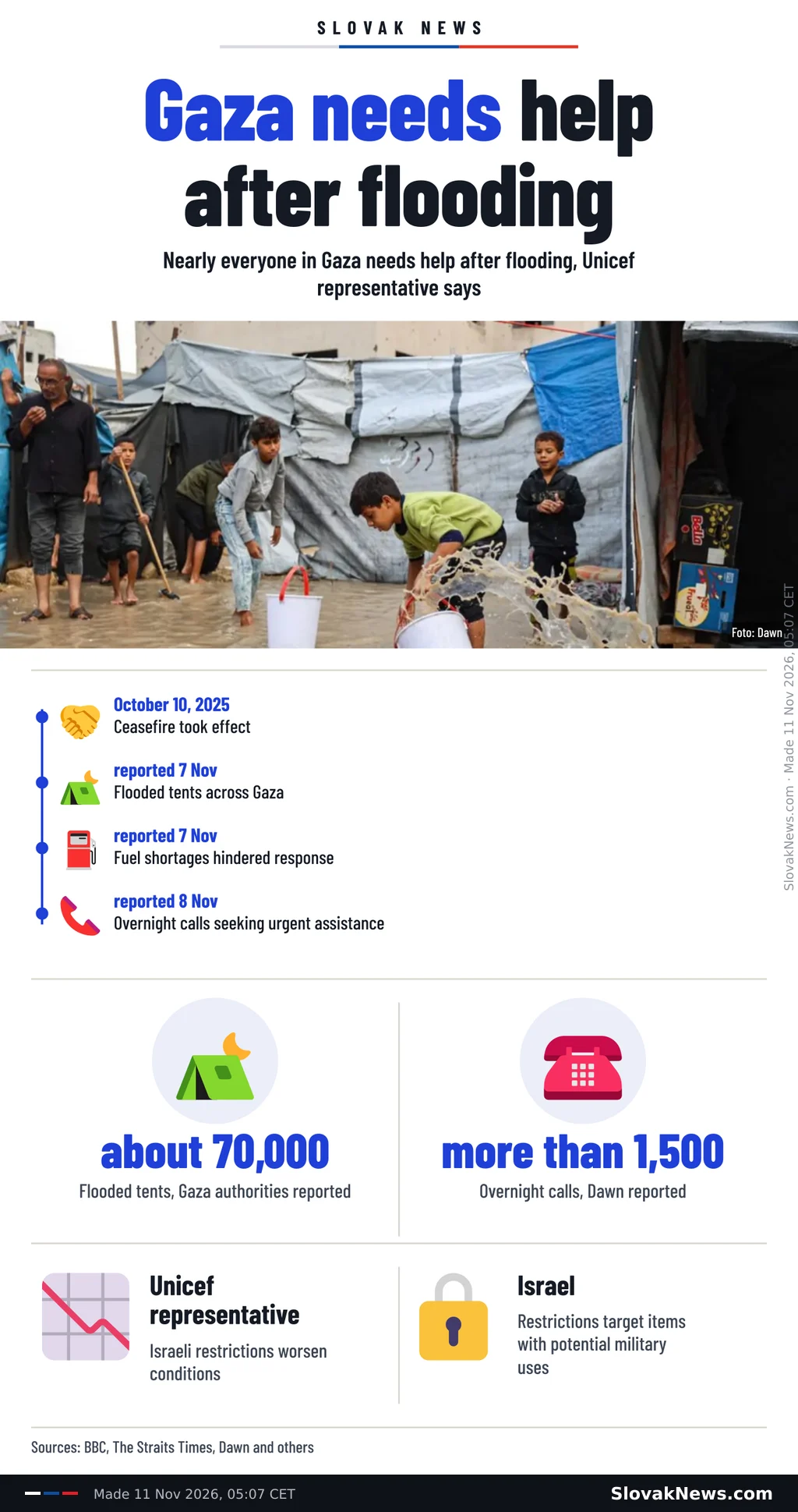
About 70,000 tents flooded, Gaza authorities said. Unicef’s representative said Israeli restrictions and UN budget cuts were worsening the humanitarian response.
Listen to the story
Short version
Unicef’s representative says almost everyone in Gaza needs help following widespread flooding.
- Gaza authorities reported about 70,000 flooded tents.
- Collapsing walls and roofs injured people, some critically.
- Unicef’s representative cited Israeli restrictions and UN budget cuts as obstacles.
- Israel says its restrictions target items with potential military uses.
- Aid agencies warned conditions could worsen during the rainy season.
Infographic
What's new
- Unicef representative Jonathan Veitch said almost everyone in Gaza needs help.
- Veitch said Israeli restrictions on machinery and engine oil were worsening conditions; Israel says it restricts items with potential military uses.
- UN budget cuts have reduced available tents and protective sheeting, Veitch said.
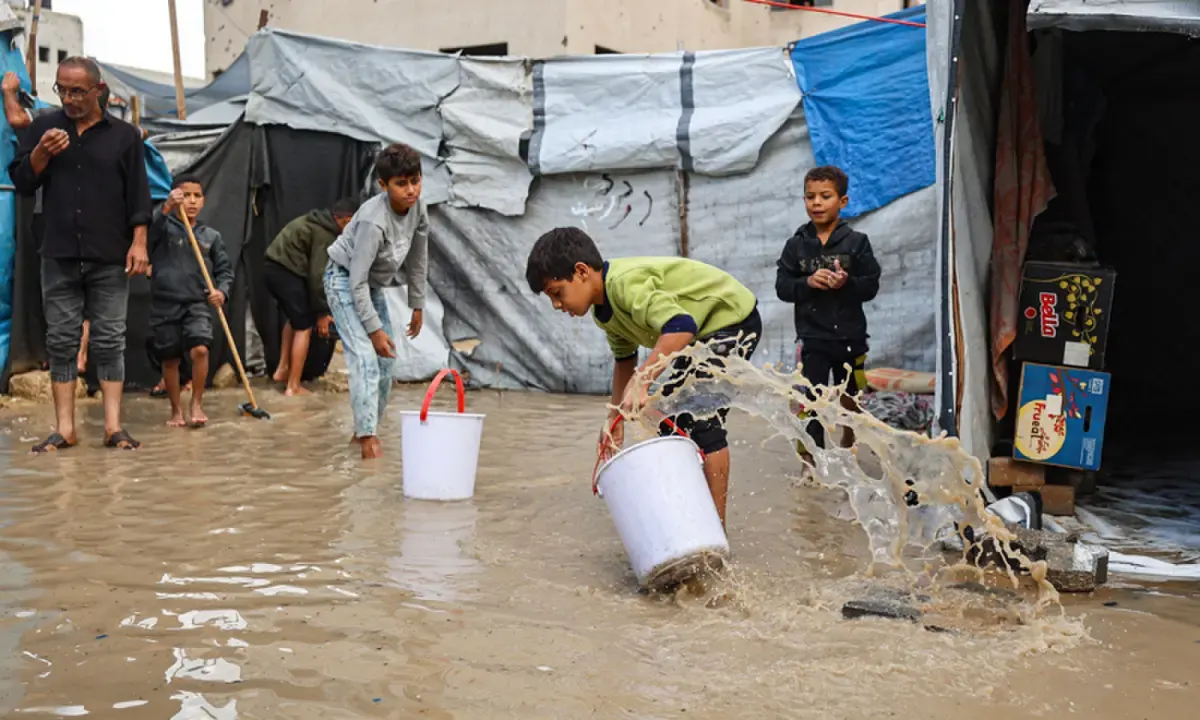
Almost everyone in Gaza needs help following heavy flooding, Unicef’s representative for Palestine, Jonathan Veitch, told the BBC. Gaza’s Hamas-run government said about 70,000 tents had flooded, while Veitch said Israeli restrictions and shortages of shelter supplies were worsening conditions.1
Infographic
Flooded shelters and collapsing structures
The rain soaked bedding and swept away shelters, The Straits Times reported. Gaza resident Olfat Magdoub described the conditions inside her tent: “Same now, the mattresses are wet so we sleep on the ground.” Her account described how flooding had affected both shelter and sleeping arrangements.2
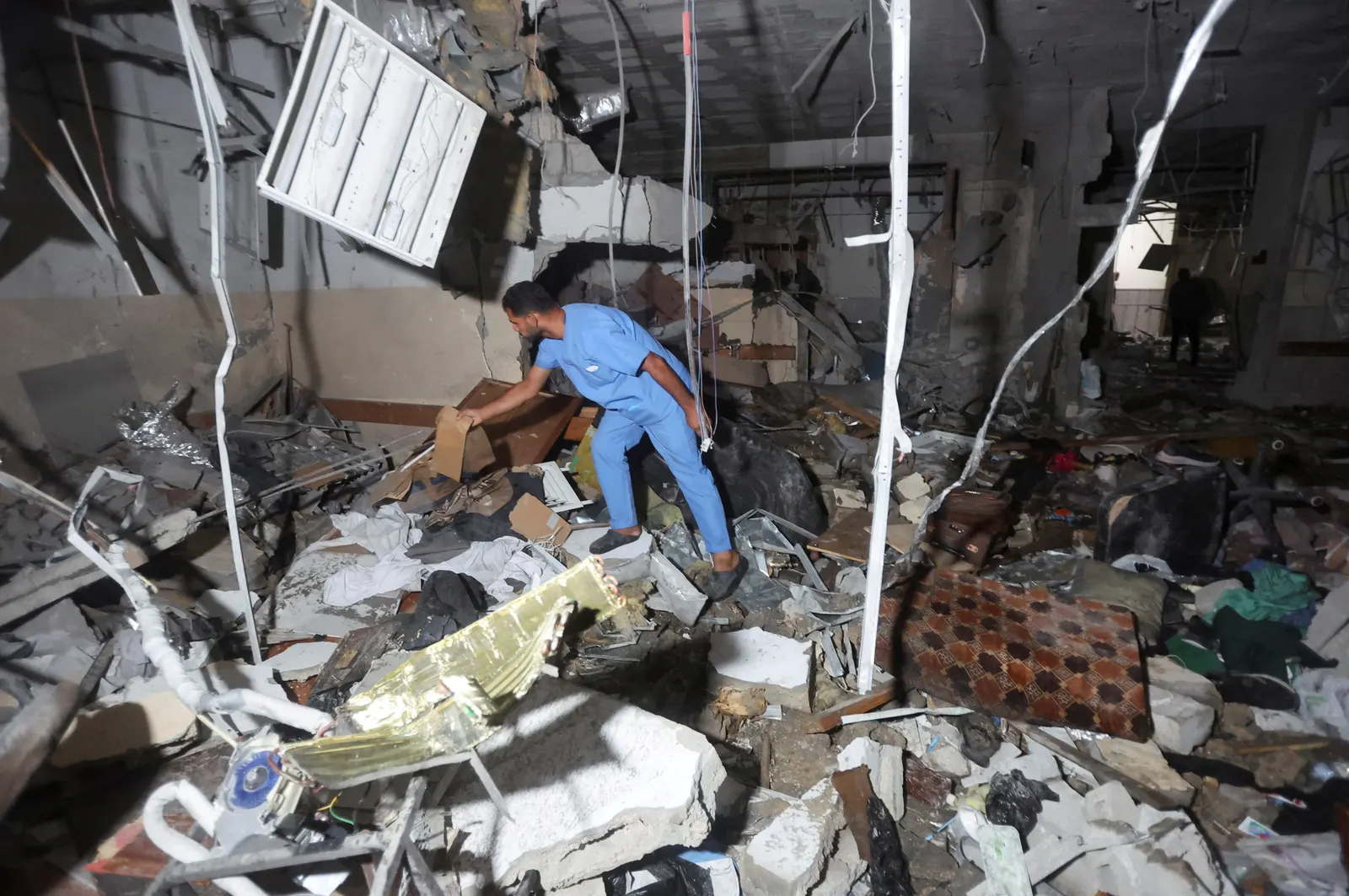
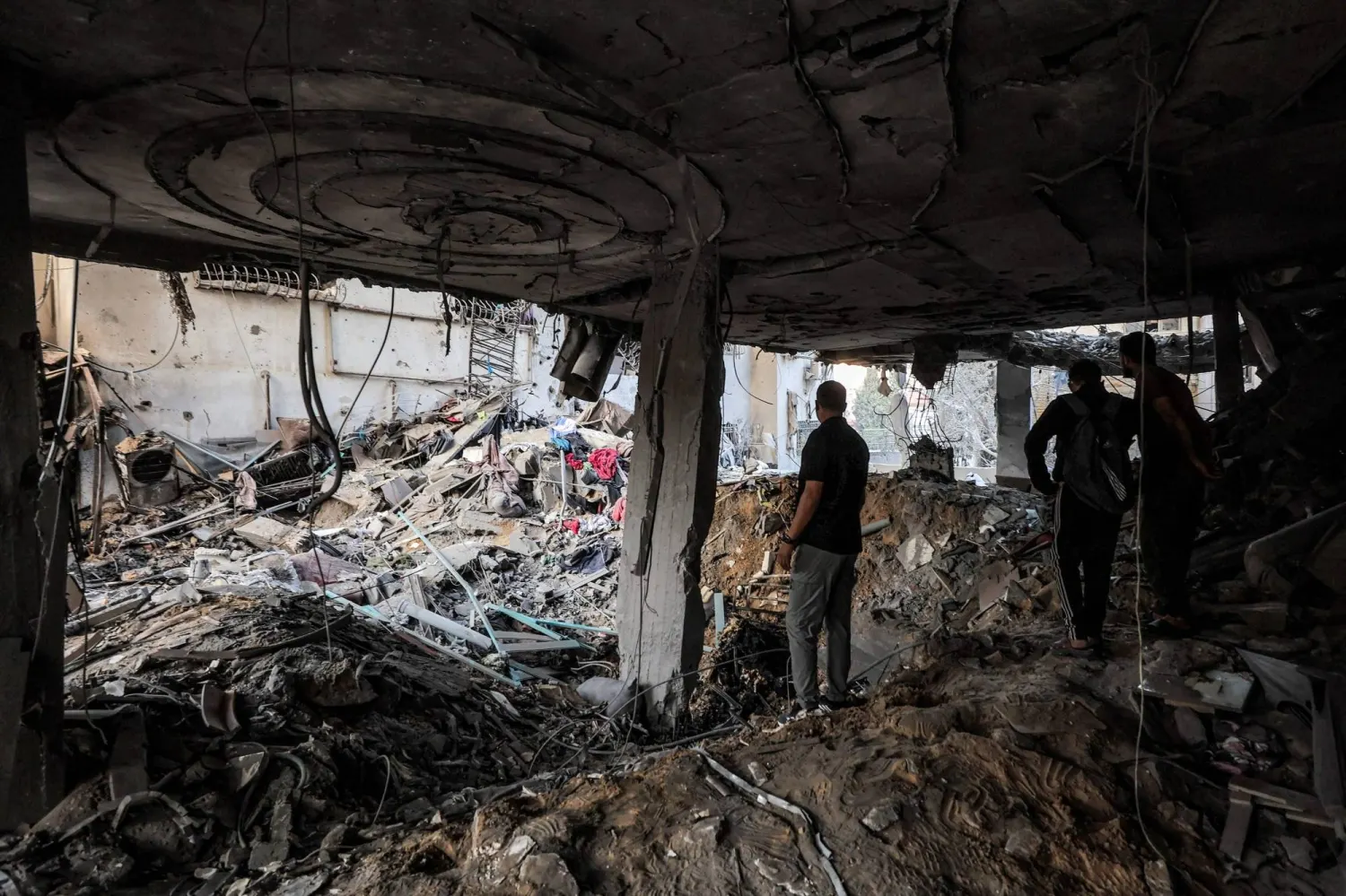
Walls and roofs already showing cracks collapsed in several parts of Gaza, injuring people, some critically, according to Gaza authorities cited by Dawn, The Japan Times and the BBC. The Japan Times reported dozens of such collapses. Separately, The Straits Times reported that three unoccupied houses had collapsed without injuring anyone.1234
The Straits Times reported no fatalities from the flooding. Both it and the BBC reported at least 70,000 tents flooded over the preceding 12 hours, while Dawn and The Japan Times described about 70,000 tents affected during the first day of rain.1234
The BBC reported that 90% of Gaza’s residents had been displaced by Israel’s war against Hamas. Deir al-Balah resident Maryam Odeh, 34, lives there with her children and said: “We no longer know how to protect our children.” Khaled al-Najjar, 41, voiced concerns about disease, low temperatures and flooding.1
Emergency services seek assistance
Unicef representative Jonathan Veitch, interviewed by the BBC while in the central Gaza city of Deir al-Balah, said nearly the entire population required assistance. He described people stopping aid workers in the street to plead for assistance. Aid agencies warned that conditions were likely to worsen as the rainy season begins.1
Civil defence spokesman Mahmoud Bassal said teams had received more than 1,500 overnight calls from residents seeking urgent help after their tents flooded, Dawn reported. He said the service lacked equipment and operational capabilities and appealed for immediate assistance from international and humanitarian organisations.3
Municipal and civil defence officials said fuel shortages and damaged equipment prevented them from coping with the storm, according to The Straits Times. The newspaper also reported officials’ account that Israel had destroyed hundreds of vehicles during the war against Hamas, including bulldozers and vehicles used to pump water.2
A coalition of Palestinian civil society organisations warned of risks from disease and epidemics, Dawn reported. It called for pressure on Israel to permit humanitarian aid without restrictions. Gaza city council member Mustafa Qazzaat said Gaza urgently needed 200,000 prefabricated homes, along with heavy machinery, road clearance, electricity and heating.3
Aid access and reconstruction
Hamas blamed Israel for blocking shelters and construction materials, The Straits Times reported. COGAT, the Israeli military agency coordinating aid, said it had stepped up work with international organisations to improve sanitation before the anticipated rain. It said the International Committee of the Red Cross brought four more vacuum trucks into Gaza that week, after eight arrived during the preceding month.2
Veitch said Israeli restrictions on heavy machinery and engine oil were making the situation worse. He also said UN budget cuts meant fewer tarpaulins, plastic sheets and tents were available. Israel says it restricts entry of items that could be used for military purposes, the BBC reported.1
The US-brokered ceasefire came into force in October 2025, according to the BBC. The Straits Times reported little progress on reconstruction under the arrangement and said negotiators had not reached agreement on Hamas disarming or Israeli troops withdrawing. The BBC reported that Israeli air strikes had continued almost daily since the ceasefire, with Gaza’s Hamas-run health ministry reporting 1,580 people killed since it took effect.12
Why it matters
Flooding is compounding shelter and sanitation needs among a population that the BBC reports is 90% displaced. Aid agencies warned that conditions could deteriorate as the rainy season begins, while Palestinian civil society organisations warned of disease risks.13
Videos
Related stories
same place
Version history
- version 2 · Adds Unicef’s assessment of widespread need, reported restrictions and shelter shortages, residents’ accounts and updated ceasefire context, while aligning citations with the current dossier.
- version 1 ·