World · Yemen, Saudi Arabia
Houthis report renewed Saudi strikes on Sana’a and other Yemeni provinces
Houthi-linked media reported explosions and fresh Saudi airstrikes in Yemen’s capital after earlier alleged attacks across several provinces. Saudi confirmation and full casualty figures were not available.
Houthi sources reported renewed Saudi strikes on Sana’a amid competing claims of attacks across Yemen and Saudi Arabia. The latest strikes, casualty figures and a reported coastal offensive remain unconfirmed.
- Explosions and renewed strikes were reported in Sana’a.
- Casualties from the latest attack were not immediately known.
- The coalition reported intercepting Houthi missiles and drones.
- The Houthis claimed an attack on an Aramco site.
- One report said Riyadh was planning a coastal offensive.
What's new
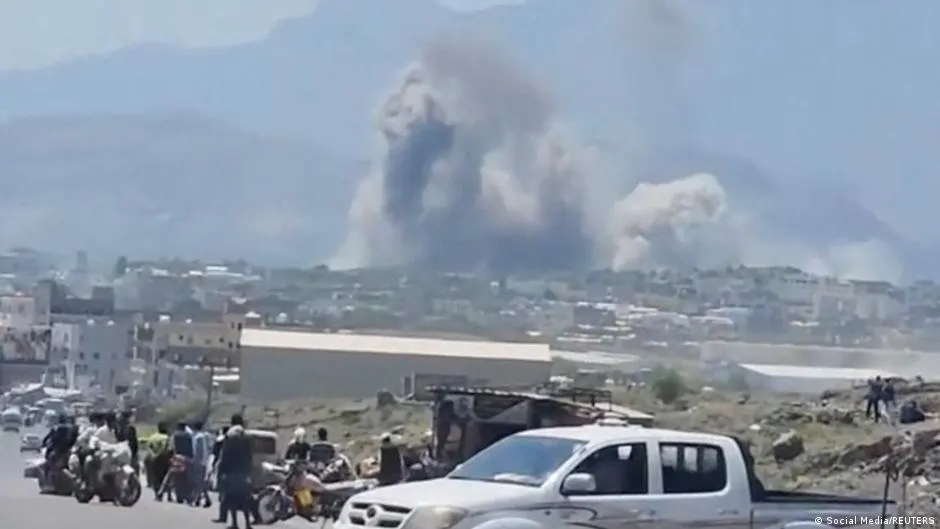
- Explosions and renewed strikes were reported in Sana’a on Oct 4. [s5]
- Casualties from the latest reported strikes were not immediately known. [s5]
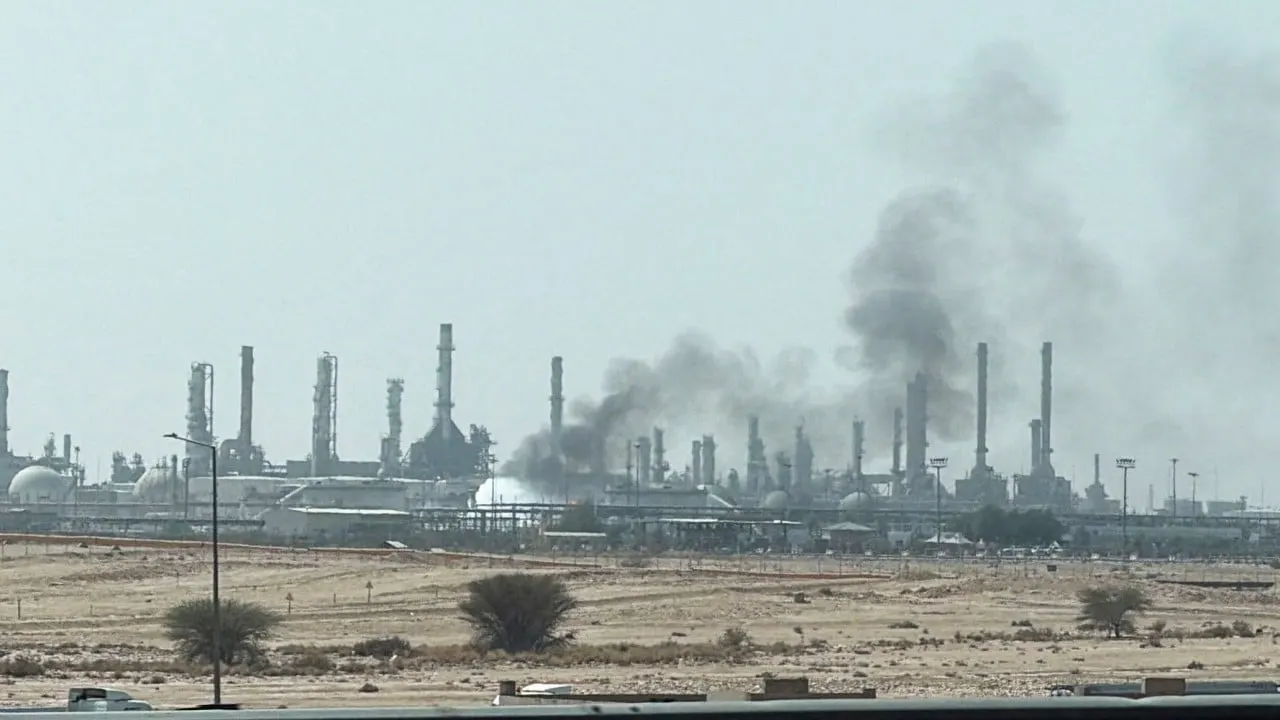
- The Houthis also claimed an attack on an Aramco site in Riyadh. [s3]
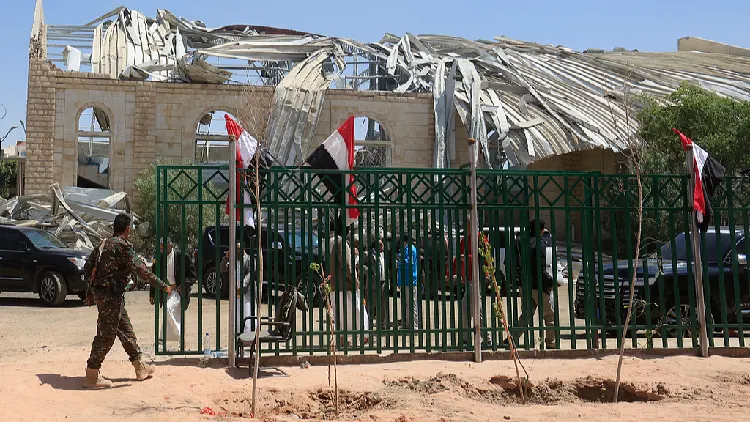
Loud explosions were reported in Yemen’s Houthi-held capital, Sana’a, on Oct 4 as the Houthi-run Al Masirah television channel said Saudi Arabia had carried out renewed airstrikes against positions in the city; casualties were not immediately known.5
Reports of strikes across Yemen
The latest account followed an Oct 1 claim by Ansar Allah, the Houthi movement, that the Saudi-led coalition had struck Sana’a and the provinces of Amran, Saada and Taiz. Information about casualties and damage from those reported attacks was unavailable at the time, according to the report.2
Houthi military spokesman Yahya Saree separately said Saudi aircraft had carried out 47 missile strikes during the preceding 24 hours, hitting what he described as civilian facilities in Saada, Taiz and Al-Jawf. That account was not independently confirmed in the available reporting.2
A separate report on Oct 2 cited a Houthi claim that Saudi Arabia had conducted 94 airstrikes over 24 hours, using aircraft and missiles against sites described as civilian in six provinces. The same report said the alleged attacks had caused civilian deaths and injuries and put the number of Saudi strikes since the escalation began at 1,350; those figures came from a single source.1
Cross-border claims
The Saudi-led coalition said on Oct 1 that Saudi air defences had intercepted two ballistic missiles over Jizan and Khamis Mushait and that four drones heading towards Khamis Mushait had been brought down. A further coalition account reported on Oct 2 said three Houthi ballistic missiles aimed at Khamis Mushait had been intercepted and destroyed.12
The same Oct 1 reporting said Ansar Allah had been accused of launching a drone towards a power plant in Medina on Sept 29, an allegation the Houthis denied. No independent confirmation was provided in the available material.2
On Oct 3, the Houthis claimed they had attacked an Aramco site in Riyadh. Saree said ballistic missiles and drones were used. An AFP journalist separately reported seeing smoke and flames at a Saudi Aramco facility south of the capital, while there was no immediate Saudi confirmation of the reported attack.3
Threats and a possible coastal offensive
The Houthis threatened on Oct 2 to attack bridges in Saudi Arabia in response to the alleged Saudi air campaign. A Sana’a military source rejected Saudi descriptions of Yemeni bridges as missile-launching sites, saying: “Civilian bridges are not used for military purposes”.1
The Jerusalem Post reported that Saudi Arabia was preparing an operation intended to loosen Houthi control of Yemen’s coast and protect Red Sea shipping routes. According to that single-source account, Yemeni ground forces under Riyadh’s oversight would lead the operation with Saudi air support, and more than 100,000 troops could be mobilised depending on its scope.1
The report said Saudi officials were considering either a limited operation around the Bab al-Mandab Strait or a broader campaign on several fronts. It also said the Houthis had taken parts of the coast during the previous month, particularly near Bab al-Mandab, the Red Sea’s southern exit and a shipping passage between the Mediterranean and Asia. Saudi and Yemeni government representatives, the Houthis and the US military did not immediately respond to requests for comment, according to the report.1
Why it matters
The reports concern fighting near Bab al-Mandab, which is described as the southern outlet of the Red Sea and a major maritime route between the Mediterranean and Asia. Any military operation focused on that passage would therefore involve a shipping corridor directly connected to the Mediterranean.1
Related stories

same actors

Version history
- version 1 ·