World · Yemen
Yemen’s Al-Alimi announces operation to retake Houthi-held territory
The campaign was announced as Houthi forces pressed government positions near Taiz and consolidated control around the Bab al-Mandeb strait. Saudi Arabia was expected to conduct aerial operations while allied Yemeni forces fought on the ground.
Listen to the story
Short version
Yemen’s internationally recognised leadership has announced an operation to recover Houthi-controlled territory. The campaign follows Houthi advances around Taiz and the Bab al-Mandeb area.
- Al-Alimi announced the operation on October 4.
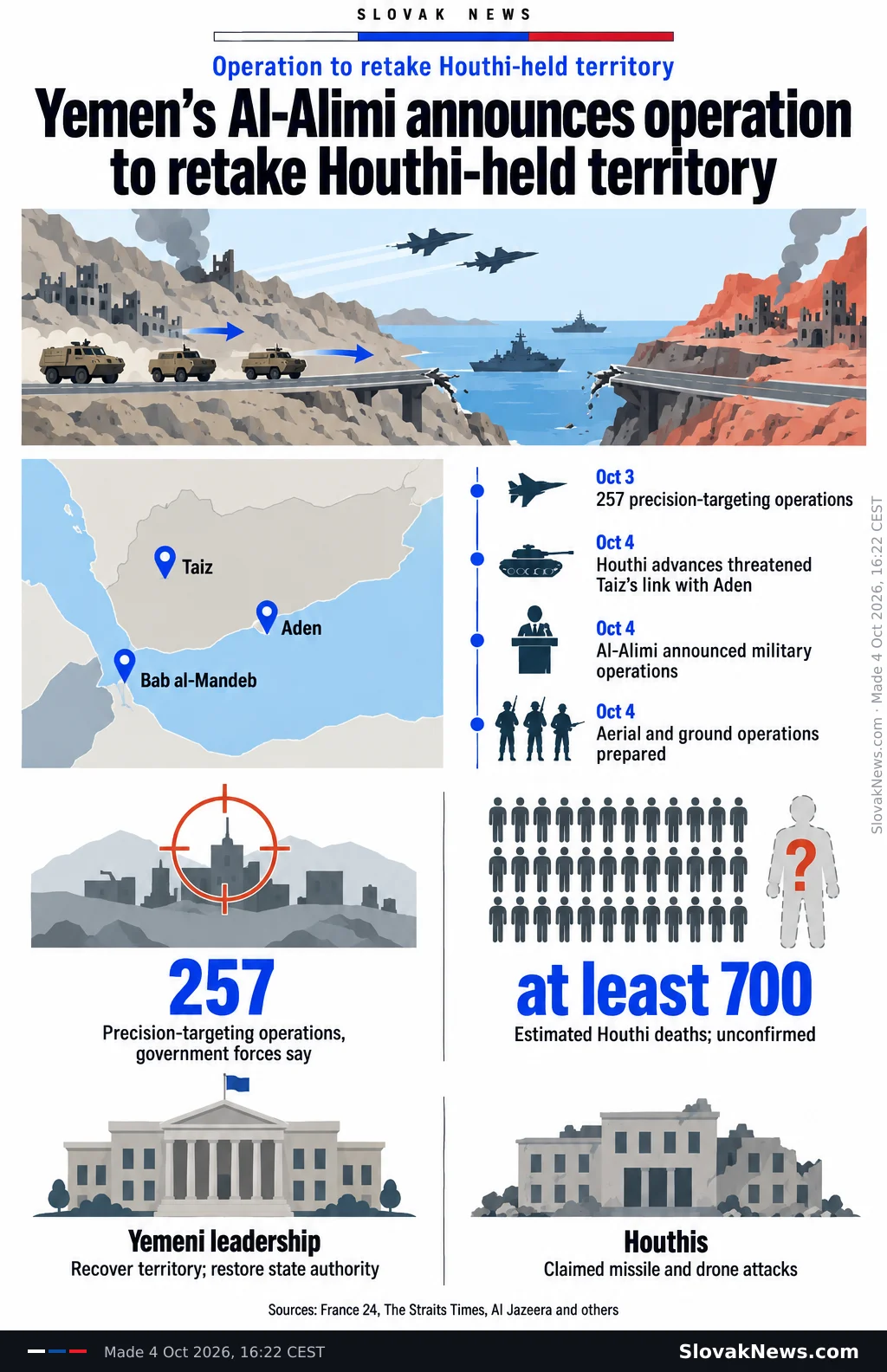
- Government forces reported 257 targeting operations.
- Houthi advances threatened Taiz’s link with Aden.
- Saudi Arabia was expected to lead aerial combat.
- Reported casualty figures remain unconfirmed.
Infographic
What's new
- Al-Alimi announced operations to restore state authority across Yemen.
- Government forces reported 257 targeting operations against Houthi military assets.
- Houthi advances threatened the remaining road between Taiz and Aden.
- Saudi and Yemeni allies were preparing coordinated air and ground operations.
Rashad al-Alimi, head of Yemen’s Presidential Leadership Council, announced on October 4 the start of military operations intended to recover remaining Houthi-held territory and restore the internationally recognised government’s authority across Yemen.1234
Infographic
Government mobilises forces
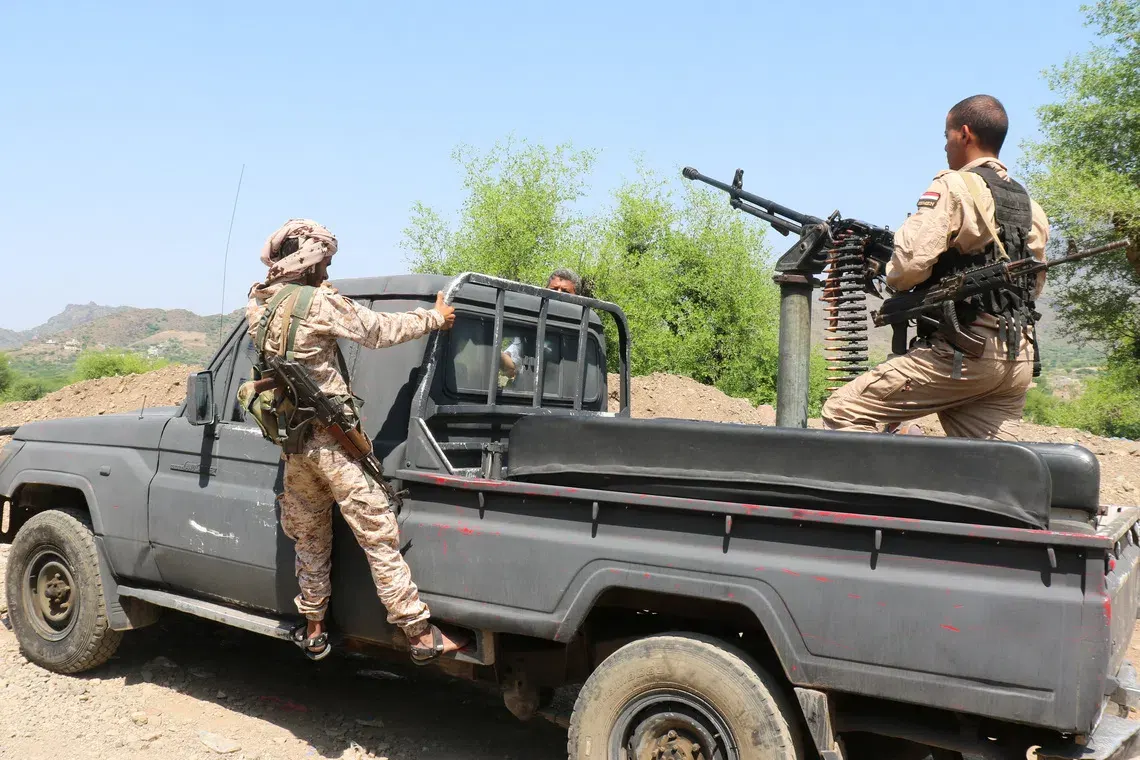
Al-Alimi, who is also supreme commander of the armed forces, ordered the military, security services and other formations to carry out approved plans. He also placed military, security and civilian state institutions on full alert and instructed the government to prepare for state bodies to resume their responsibilities in recovered cities, districts and governorates.37
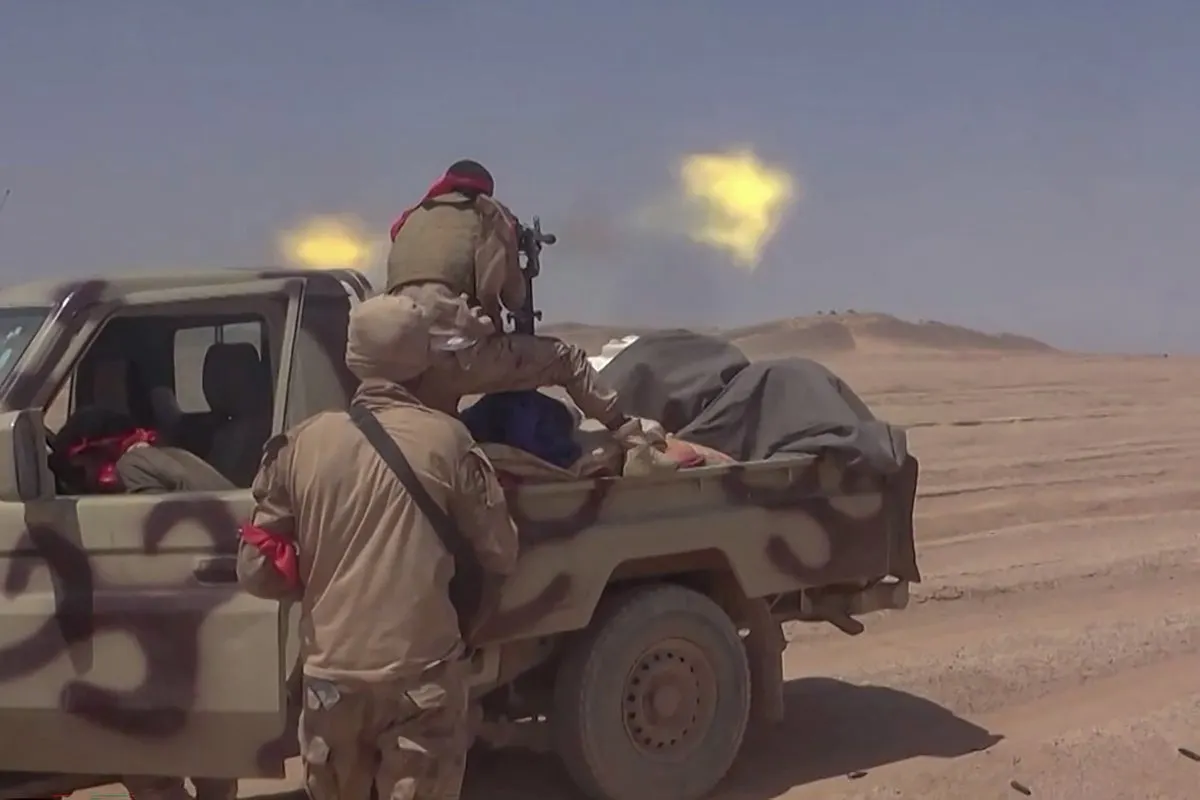
The government said its forces carried out 257 precision-targeting operations on October 3 against Houthi positions, movements and military capabilities. The reported targets included command centres, reinforcements, weapons stores and supply lines, while the coalition used warplanes, drones, artillery, missiles and snipers.37
Colonel Majed Abdullah al-Nazili, a spokesman for the internationally recognised government’s forces, said initial field estimates indicated that at least 700 Houthi members had been killed and 170 military vehicles or other combat assets destroyed. Those casualty and damage figures have not been independently confirmed in the dossier.7
Al-Alimi said residents of Houthi-controlled areas were not targets and urged them to avoid Houthi gathering points and prevent children from being drawn into the fighting. He described the operations as directed neither against civilians nor against any sect or tribe.67
Pressure around Taiz and the coast
The announcement came after the Houthis captured strategically important elevated terrain from government and local forces near Taiz. Reports said the group was moving towards the remaining road linking Taiz with Aden; control of that route would place Taiz under an effective siege.24
France 24 reported that Houthi forces had already taken al-Safiya, seized its police station and halted traffic on the main supply road, effectively encircling government-held Taiz. Farea Al-Muslimi said: “They've achieved the military objective of isolating Taiz from Aden, even if they haven't fully taken control of it”.1
Separate reports said the Houthis had seized the strategic Bab al-Mandeb strait during a rapid advance along the coast and were seeking mountains overlooking the area. Mohammed Al-Qadhi, a Yemeni journalist and political analyst from Taiz, said possession of the high ground would protect the Houthis’ rear and complicate attempts to recover the coastal territory.24
Saudi role and widening exchanges
Reports said Saudi Arabia and allied Yemeni troops were preparing an offensive, with Saudi forces taking charge of air operations and Yemenis fighting on the ground. In 2015, Saudi Arabia joined Yemen’s civil war as leader of an Arab coalition backing the internationally recognised government.24
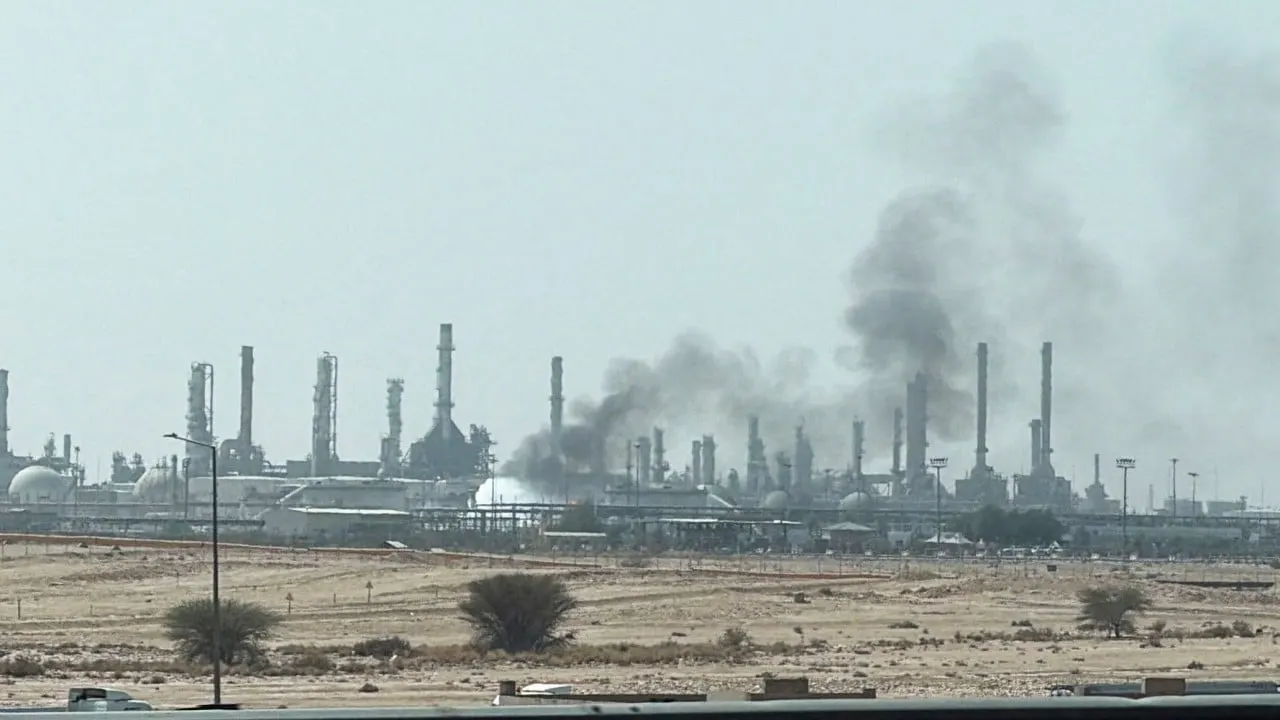
The Houthis claimed to have struck Saudi Aramco sites in Riyadh and Khurais with drones and ballistic missiles, setting off major fires. They said the attacks were retaliation for 50 air and missile raids in Yemen by the Saudi-led coalition. The Associated Press separately reported a Houthi claim that air strikes hit Sanaa around midnight.245
The latest fighting adds to a conflict in which the Houthis drove the internationally recognised government from Sanaa. The Straits Times and The Jerusalem Post cited reports that intensified combat had caused hunger among three out of four families in some parts of Yemen, forced tens of thousands from their homes and interrupted supplies for millions.24
Why it matters
The fighting encompasses the Bab al-Mandeb strait, described in the dossier as a vital route for global oil shipments, giving the conflict consequences beyond Yemen and direct relevance to European readers. The renewed combat also compounds hunger, displacement and supply disruption affecting civilians.24
Related stories
Version history
- version 1 ·