World · Afghanistan, Netherlands
ICC unseals four Taliban warrants over alleged gender persecution
The court disclosed warrants for four senior Taliban figures accused of persecuting women, girls and others in Afghanistan. Arrests remain unlikely while the Taliban controls the country and the ICC lacks its own police force.
The ICC has unsealed four warrants accusing senior Taliban figures of gender and political persecution in Afghanistan. The Taliban government rejects the court, and arrests remain unlikely.
- Four senior Taliban leaders are named
- Allegations cover persecution since the 2021 takeover
- Women and girls were allegedly targeted because of gender
- The alleged conduct includes torture, rape and enforced disappearance
- The ICC has no police force
What's new
- Four arrest warrants were unsealed with redactions
- Two education ministers were named in additional warrants
- Judges detailed alleged abuses linked to Taliban policy
- Afghanistan’s government rejected the court’s authority
The International Criminal Court on October 5, 2026, unsealed arrest warrants for four senior Taliban leaders, including Afghanistan’s education and higher education ministers, over alleged persecution in Afghanistan since the Taliban returned to power in 2021. The accusations concern policies directed at women, girls and people whose sexuality or gender identity was deemed contrary to Taliban rules.234
Four senior figures named
The four suspects are Taliban supreme leader Hibatullah Akhundzada; Abdul Hakim Haqqani, the head of Afghanistan’s Supreme Court; Education Minister Habibullah Agha; and Higher Education Minister Neda Mohammad Nadeem. The warrants for Akhundzada and Haqqani were authorised in July 2025, while those for the two ministers were issued on September 9, 2025, according to France 24’s account of the court’s announcement.1234
The ICC’s Pre-Trial Chamber II unsealed the four warrants with redactions after determining that publication would not unduly harm continuing investigations, France 24 reported. According to that account, the court said disclosure could help prevent further alleged crimes and encourage international cooperation concerning Afghanistan.2
Alleged policy of persecution
Judges alleged that the four officials acted for the Taliban in carrying out a government policy that severely curtailed the rights and freedoms of Afghanistan’s civilian population. The affected rights included education, privacy and family life, freedom of movement and expression, and freedom of thought, conscience and religion.1345
The alleged conduct associated with that policy included murder, imprisonment, torture, rape and enforced disappearance. Women and girls were allegedly selected because of their gender, while other people were targeted because their sexuality or gender identity was viewed as incompatible with Taliban policy. The four leaders face accusations of persecution on gender and political grounds.1345
France 24 reported that the allegations against Agha and Nadeem relate to measures excluding girls older than 12 from school and women from higher education. The outlet said the court found reasonable grounds to believe that the two ministers had played important roles in implementing the supreme leader’s plans and that the alleged crimes occurred from the Taliban takeover until at least January 20, 2025.2
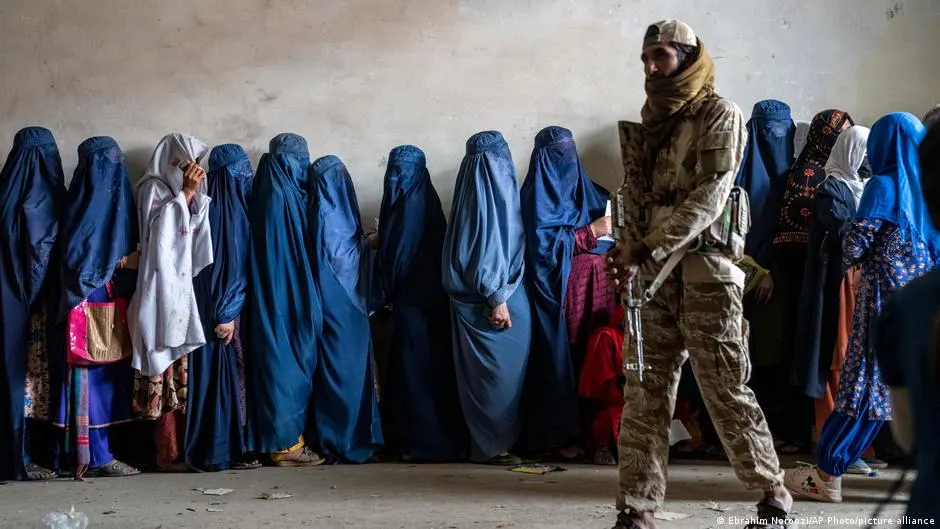
Since returning to power, the Taliban has restricted women’s access to employment, education beyond sixth grade and most public places, Deutsche Welle reported. It also said women must cover their bodies apart from their eyes when outside their homes and must travel with a male relative on long journeys.1
Enforcement obstacles and rejection
The likelihood of arrests is remote because the Taliban remains in control of Afghanistan and the ICC has no police force to detain suspects. The warrants nevertheless provide a basis for seeking international cooperation if any of the men comes within reach of authorities prepared to act on the court’s requests.234
Afghan government spokesman Zabihullah Mujahid condemned the decision and said Afghanistan did not recognise the ICC’s authority. In a separate development, France 24 reported that all 47 members of the UN Human Rights Council jointly condemned discrimination against Afghan women and girls and called on Taliban authorities to end the escalating, systematic repression identified by the council.1234
Why it matters
The court has said that publishing the warrants could encourage cooperation by the international community over Afghanistan. For readers in Europe, their practical significance therefore depends partly on whether governments assist the ICC if opportunities arise to detain the suspects, while immediate enforcement remains remote.234
Related stories
Version history
- version 1 ·