World · Italy, Egypt
Regeni Verdict Sparks Political Storm in Italy Over Ties With Egypt
Days after a Rome court convicted three Egyptian officials over researcher Giulio Regeni's 2016 kidnapping, Foreign Minister Antonio Tajani's trip to Cairo and remarks distancing Egypt from the ruling have triggered fierce opposition criticism and calls to sever relations with Cairo.
A Rome court convicted three Egyptian officials over Giulio Regeni's 2016 kidnapping, and Foreign Minister Tajani's Cairo trip and remarks have sparked political backlash in Italy.
- Three Egyptian officials convicted in absentia, sentenced to 10 years each
- Fourth defendant Tarek Sabir acquitted; murder charge against Sharif dropped
- Court ordered €200,000 in damages to Regeni's parents
- Tajani's Cairo visit and remarks spark opposition criticism
- Family lawyer urges Italy to sever ties with Egypt
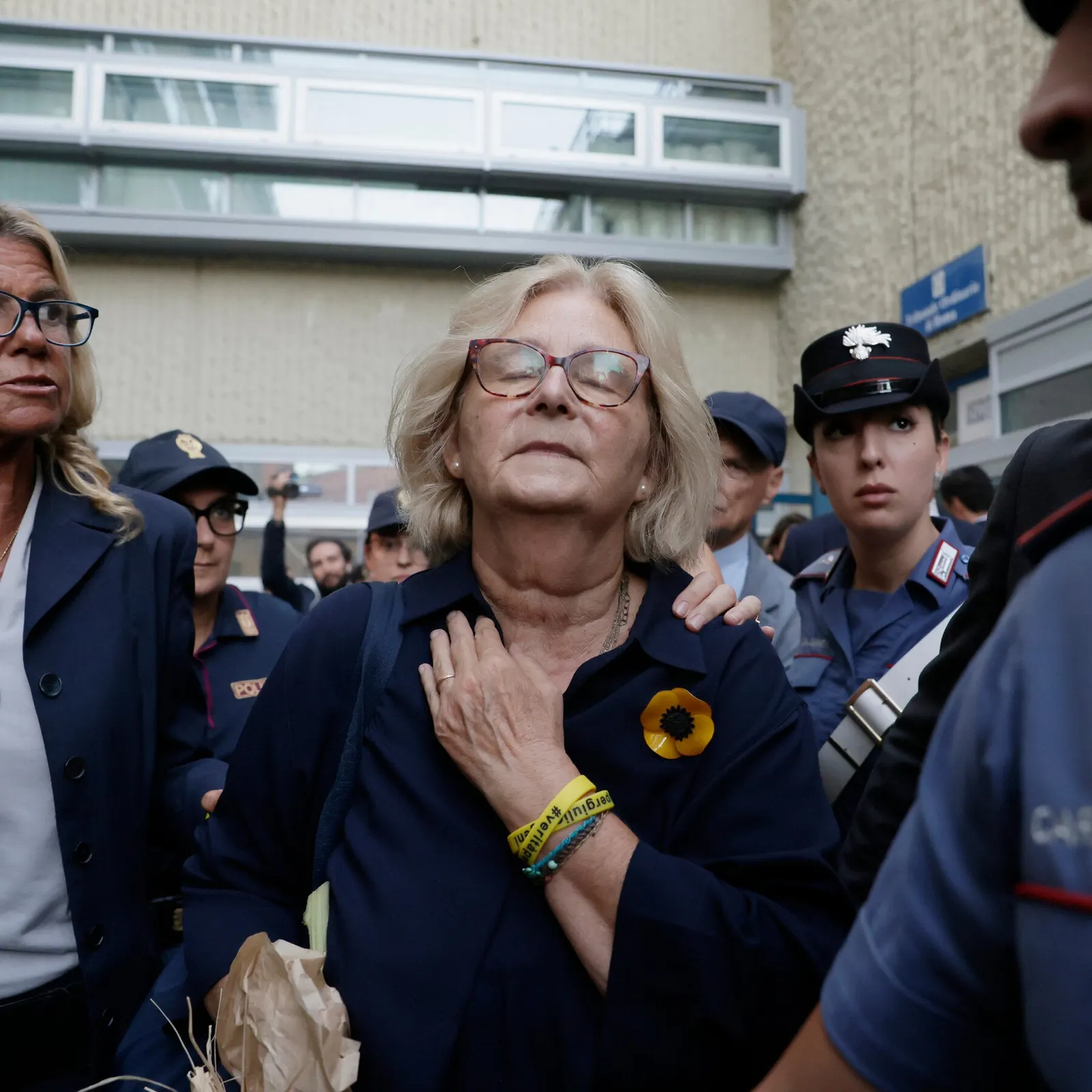
What's new
- Foreign Minister Antonio Tajani travelled to Cairo to sign cooperation deals days after the verdict, saying only three individuals – not Egypt – were convicted
- Opposition leaders Elly Schlein, Angelo Bonelli and Nicola Fratoianni accused the government of putting business ties with Egypt above justice
- Regeni family lawyer Alessandra Ballerini urged Italy to sever relations with Cairo
- Court records show judges found Regeni was seized by Egyptian security forces and ordered €200,000 in damages to his parents
Italy's Foreign Minister Antonio Tajani drew sharp criticism this week after signing new cooperation agreements with Cairo and telling reporters that only three individuals – not Egypt – had been convicted over the 2016 kidnapping of researcher Giulio Regeni, prompting opposition leaders to accuse the government of prioritising ties with Egypt over justice and the family's lawyer to call for a rupture in relations.10111315
The verdict
The three men convicted were Magdi Sharif, a major with Egypt's General Intelligence Service; Hisham Helmy, a police colonel; and Ather Kamal, a colonel and former head of investigations in Cairo. Each received a ten-year sentence for aggravated kidnapping. A fourth defendant, Major General Tarek Sabir, former head of state security, was acquitted.1234
The men were tried in absentia after Italy attempted, without success, to obtain their addresses through diplomatic channels on roughly 30 occasions. A murder charge against Sharif was dismissed, with judges ruling there was insufficient evidence to convict the defendants of murder and torture. The Rome court, in a first-instance ruling subject to appeal, found Regeni had been seized by Egyptian security services.141185
The case
Giulio Regeni, 28, was a postgraduate researcher at Cambridge University who was studying trade union activity in Cairo when he disappeared on 25 January 2016. His body was found dumped on the outskirts of Cairo nearly a week later, showing broken teeth and broken bones.3145
A post-mortem indicated Regeni had been extensively tortured. Human rights activists said the pattern of injuries resembled those documented in people tortured in Egyptian security facilities. Italian prosecutors said his abduction and killing were linked to the trade union research he was conducting.13
At the outset, prosecutors from both Italy and Egypt worked together on the investigation. Egyptian authorities said a criminal gang was responsible for the killing and that its members had been killed in a police shootout; Egypt later said Regeni's killers remained unknown. Egyptian authorities have also suggested his death resulted from a car accident, a failed drug deal or a botched robbery. Rome prosecutors concluded that Egypt's national security agency was involved.12
A decade-long process
Reaction and diplomatic context
Foreign Minister Antonio Tajani travelled to Cairo shortly after the verdict to sign cooperation agreements with Egypt, prompting accusations from opposition leaders that the government was prioritising ties with Cairo over justice for Regeni. Speaking to reporters during a break from the Euro-Mediterranean Water Forum in Rome, Tajani remarked, "There is a separation of powers, the sentence is of first instance: there was a conviction, Egypt was not convicted, three people were convicted," and noted that Italy had "always asked for cooperation" from Egyptian authorities. He later said he was "surprised by the controversy" over his remarks, insisting he had "merely quoted yesterday's verdict."111315
Opposition leaders reacted with anger. Democratic Party leader Elly Schlein declared, "No one will ever be able to deny the Egyptian regime's responsibility." Nicola Fratoianni cautioned that "if cooperation continues to be blocked, Giorgia Meloni's government must take decisive measures." Angelo Bonelli charged that the government was allowing "business dealings with Egypt and oil come before international law and justice." Family lawyer Alessandra Ballerini called on the government to cut ties with Cairo.1113310
Why it matters
The case has tested whether a European Union state can hold foreign security officials accountable for the killing of one of its citizens abroad, and its aftermath has exposed political fault lines in Italy over how far justice should be allowed to affect its economic and diplomatic relationship with Egypt, a key partner on migration and energy.3105
Videos
Related stories
Version history
- version 2 · Added coverage of the political fallout since the verdict: Tajani's Cairo trip and remarks distancing Egypt from the ruling, opposition backlash, and new details on damages and the court's findings.
- version 1 ·