World · Israel, United Arab Emirates
Netanyahu Secretly Asked UAE's Bin Zayed to Deny Oct. 7 Warning Report, Haaretz Says
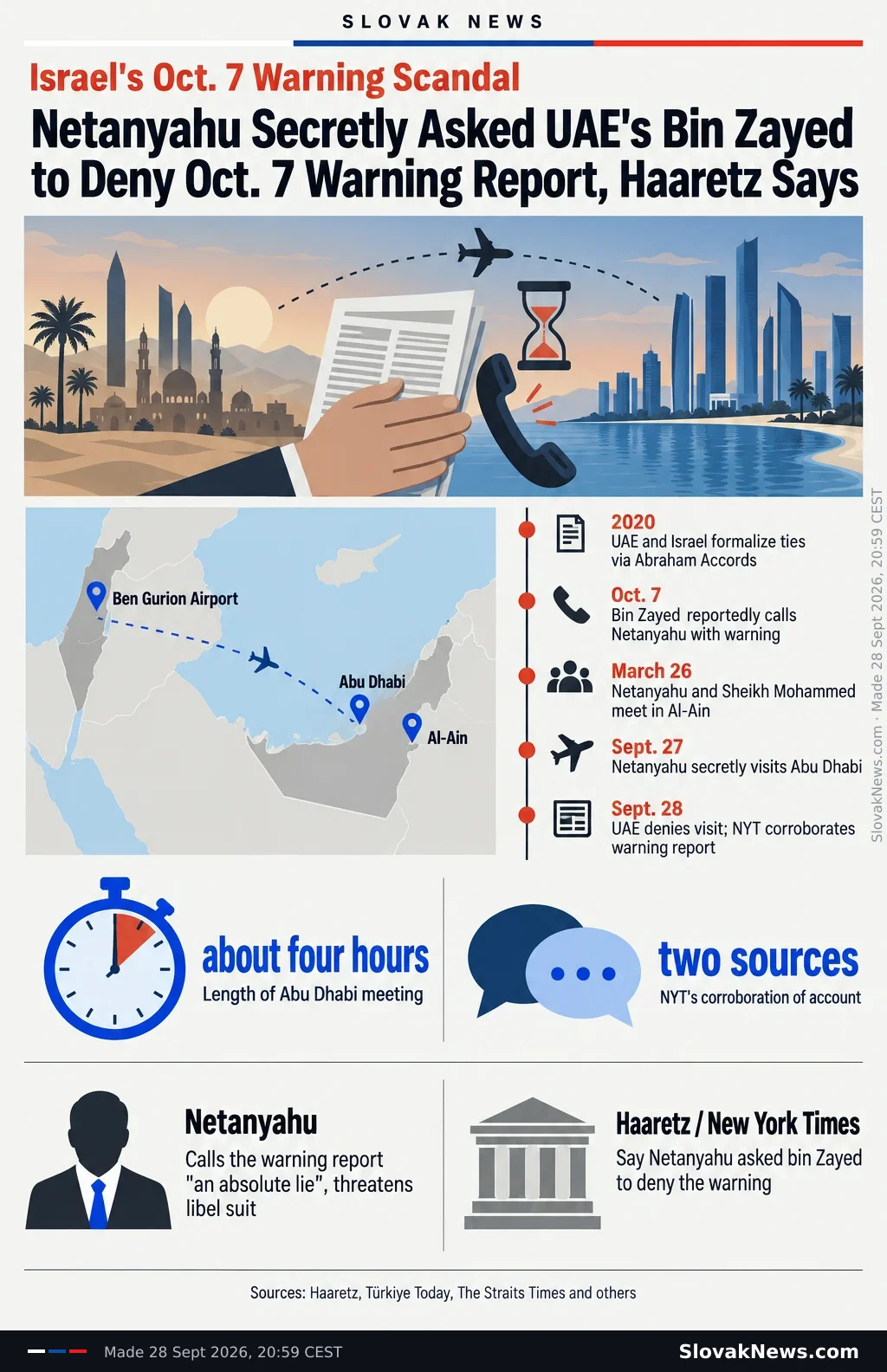
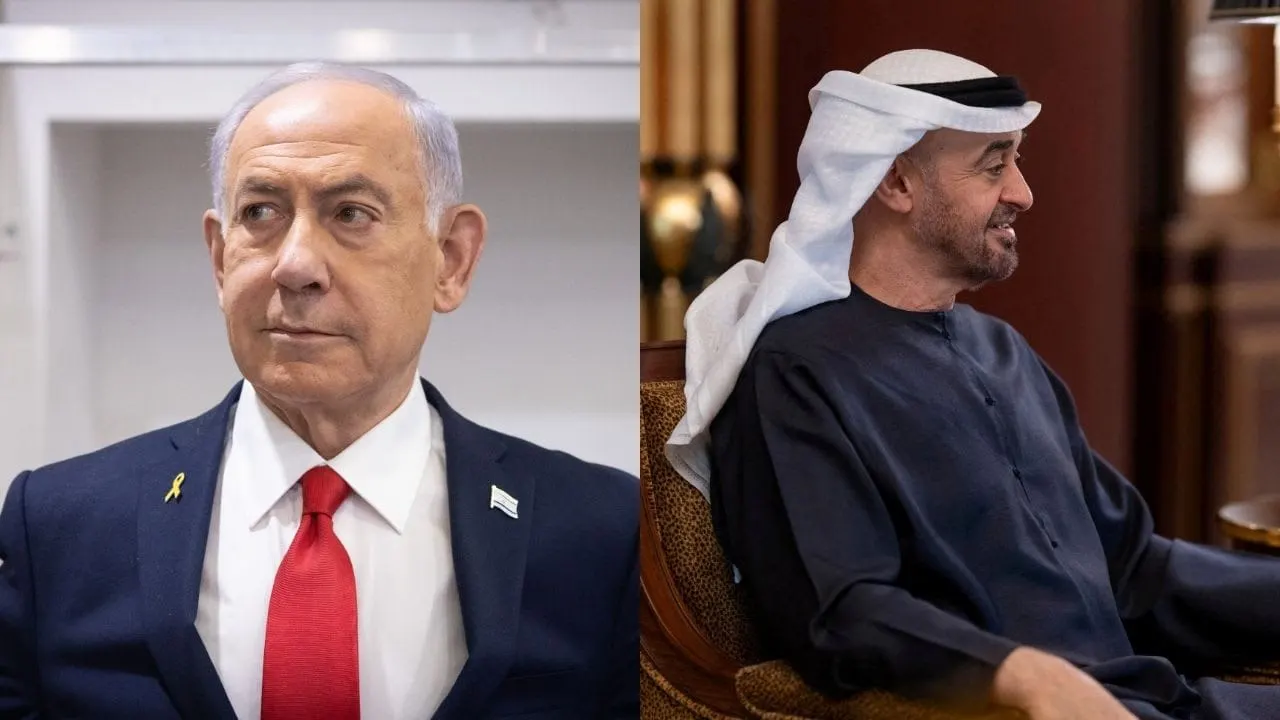
Haaretz reported that Prime Minister Benjamin Netanyahu held a secret hour-long airport meeting with UAE President Mohamed bin Zayed to press him to publicly deny that he had warned Israel before the Oct. 7 Hamas attack, as The New York Times said it corroborated the account with two sources and a revived Egyptian-warning story drew fresh denials from Netanyahu.
Listen to the story
Short version
Haaretz says Netanyahu secretly asked UAE's bin Zayed to deny a pre-Oct. 7 warning report, which the New York Times says it corroborated.
- Netanyahu reportedly asked bin Zayed to deny the Oct. 7 warning report
- UAE's foreign ministry offered no comment on the alleged request
- New York Times says it corroborated the account with two sources
- Netanyahu denies revived Egyptian-warning story, threatens libel suit
- Bennett calls alleged inaction "criminal negligence"
Infographic
What's new
- Haaretz reported Netanyahu traveled to the UAE specifically to ask President Mohamed bin Zayed to publicly deny he had warned Israel before Oct. 7
- The meeting at the airport reportedly ran roughly sixty minutes, and the UAE's foreign ministry offered no response when asked about the alleged request
- The New York Times said it corroborated Haaretz's account with two sources, including someone who spoke with bin Zayed
- The Wall Street Journal and The Atlantic revived a separate account naming Egyptian intelligence chief Abbas Kamel as having warned Israel
- Netanyahu denied both accounts, called them a "vile and false campaign," and said he instructed a libel suit against Haaretz
- A panel overseeing Israel's elections, the Central Elections Committee, approved barring the nation's two leading Arab-majority parties from running
Haaretz reported, citing sources, that Prime Minister Benjamin Netanyahu secretly traveled to the United Arab Emirates and met President Mohamed bin Zayed at an airport for about an hour, asking him to publicly deny that he had warned Israel of Hamas's October 7, 2023 attack, as The New York Times said it had corroborated the warning account with two independent sources.16
Infographic
A quiet trip to the Gulf
Israeli reports say Netanyahu traveled to Abu Dhabi aboard a private jet to meet the Emirati president.1
The visit was reported to be a one-day trip.13
When asked about the meeting, Netanyahu's office offered no response, one report said, adding elsewhere that it "declined to provide further details about the meeting."7
One report said the Sunday talks focused mainly on Iran, reflecting deepening security coordination between the two countries. But Haaretz reported, citing sources, that the visit's primary purpose was for Netanyahu to ask bin Zayed to publicly deny that he had warned Israel of the Hamas attack before October 7, 2023 – a request the Emirati president reportedly did not grant beyond a general statement about intelligence sharing.718
The UAE Foreign Ministry, however, denied that any such visit took place. In a statement carried by the state news agency WAM, the ministry said it "denies reports circulating regarding an alleged visit" by Netanyahu and rejected claims that it had received an Israeli military delegation, adding that UAE-Israel relations "were public and conducted under the Abraham Accords," not based on "non-transparent or unofficial arrangements."3
Haaretz reported that when asked about Netanyahu's request that bin Zayed deny the warning account, the UAE Foreign Ministry declined to comment, while reiterating in a general statement that it maintains "open and direct lines of communication" with Israel and shares "all relevant intelligence."14
A relationship with a history of secrecy
Israel and the UAE established diplomatic relations in 2020 under the U.S.-brokered Abraham Accords. According to Israeli media, Netanyahu and Sheikh Mohammed had previously met in Al-Ain on March 26, a meeting the UAE later denied had taken place in the form disclosed. Netanyahu's office disclosed that earlier Al-Ain meeting only in May.239
Netanyahu's office disclosed the visit only in May.3
In May, Netanyahu's office disclosed that he had quietly traveled to the Gulf nation and held talks with the president. The same report noted that the Emirates have deepened its relationships with both the United States and Israel in the period following the strikes it endured amid the Iran war.12
One report cited the UAE as saying communication between the two nations remains direct and open, though it added that security issues are handled through appropriate institutional channels rather than direct leader-to-leader contact.24
Warning before October 7
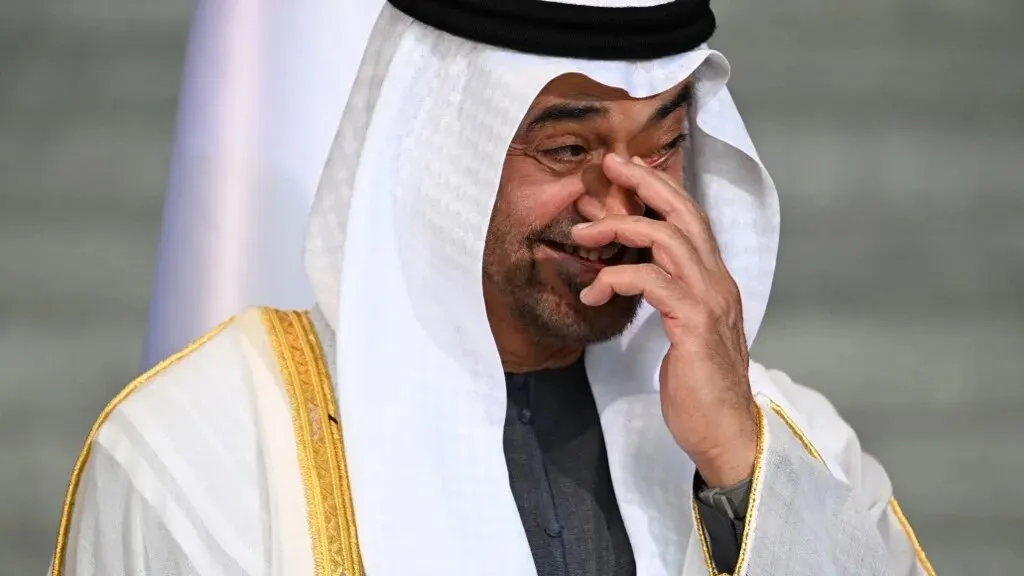
In a separate account, Haaretz reported that roughly ten days before the October 7, 2023 assault, Sheikh Mohamed alerted Netanyahu that Hamas's Gaza chief, Yahya Sinwar, was preparing a large-scale strike on Israel and pressed him to respond to the tip. According to that report, the two leaders spoke for 45 minutes and Netanyahu responded with relative calm.21
According to Israeli reports, the warning was not passed on to Israeli intelligence agencies or the military.291
One report said Netanyahu has rejected Haaretz's account and warned he may pursue legal action against the publication. Opposition leaders have accused him of bearing responsibility for security failures preceding the October 7 attack, according to the same report.2
Haaretz separately reported that Egyptian intelligence chief Abbas Kamel had been flagging Gaza's volatility to Israel as early as June 2023, secretly visited Israel on September 26, 2023 to warn of a major assault, and continued warning Israeli officials until 48 hours before the attack; Netanyahu reportedly raised neither warning during a security discussion on October 1, 2023.61
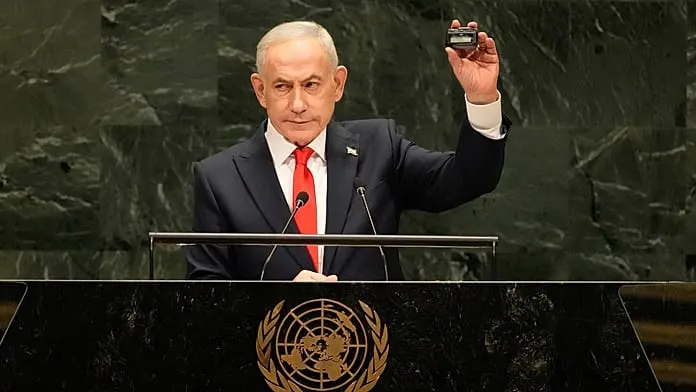
The Prime Minister's Office pushed back against the core claim, labeling it "an absolute lie" and insisting Netanyahu "did not speak with the president of the United Arab Emirates during the period in question and did not receive any warning from him."6
The New York Times reported it had independently corroborated Haaretz's account with two sources, including a person who said they had spoken with bin Zayed about the warning. Bennett escalated beyond his prior radio comments, labeling Netanyahu's purported failure to act on the warning as "criminal negligence," as four opposition figures jointly called for a probe into what Netanyahu was aware of and when.18
His office said it had instructed a libel suit against Haaretz and journalists Eldar and Yuval.1
Republican Congressman Michael McCaul has separately said lawmakers were briefed that "Egypt has warned the Israelis three days prior that an event like this could happen." Yedioth Ahronoth, which reported an Egyptian warning as early as October 9, 2023, quoted Netanyahu as telling Kamel, "In Gaza, we are in the picture, we are in control. Our problem is with the West Bank."41
Why it matters
The dispute over whether Netanyahu received and ignored warnings from the UAE and Egypt before the October 7 attack, and now over his own reported efforts to have the UAE deny the account, has drawn conflicting statements from a former prime minister, former security chiefs and foreign officials, deepening unresolved questions in Israel about accountability for the attack.16
Videos
Related stories

Version history
- version 4 · Added Haaretz's report that Netanyahu asked bin Zayed to publicly deny the Oct. 7 warning account, The New York Times' two-source corroboration, the revived Egyptian-warning story naming Abbas Kamel, Netanyahu's denials and libel-suit threat, and the Central Elections Committee's ban on Arab-majority lists.
- version 3 · Added the UAE Foreign Ministry's denial of the Abu Dhabi visit, reports that The New York Times corroborated the pre-Oct. 7 warning account, new details on the March 26 meeting and Israel-UAE security cooperation, and Bennett's "criminal negligence" charge alongside an opposition call for investigation.
- version 2 · Added new corroborating and disputed details about the pre-October 7 warning, including Bennett's endorsement, an alleged Egyptian intelligence warning, denials from former security chiefs Bar and Halevi, and confirmation that Iran was the focus of the Abu Dhabi meeting.
- version 1 ·