World · Netherlands, Israel, State of Palestine
Netherlands enforces settlement goods ban; Israel revokes Dutch diplomats' status
Israel ordered Dutch diplomats in Ramallah to surrender their credentials after the Netherlands began enforcing a ban on goods from Israeli settlements, with violators facing up to six years in prison.
Listen to the story
Short version
The Netherlands enforced a ban on Israeli settlement goods, and Israel retaliated by revoking Dutch diplomats' credentials in Ramallah.
- Dutch ban on settlement goods took effect September 22, 2026
- Violators face up to six years in prison for deliberate breaches
- Israel gave Dutch diplomats in Ramallah seven days to leave
- Israeli passengers reported searches at Amsterdam's Schiphol Airport
- UK, France, Canada also imposed sanctions on settlement goods
What's new
- Dutch ban on settlement goods took effect September 22, enforced with airport checks
- Israel's Foreign Minister Sa'ar gave Dutch diplomats seven days to return credentials
- Diplomatic immunities for Dutch staff in Ramallah set to expire after the deadline
- Israel also removed Dutch delegation from Gaza support center and closed a British consulate
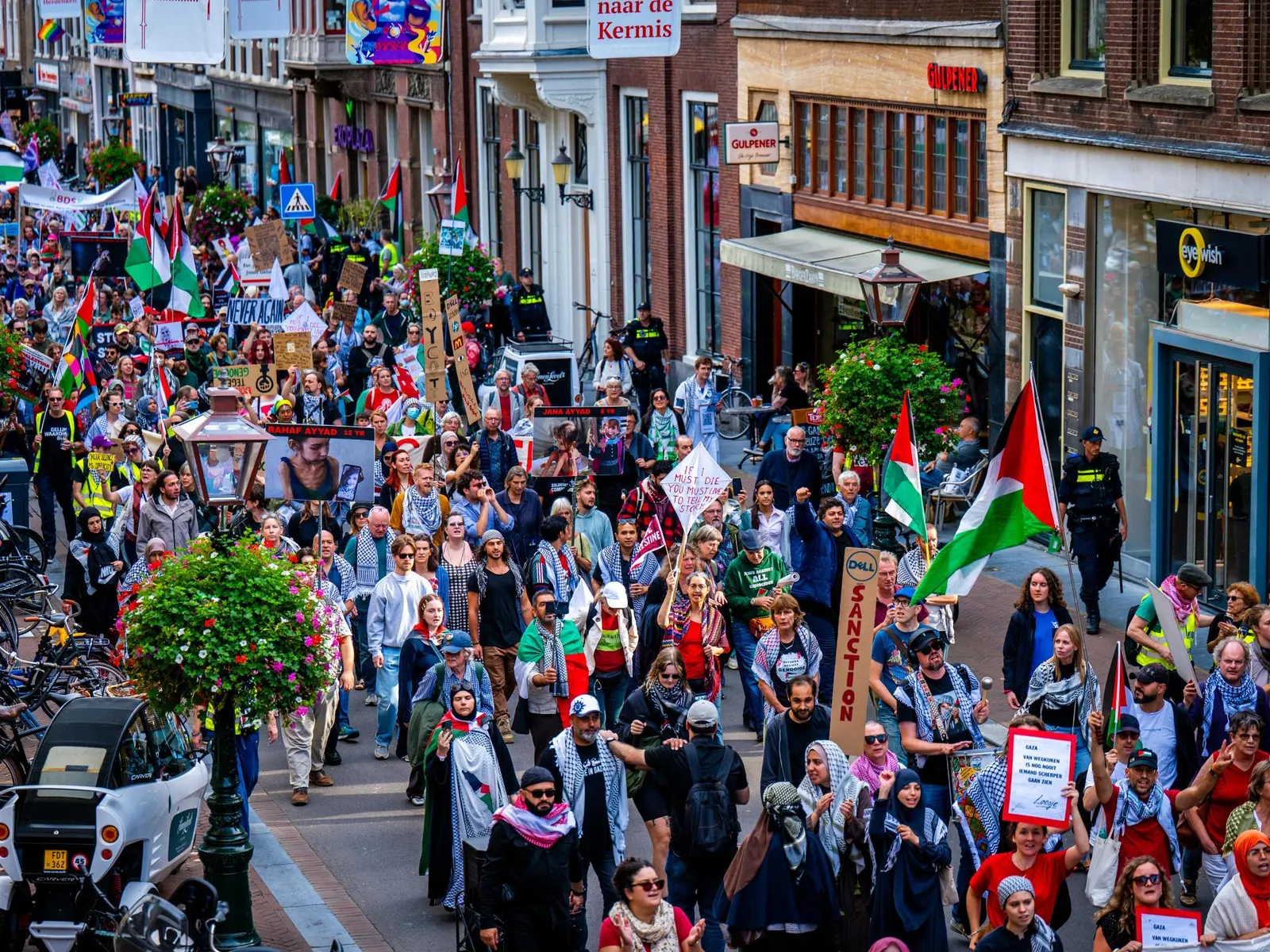
Starting September 22, Dutch authorities began applying a nationwide prohibition on importing, buying and selling products from Israeli settlements in occupied territory, a move that led Israel to strip Dutch diplomats stationed in Ramallah of their diplomatic standing, according to Israeli and Palestinian officials cited across several outlets.1235
Scope of the ban
Formally published in July and taking effect September 22, the Dutch measure prohibits importing, buying and selling products originating from Israeli settlements in the West Bank, East Jerusalem and the Golan Heights, as well as services that support such commerce. The ban applies to commercial shipments as well as personal baggage, and, according to reporting on the law, covers even souvenirs and goods only partially made in settlements.1234
Deliberate violations of the ban carry a possible prison term of up to six years or a substantial fine, while unintentional breaches can bring up to one year in prison. A Dutch customs spokesperson said goods identified as falling under the sanctions measure would be seized and reported, while retailers Albert Heijn and Lidl said they were monitoring the requirement, with Lidl stating it sells almost no products from Israel.134
Israeli countermeasures
Israeli Foreign Minister Gideon Sa'ar said his ministry notified the Dutch Embassy that staff working in Ramallah had a week to hand back their Israeli-issued diplomatic papers, after which their privileges and immunities would lapse. Sa'ar said the Netherlands could continue representing its interests with the Palestinians "from Palestinian Authority territory, rather than from the territory of the State of Israel."1245
Sa'ar characterized the Dutch step as a hostile, one-sided measure, stating that Israel would not disregard actions aimed at damaging it. He added that any nation behaving in a hostile, unilateral way toward Israel would forfeit its standing and relevance in the region. He also noted that Israel had removed the Dutch delegation from the International Support Center for Gaza in Kiryat Gat the previous month, following earlier Dutch government actions.2
Separately, Israel directed that the British consulate in East Jerusalem be shut down and gave British representatives at the Gaza support center a week to leave, after the UK, France and Canada unveiled their own sanctions targeting settlement goods.26
Airport checks
Israeli passengers reported being singled out for luggage searches at Schiphol Airport in Amsterdam after the ban took effect. A customs officer was quoted asking, "Are you coming from Tel Aviv? Yes? Everyone from Israel, come over here!" while a unit of the Royal Netherlands Marechaussee was assigned to conduct additional checks on passengers arriving from Israel; all El Al passengers were also required to put luggage through a screening machine. The outlet Nieuwsrecht described the checks as a "witch hunt."4
US Ambassador to Israel Mike Huckabee wrote that visitors from the Netherlands he had met were checking whether their souvenirs originated from "Judea/Samaria" before flying home, citing the possible six-year prison term.1
Wider context
Al Jazeera reported that trade flowing between the Netherlands and Israel reached roughly $4.8 billion last year, with the Netherlands functioning as a key entry point for goods moving into the rest of Europe. The same outlet noted that about one-third of agricultural products exported from Israeli settlements passed through the Netherlands, which handled close to half of such exports headed to the European Union.2
The Dutch government said the settlements are unlawful and that the ban gives "further substance to its international legal obligation not to contribute to this unlawful situation," a position that follows a 2024 International Court of Justice advisory opinion finding Israel's continued presence in territory captured in 1967 unlawful. Ireland, Belgium and Spain have taken similar measures on settlement goods, according to Middle East Eye, while Israel's Ministry of Economy and Industry plans to offer settlement companies up to 200,000 shekels, or about $54,000, and help them find alternative markets including the Philippines, India, the United Arab Emirates, Chile and Argentina.5
Why it matters
The Netherlands is a major European entry point for goods, and the dispute over the ban touches on trade worth billions of dollars and on how European states apply international legal findings on occupied territory. The diplomatic rupture also signals how far a European Union member is willing to go in enforcing sanctions on settlement products, and how Israel is prepared to respond.2
Version history
- version 1 ·