World · North Korea
North Korea Says Missile Drill Tested AI-Assisted Flight
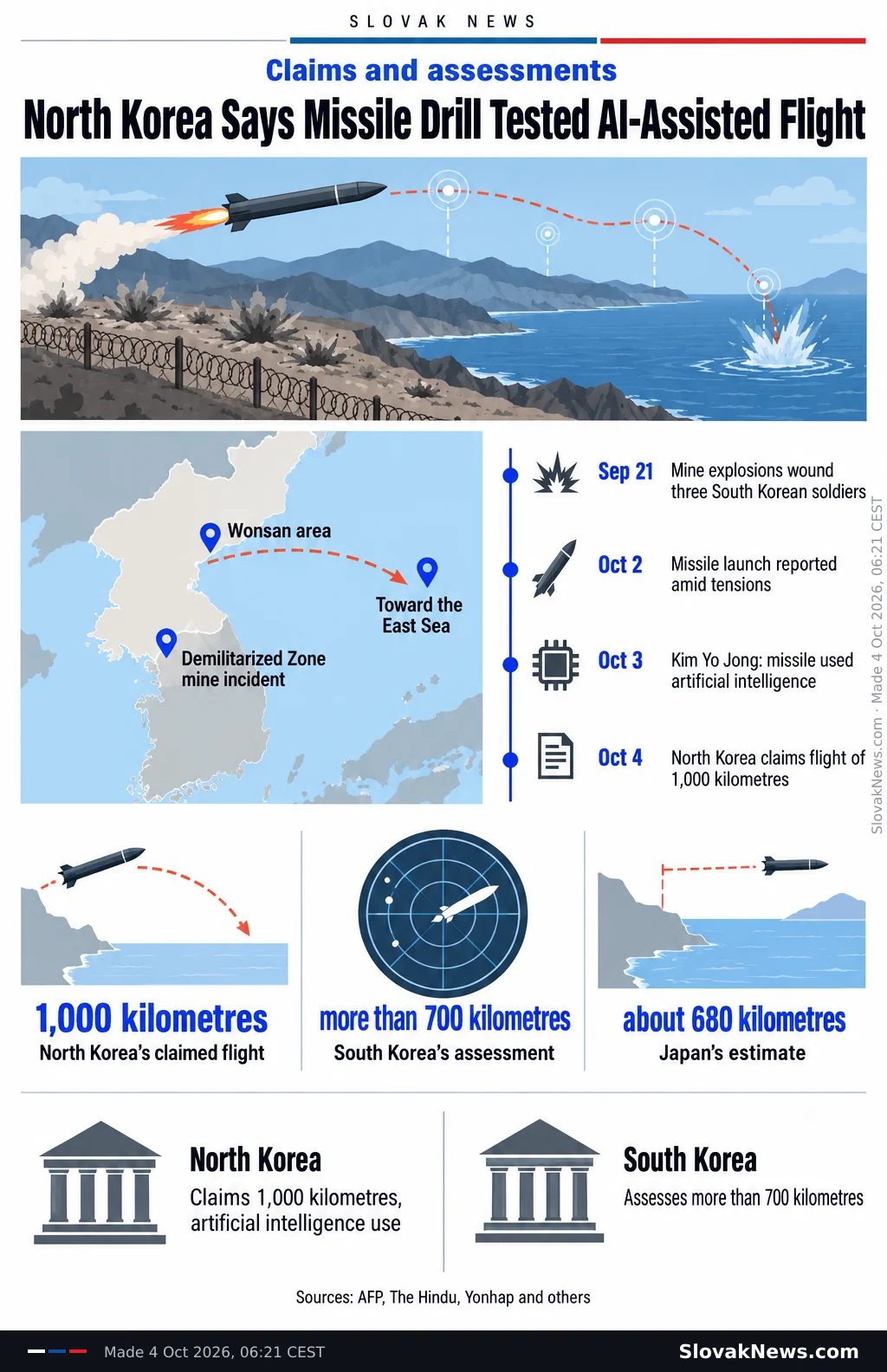
Pyongyang said an intermediate-range missile used variable trajectories and artificial intelligence during an exercise. South Korean and Japanese estimates put the flight below North Korea’s claimed 1,000-kilometre distance.
Listen to the story
Short version
North Korea says an intermediate-range missile drill tested variable trajectories and AI technology. South Korean and Japanese assessments placed the flight below Pyongyang’s claimed 1,000 kilometres.
- South Korea assessed a flight of more than 700 kilometres.
- Japan estimated about 680 kilometres and a 90-kilometre peak altitude.
- Pyongyang claimed AI-assisted, low-altitude changes of trajectory.
- The launch followed a disputed Demilitarized Zone mine incident.
Infographic
What's new
- North Korea said the missile struck a target 1,000 kilometres away.
- Kim Yo Jong claimed AI supported changes of trajectory at low altitude.
- South Korea assessed a flight above 700 kilometres; Japan estimated about 680.
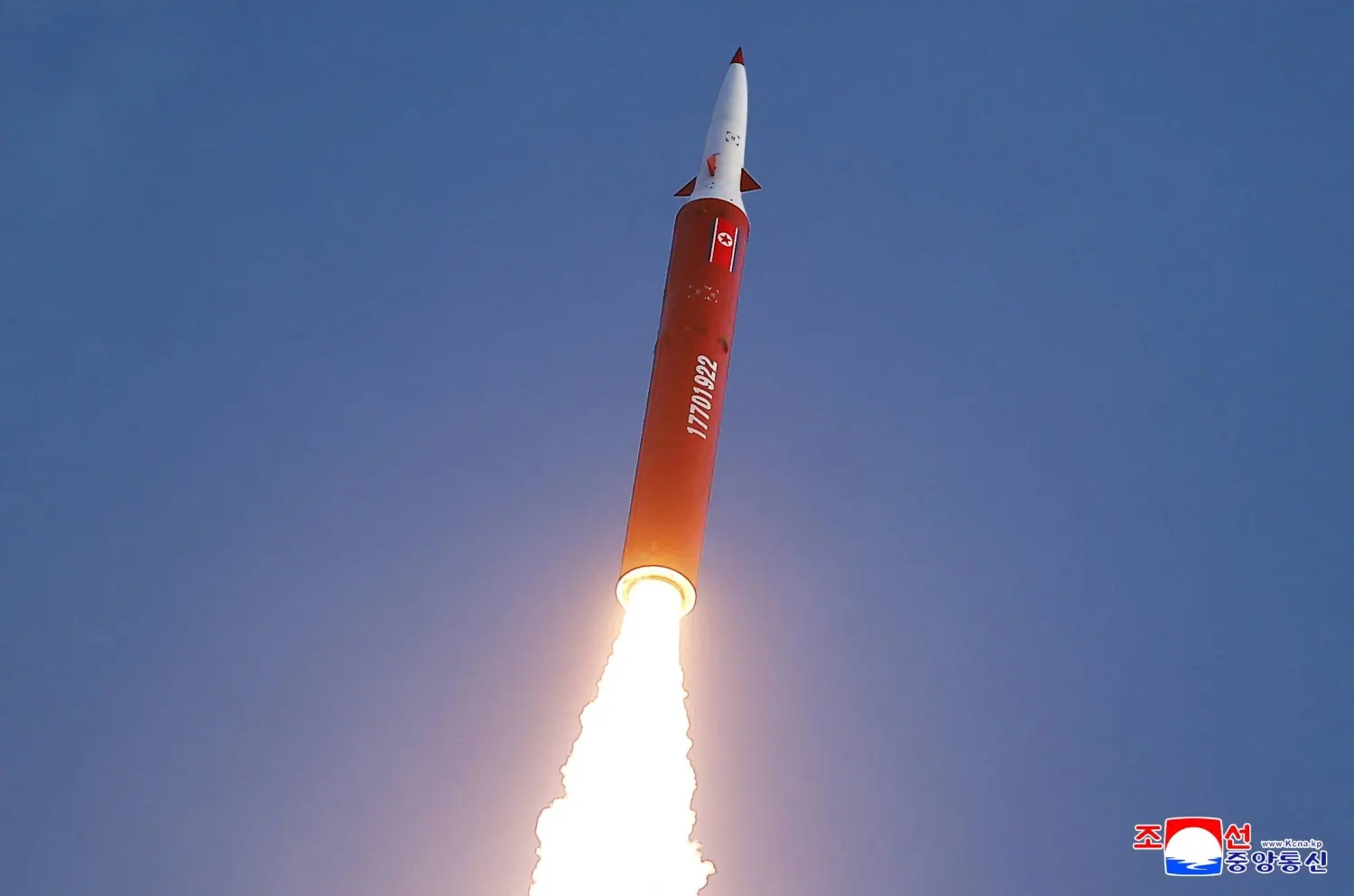
North Korea said on October 3 that it had conducted a firing exercise involving an intermediate-range strategic missile launched from its eastern region toward waters off the Korean peninsula. South Korea’s Joint Chiefs of Staff detected a ballistic missile leaving the Wonsan area and assessed that it travelled more than 700 kilometres toward the East Sea.1310
Infographic
Different accounts of the flight
Pyongyang said the missile struck a target 1,000 kilometres away in waters off North Korea’s east coast. Its account described the event as a military drill rather than solely a weapons test and said troops operating what it called a hypersonic strategic weapon system received training.278
The external assessments were shorter. South Korea’s military put the distance at more than 700 kilometres, while Japan’s Defence Ministry estimated about 680 kilometres and a peak altitude of roughly 90 kilometres. Japan said the missile came down outside its exclusive economic zone.289
North Korea said Kim Jong Un supervised the test. North Korea said the drill evaluated the dependability, performance and deployment flexibility of its deterrent force. Kim said continued development of the nuclear war deterrent remained essential to national security.278
Claims of artificial intelligence and manoeuvrability
Kim Yo Jong, a senior Workers’ Party official and the North Korean leader’s sister, said the missile could alter its flight path at low altitude and incorporated artificial-intelligence technology. North Korea’s Missile Administration said the weapon could be assigned at least four types of flight path, depending on its mission and target.123
She also claimed that South Korean and Japanese systems had lost track of the weapon when North Korea used a wave-like trajectory. South Korea’s military did not immediately respond to that assertion. Pyongyang has not provided independent confirmation that the missile can perform the described manoeuvres or that its AI-related systems operated as claimed.1238
Hong Sung-pyo said artificial intelligence could assist with target data and launch procedures but cautioned that its use would not guarantee accuracy. Another assessment cited by AFP said it was too early to determine whether North Korea’s account of the missile’s capabilities was correct.1
Border dispute adds to tensions
The launch followed mine explosions on September 21 in the Demilitarized Zone that wounded three South Korean soldiers. South Korea and the US-led United Nations Command concluded that North Korean mines caused the blasts. The command determined that North Korea had violated the armistice agreement, according to The Hindu.124
South Korea demanded an apology and said the mines had been planted by North Korea. Kim Yo Jong rejected the accusation, denying that North Korean forces had deliberately placed mines to target South Korean troops. The mines were believed to have been laid during North Korean work to fortify the border, according to AFP.128
North Korea has conducted more than 10 missile tests this year. Following the latest launch, South Korea, the United States and Japan maintained what they described as a robust defence posture through close information sharing.1268
Why it matters
For European readers, the episode provides a further measure of North Korea’s stated effort to develop its nuclear war deterrent and incorporate artificial intelligence into missile operations. The gap between Pyongyang’s account and South Korean and Japanese assessments also shows that the missile’s precise performance remains unresolved.1289
Related stories


Version history
- version 1 ·