World · North Korea, South Korea
South Korea Demands Apology From North Over DMZ Mine Blasts
Seoul says North Korean landmines wounded three soldiers in the Demilitarized Zone and violated the 1953 armistice; Pyongyang has denied responsibility and called the claim a "farce".
South Korea blames North Korean landmines for DMZ blasts that wounded three soldiers; Pyongyang denies responsibility and calls the claim a farce.
- Blasts on 21 September wounded three South Korean soldiers, one lost a foot
- Seoul says North Korean mines caused the explosions, violating the 1953 armistice
- An unexploded North Korean mine was found near the site on 30 September
- North Korea denied involvement, calling the claim a "conspiratorial farce"
- A similar incident in 2015 also ended without North Korea accepting responsibility
What's new
- North Korea, through Kim Yo Jong, rejected Seoul's findings as a "conspiratorial farce"
- South Korea's Joint Chiefs of Staff formally demanded an apology from Pyongyang
- Investigators recovered a live North Korean-made anti-personnel mine, made of plastic, at the site where the explosions occurred, on Tuesday
- Defence Minister Kang Shin-chul told parliament the blasts were a clear armistice violation
Seoul's armed forces have called on Pyongyang to issue a formal apology, after determining that mines planted by North Korea triggered two blasts in the Demilitarized Zone on 21 September, leaving three South Korean troops hurt and one without a foot.1235
Investigation findings
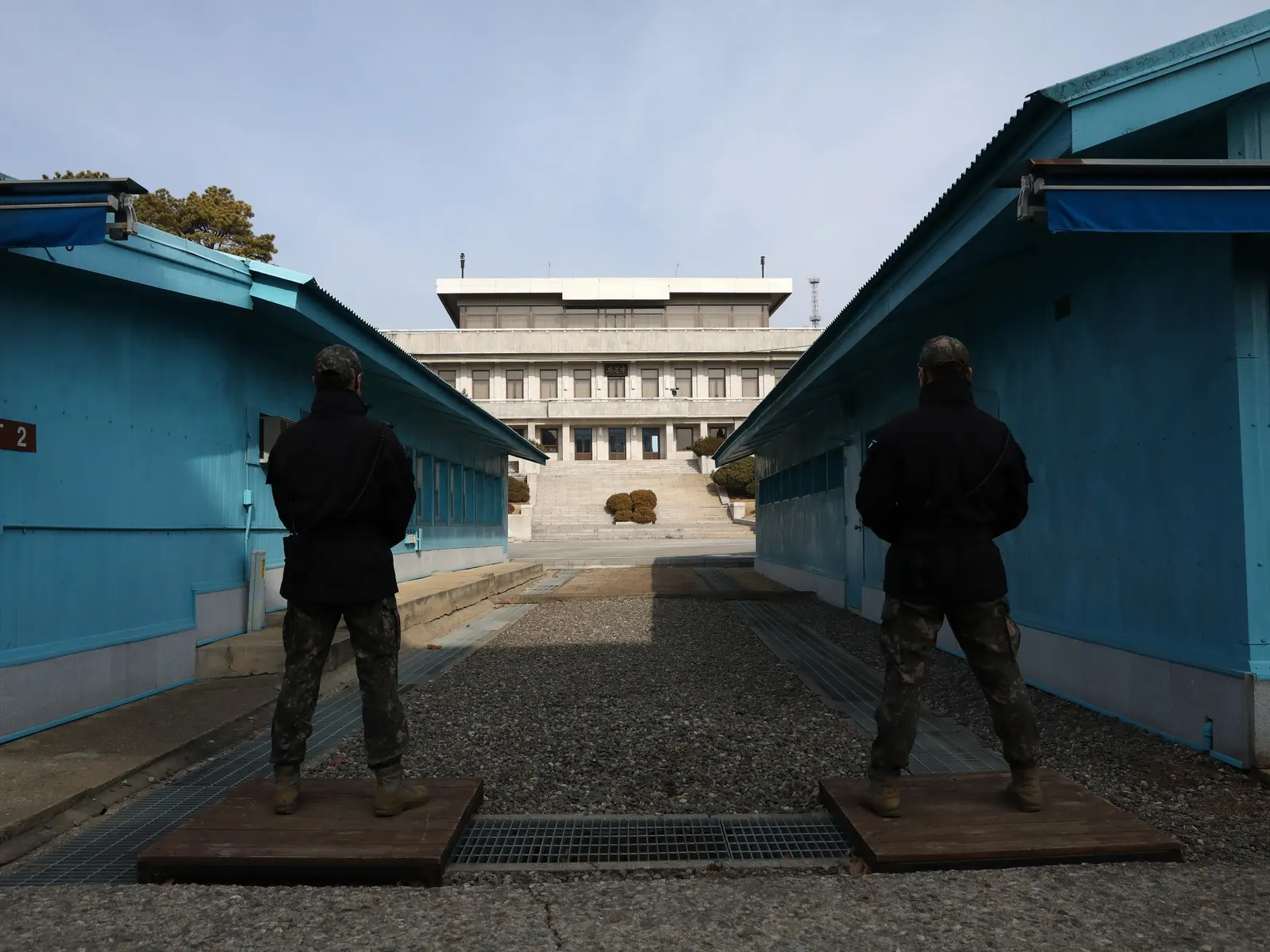
The blasts occurred in the DMZ's western portion, roughly 10 metres on the southern side of the Military Demarcation Line, as South Korean personnel were preparing the ground for an upcoming UN Command operation. Three soldiers were wounded and evacuated; one lost a foot in the blasts.1235
A combined probe at the scene, drawing on about 30 people from South Korea's military, the UN Command Military Armistice Commission and other investigators, subsequently turned up an intact plastic anti-personnel mine of North Korean origin close by. According to Seoul's Joint Chiefs of Staff, the device was uncovered in the course of that examination.328
Army Lieutenant-General Kwon Dae-won said the assessment was based on the crater pattern, the flame pattern of the explosion and the nature of the soldiers' injuries. According to him, the devices turned up close to ground that showed signs of alteration and that North Korean troops are thought to have recently mined.5
Detection work was reportedly complicated by dense vegetation in the area, and mines may have gone undetected because handheld detectors were operated too far above the ground, according to one account of the investigation.3
North Korea's denial
North Korea denied that its soldiers crossed the border to plant mines and dismissed Seoul's conclusions. Kim Yo Jong, who is Kim Jong-un's sibling and a senior North Korean official, alleged that Seoul had manufactured evidence and dismissed the findings as a "conspiratorial farce," suggesting they were designed to invent a justification for provoking the North.134
North Korea also warned of "immediate and merciless retaliatory action" should South Korean forces fire on North Korean soldiers, according to reporting on Pyongyang's response. North Korean state media made no mention of the blasts in the days after they occurred.32
Seoul's Joint Chiefs of Staff said Pyongyang bears responsibility and, through Defence Minister Kang Shin-chul, told parliament: "This is a clear violation of the armistice agreement, and since North Korea bears responsibility, we will take corresponding measures."2
Echoes of 2015
The incident recalls a 2015 episode in which two South Korean soldiers were seriously wounded by landmines in the DMZ, with one losing both legs. At that time, South Korean officials determined that soldiers from the North had crossed over the demarcation line to place the explosives, a charge Pyongyang rejected. North Korea later issued a vague expression of regret but never clearly accepted responsibility.123
That earlier crisis saw the two Koreas trade threats and stage weapons demonstrations, and South Korea resumed anti-Pyongyang loudspeaker broadcasts along the border, before marathon talks eased the standoff.23
Observers point out that Pyongyang has labeled Seoul its main adversary since 2024, and reporting in South Korea indicates the North has since reinforced the border with additional mines, tank barricades and further defensive structures.235
Limited options for Seoul
Stretching 248 kilometres, the DMZ is thought to hold roughly two million mines and ranks among the planet's most militarized boundary zones. The armistice agreement that ended the Korean War in 1953 prohibits hostile acts within, from or against the DMZ.3
Analysts cited in South Korean reporting say Seoul has few realistic retaliatory options. Resuming loudspeaker broadcasts, one analyst said, "would do more harm than good, particularly because residents in border areas would bear much of the disruption," leaving Seoul largely reliant on demanding an apology and assurances from Pyongyang.2
In addition, Seoul's Joint Chiefs of Staff indicated it would respond with steps yet to be defined should the complete inquiry pin blame on North Korea, and Kang Shin-chul informed lawmakers that the armed forces possess several options to be rolled out progressively.32
Why it matters
This standoff illustrates how swiftly tensions can flare between the two Koreas over an event along a border that is among the most militarized and mine-laden in the world. For European readers, it is a reminder that unresolved Korean War-era arrangements continue to generate friction with implications for regional security that Western governments monitor closely.23
Videos
Related stories
Version history
- version 1 ·