Business · Russian Federation, Germany
Kremlin Places German Retailer Metro's Russian Assets Under State Control
Vladimir Putin signed a decree transferring Metro AG's Russian subsidiary to a company registered three weeks earlier, part of a wider pattern of asset seizures amid rising tension with Germany.
Putin ordered Metro AG's Russian subsidiary placed under temporary state management via a newly registered firm, Torg Rus, amid a wider wave of asset seizures and rising tension with Germany.
- Decree signed Sept 28 hands Metro Russia to Torg Rus
- Torg Rus was registered only three weeks earlier, on Sept 8
- Metro AG says it lost operational control of its Russian unit
- Follows Sept 17 seizures of Auchan, Nestlé, Lemana PRO, FM Logistic
- Comes amid drone-attack row and consulate closures with Germany
What's new
- Putin decree hands Metro Russia's shares to newly created Torg Rus
- Move follows similar Sept 17 seizures of Auchan, Nestlé, Lemana PRO and FM Logistic
- Comes amid German-Russian diplomatic friction over an alleged drone attack and consulate closures
- Metro AG says it no longer has operational control of its Russian unit
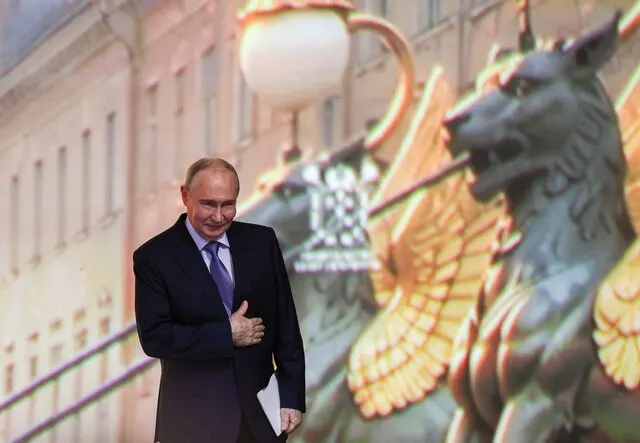
On Monday, Russia's leader Vladimir Putin put his signature to an order that shifts oversight of Metro AG's Russian unit to the state on a temporary basis, handing control to a freshly created firm named Torg Rus, per accounts published Sept 28, 2026.1245
The decree and Torg Rus
According to the Moscow Times, the order handed Metro Russia's shares to Torg Rus, a firm registered earlier this month. According to Meduza, the entity JSC UK Torg Rus came into existence on September 8, roughly three weeks prior to the decree, and was subsequently handed the entire ownership stake in Metro Cash & Carry LLC.13
Meduza identified the firm's only owner as Johannes Tolay, who has served as Metro Cash & Carry's leader since 2023, whereas UNITED24 Media reported that Torg Rus belongs entirely to Johannes Maria Tolay. The Moscow Times, however, identified Johannes Tholey as chief executive of both Metro Russia and Torg Rus.136
NBC News reported that the order was posted on a government website without a stated reason. Presidential spokesman Dmitry Peskov said, "One of the factors taken into account when making this decision was that this is an unfriendly country."46
Metro's Russian operations
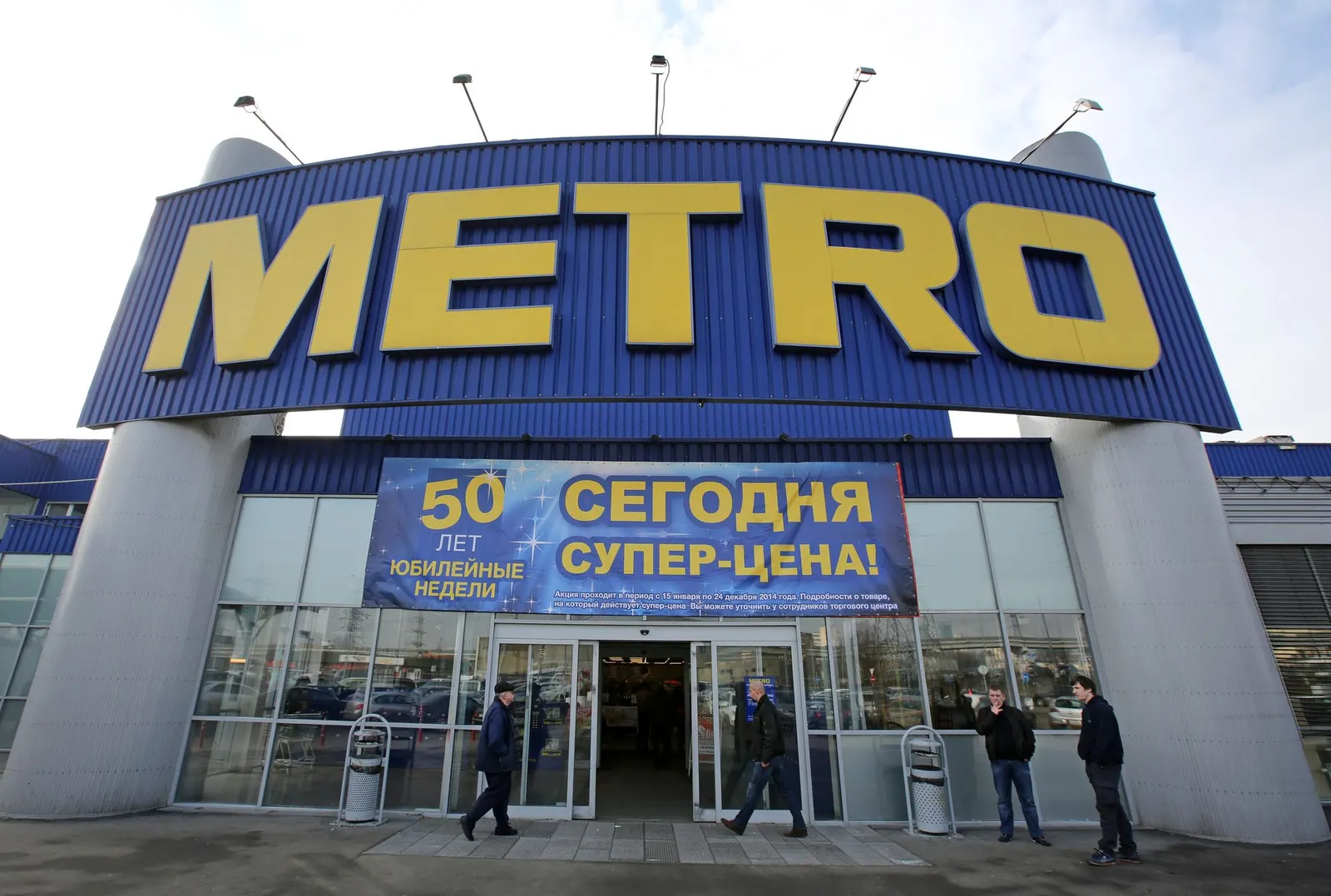
Metro AG, described by the Moscow Times and the Kyiv Independent as the world's fourth-largest retailer, entered the Russian market in 2001 and continued operating there after the 2022 invasion of Ukraine, according to the Kyiv Independent, Meduza and t-online.de.1235
The Kyiv Independent reported that the chain ran 91 wholesale stores and employed around 9,000 people in Russia, a figure also cited by NBC News. t-online.de instead reported approximately 93 locations and quoted Metro AG chief executive Steffen Greubel saying the company "trage Verantwortung für mehr als 10.000 Mitarbeiter in Russland."245
t-online.de put Metro's Russian annual revenue at about €2.4 billion, roughly a tenth of group revenue, while NBC News cited Russian sales of €2.6 billion for the 2024/2025 financial year.45
Metro AG said, as quoted by the Kyiv Independent and NBC News: "Even though the ownership of Metro Russia formally remains with Metro AG, the decree means that Metro itself no longer has operational control." The company added it had "taken a variety of measures to reduce the links between the Russian business and Metro AG" since February 2022, and that "further effects of the decree on METRO AG are currently being analyzed."24
Part of a wider pattern
The Metro order follows a September 17 decree placing the Russian assets of French retailer Auchan, Swiss group Nestlé, home-improvement chain Lemana PRO (formerly Leroy Merlin) and French logistics firm FM Logistic under temporary management, according to Meduza and UNITED24.36
Nestlé said it "pledged to take all necessary measures to safeguard its legal rights and support its workforce," while Auchan Retail Russia requested official clarification of the order, UNITED24 reported. The outlet said L.E.V. Management, appointed to administer those companies, has charter capital of about $177 and a single employee.6
NBC News reported that temporary administration has previously led to local owners acquiring the Russian businesses of Danone and Carlsberg at reduced prices, and that more than a thousand companies have left the Russian market since March 2022.46
The measures rest on a decree Putin signed in 2023 granting the state authority to place foreign-owned assets under temporary management, the Moscow Times reported. Moscow has described the seizures as a response to "hostile actions taken by unfriendly foreign governments," while the European Union characterizes them as nationalization and expropriation, according to t-online.de.15
Diplomatic backdrop
The decree arrived against a backdrop in which Germany had, over the summer, accused Russia of trying to strike Leipzig/Halle Airport with a drone—a charge Moscow rejected as invented, the Moscow Times and NBC News reported.124
Germany shut down both a Russian consular office in Bonn and a Russian cultural institute in Berlin, prompting Russia to close, in turn, the German consulate in St. Petersburg, NBC News reported.14
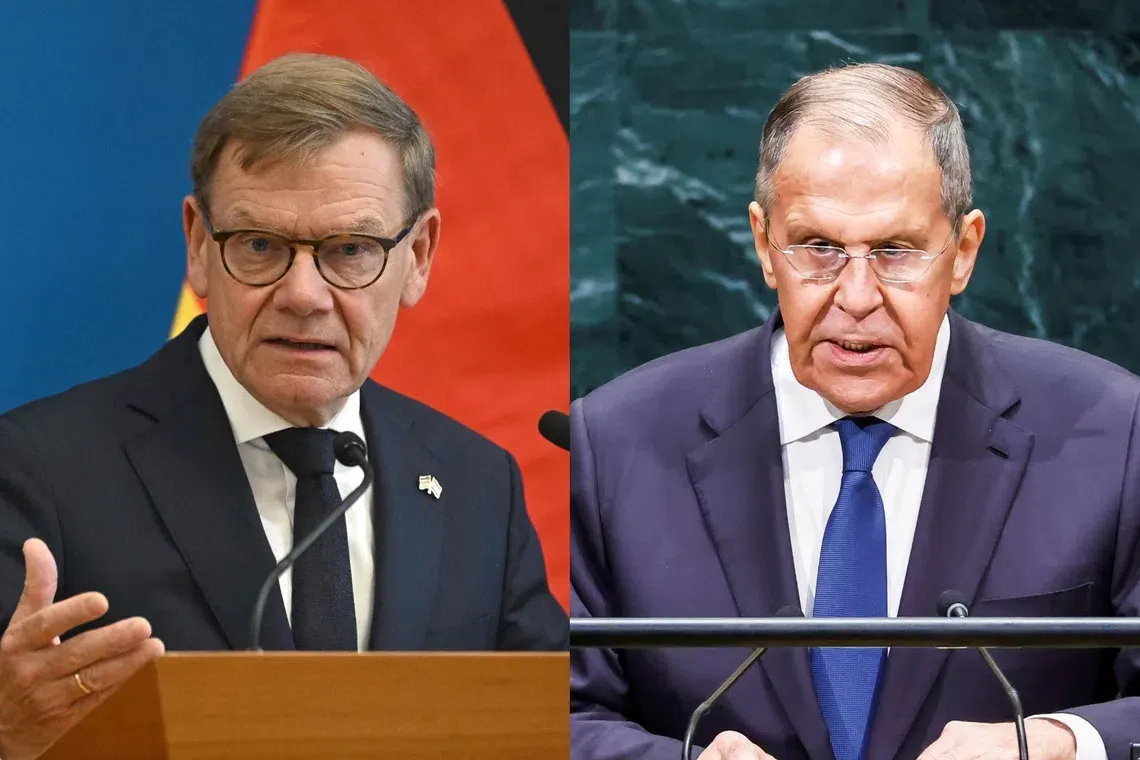
On Sept 26, Foreign Minister Sergei Lavrov held talks with Germany's Johann Wadephul on the margins of the UN General Assembly, marking their first encounter since Russia launched its full-scale invasion of Ukraine in 2022. Lavrov remarked that nothing new emerged from his sit-down with Germany's top diplomat, adding on another occasion that Wadephul "simply reiterated his official public position condemning Russia... whether that qualifies as genuine dialogue, he said, is something people can decide for themselves."14
Per the Kyiv Independent, Germany urged Russia to halt the fighting and pursue talks, while noting that missile and drone strikes carried out by Russia have destroyed property belonging to international firms in Ukraine, among them a PepsiCo site in Mykolaiv Oblast and a Mondelez plant in Sumy Oblast.2
Stefan Meister was quoted by NBC News saying, "The Russians are raising the pressure on Germany in their hybrid war," adding, "It's being made clear that the Germans could lose even more companies and assets in Russia, in order to raise pressure on the German government from the German business community." Meister said Russia views Germany as a key adversary because of its support for Ukraine.4
Why it matters
For European companies still operating in Russia, the Metro decree signals that continued presence offers no protection from state takeover. The move also coincides with a deepening diplomatic rupture between Moscow and Berlin, raising the stakes for other German and European businesses with Russian holdings.45
Related stories
Version history
- version 1 ·