World · Ukraine, Russian Federation
Russian Drones Hit Kyiv Center, University Moves Online
A day-long barrage of Russian jet-powered drones struck central Kyiv and other Ukrainian cities on September 28, killing several people and prompting Kyiv's main university to switch to remote learning.
Russian jet-powered drones struck central Kyiv and other Ukrainian cities on Sept. 28, killing several people and prompting Kyiv's main university to go online.
- National Academy of Sciences hit, at least one killed, 19 injured
- Dnipro business centre struck, three killed, 19 injured
- Shevchenko University moved classes online from Sept. 29
- Ukraine says it intercepts only about half of new Russian jet drones
- Ukraine struck Russian oil facilities and defence plants in response
What's new
- Russian drones struck the National Academy of Sciences and multiple Kyiv districts on Sept. 28
- Shevchenko University moved to online classes from Sept. 29 citing security
- Washington Post reports Russia's jet-powered drones are outpacing Ukrainian air defenses
- Ukraine struck Russian oil facilities and defence plants in response
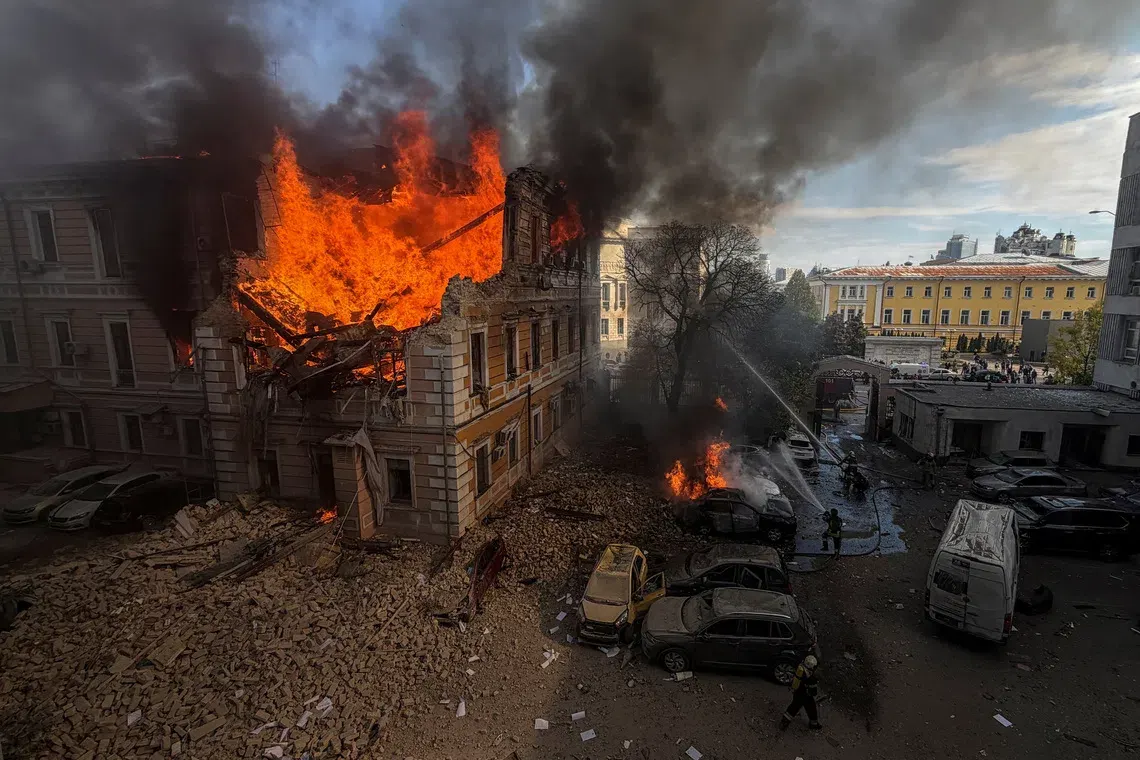
Russian drones struck central Kyiv and several other Ukrainian cities on September 28, hitting the National Academy of Sciences, a business centre in Dnipro and targets in three Kyiv districts, killing multiple people and injuring dozens, according to Ukrainian officials and local reporting. The attacks prompted Kyiv's Taras Shevchenko National University to switch to remote learning from September 29.145
Day-long barrage
Russian drones struck non-residential buildings in three Kyiv districts on September 28, according to the Kyiv Independent, with an air raid alert lasting nine hours over the capital's center. At least one person was killed in the city center strikes, and a fire broke out at the Stolichny food market, where two people were killed and four injured the previous day, Sept. 27. Nine more people were injured in attacks throughout the day, six of whom were hospitalized, including one child, the outlet reported.4
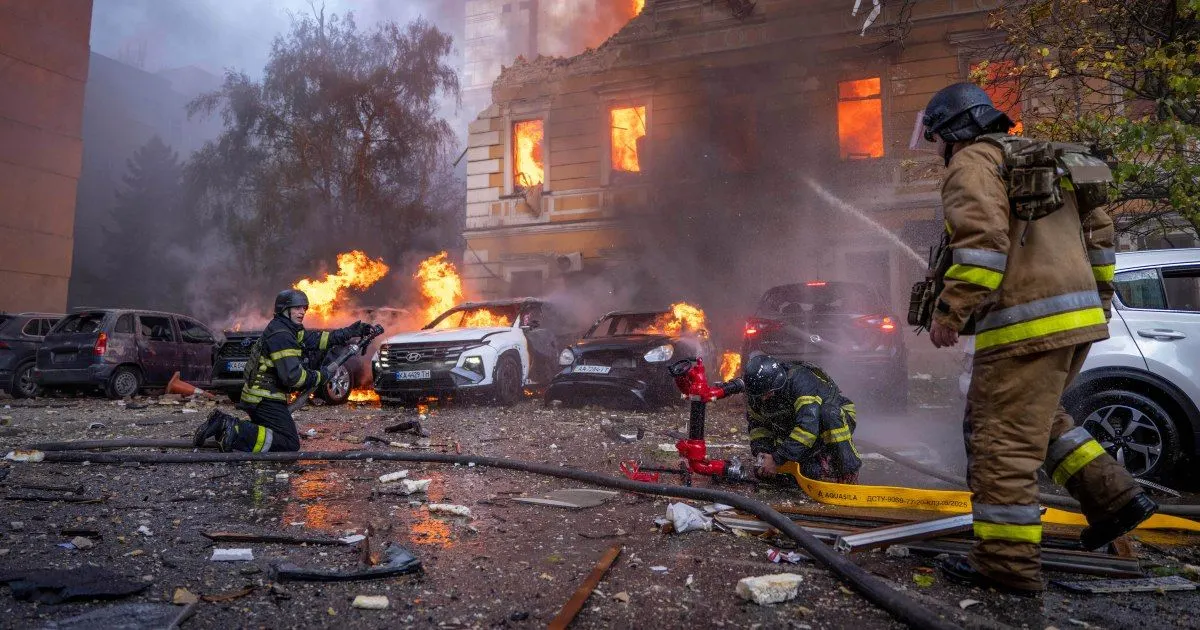
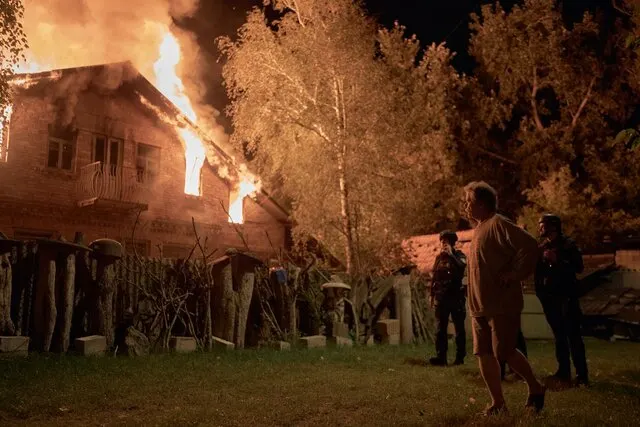
The Kyiv Independent described scenes at one burning building: "Videos posted to social media showed people clinging to the outside of windows as smoke poured from the building," and noted that "smoke was seen rising from numerous locations across the city center." The outlet said the Russian aerial campaign against Kyiv has lasted weeks with round-the-clock bombardment.4
Academy of Sciences hit
The Straits Times reported that a drone hit the National Academy of Sciences building in central Kyiv on Monday, leaving at least one person dead; Kyiv Mayor Vitalii Klitschko said 19 people were hurt overall, with six requiring hospital care. Other locations damaged in the capital that day included a drugmaker's facility, several gas stations and a clinic. Ukrinform separately confirmed that a Russian drone struck a National Academy of Sciences building in central Kyiv.15
The attacks extended beyond Kyiv. According to the Straits Times, three people died when a Russian drone hit a Dnipro business center, and a separate fatality occurred at a warehouse office in nearby Synelnykove, to the city's southeast. Prime Minister Sergii Koretskyi put the injury toll from the daytime strike on the Dnipro business center at 19, while Governor Oleksandr Hanzha noted the site sits near apartment blocks, a park, a library and office buildings. "Hundreds of people are here in the middle of the working day," Hanzha said.1
Foreign Minister Andrii Sybiha charged that Moscow is intentionally testing how much the global community will put up with, remarking: "Russia is deliberately expanding the boundaries of what it believes the world will tolerate. Every attack left without a strong response only encourages the next one." The Straits Times noted that both Russia and Ukraine reject claims of intentionally targeting civilian populations.1
President Volodymyr Zelenskiy reported that Ukrainian forces have managed to shoot down only slightly more than 50 percent of the newly deployed jet-powered drones Moscow has used against Kyiv and other cities lately. "Every one of Ukraine's partners must see from this terror, from these strikes, that supporting Ukraine means truly supporting people's lives," he said. The Straits Times reported that Moscow's strikes on economic infrastructure have grown to encompass more than just storage depots, ports and power facilities. Ukraine retaliated Monday by hitting oil installations in Russia's Krasnodar region along with a pair of military production sites.1
University shifts online
Taras Shevchenko National University of Kyiv announced it was switching to remote educational format from September 29 due to the deteriorating security situation in the capital, Ukrinform reported. The university said: "During this period, the educational process will be conducted using information and communication technologies in accordance with the approved schedules." It added that "university buildings and dormitories will provide round-the-clock access to shelters."5
Capability gap
The Washington Post reported that Russia's jet-powered drones are outpacing Ukrainian air defenses, describing a capability gap between the new weapons and Ukraine's existing defenses, as manufacturers race to build new interceptors. The outlet reported that Russia's new jet-powered drones overwhelmed Ukrainian air defenses in Kyiv's city center on October 1.3
Why it matters
The emergence of faster, high-flying jet drones that Ukraine can intercept only about half the time signals a shift in the aerial war that strains Kyiv's defenses and civilian infrastructure, including universities and research institutions. For European readers, the strain on Ukrainian air defense capacity and the search for new interceptors bears on the wider question of continued Western support for Ukraine's defense.13
Videos
Related stories
same actors
Version history
- version 1 ·