World · Ukraine, Russian Federation
Russia's Jet-Powered Drones Turn Kyiv Into Daytime War Zone
Faster, harder-to-intercept Russian drones have extended attacks on Kyiv into daylight hours, killing civilians and straining Ukraine's costlier air defences.
Listen to the story
Short version
Russia's faster, costlier jet-powered drones are enabling daytime strikes on Kyiv and other Ukrainian regions, killing civilians and straining Ukraine's air defenses.
- Sept. 25 Kyiv strikes killed 7, including a boy, injured 59
- Jet-powered drones fly faster and higher than older models
- Ukraine faces a $27 billion military budget gap
- Patriot missile stocks are low, partly due to the Iran war
- Attacks also hit Dnipro, Kharkiv, Ternopil and Zhytomyr region
What's new
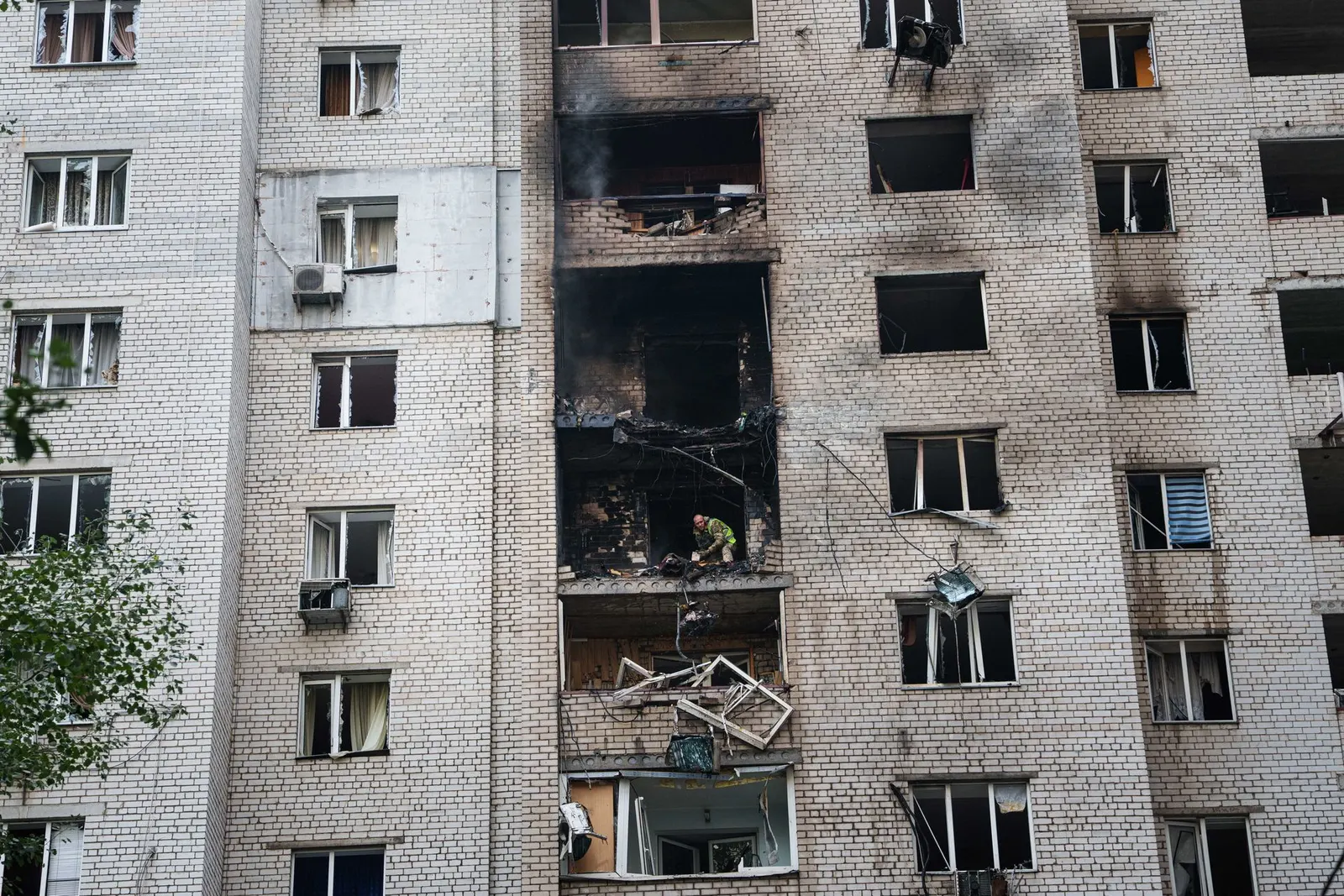
- Sept. 25 daytime strikes on Kyiv killed at least seven, including a 14-year-old boy, and injured 59
- A Russian jet-powered drone struck the National Academy of Sciences in Kyiv on Sept. 29
- A jet-powered drone hit Ternopil on Sept. 30 as a ten-pronged assault struck multiple regions
- Zelensky renewed appeals to Western allies for more Patriot interceptors
Russian drone and missile strikes killed at least seven people, including a 14-year-old boy, and injured 59 others in Kyiv on Sept. 25, 2026, as Russia's new jet-powered drones pushed daytime attacks on the Ukrainian capital, according to the Kyiv Independent.3
A capital under daylight fire
The Sept. 25 assault hit a five-story commercial building in Shevchenkivskyi district along with an office building in Solomianskyi district, leaving four dead and seven wounded; nearby, a clinic sustained damage that sent three people to the hospital, the Kyiv Independent reported. Kyiv residents endured a seventh air raid alert of the day, and Russian ballistic missiles separately killed two people and injured eight, the outlet reported. During the night, Russia fired off 282 strike drones spanning multiple types, along with jet-powered models, Zircon and ballistic missiles, the same outlet said.3
Residents described the strikes as sudden. Yana, a real estate agent whose building in Pecherskyi was damaged, recalled, "There was no alarm — just a muffled explosion. We were asleep and woke up immediately," she said, continuing, "We try to put it out of our minds and stay composed. But lately, our morale has taken a hit." Ivan, a retired resident of the same building, said he hadn't realized the strike hit their own building. There was no tremor, just a loud explosion," he said, adding that the strikes have become constant. We see the missiles flying, we see the Shaheds flying, but they've never hit us."3
President Volodymyr Zelensky said, "The Russians are constantly expanding their escalation operation: American and other businesses, data centers, internet providers — for Russia, ordinary life in and of itself is simply a target." A Kyiv data center's damage also disabled digital transit signage in Lutsk, leading the Lutsk City Council to state, "Currently, specialists are working to restore the operation of the relevant infrastructure and services."3
New drones, new arithmetic
Russian President Vladimir Putin has claimed Ukraine has no "antidote" to the new jet-powered drones, though Kyiv has already shown it can shoot some down, according to Meduza. The outlet reported that the Geran-3 model is roughly twice as fast as the older Geran-2, and that the new jet-powered drones cost several times more to produce than the Geran-2. Per Meduza, a completed Geran-5 unit runs upward of $100,000, and the drone is said to be capable of hitting targets across all of Ukraine, even a crossing point 600 kilometers from Russia's border.1
Ukraine's countermeasures also carry a price. Electric-powered interceptor quadcopters cost under $10,000 each, but it previously took three or four of them to down a single Geran-2, Meduza reported, with an average of four interceptors used per target destroyed. Conventional air-defense interceptor missiles cost at least $70,000 for older systems, while more modern missiles such as the AIM-120 and Sea Sparrow exceed $100,000 each; APKWS II missiles cost up to $20,000 each, according to the outlet. Meduza reported Ukraine has taken delivery of dozens of F-16 jets alongside under 20 Vampire units, and has built more than ten variants of electric interceptor drones domestically, while its intelligence services reportedly uncovered Russia's jet-drone initiative back in January 2026.1
Zelensky noted that a steep increase in spending on drones had created a $27 billion shortfall in this year's military budget. Meduza reported that covering full military spending at current rates would amount to almost 78% of Ukraine's GDP, while Russia's overall military spending has reached 9.4% of its GDP, roughly $250 billion a year. Meduza further noted that Russian jet-drone output now exceeds that of the older Geran-2, that Moscow aims to make the Dan-T its top-volume drone by manufacturing 10,000 annually, and that the Banderol missile packs a warhead double the weight of the Geran-5's.1
Air defences under strain
The Hindu reported that these jet-powered drones outpace and outclimb Ukraine's ground defenses, making reliable interception difficult, while Ukraine faces acute shortages of American Patriot missiles—supplies depleted mainly by the Iran conflict and only minimally replenished this year. A drone operator cited by Reuters said jet-powered drones "now fly at four, five, even seven kilometres, making it not realistic to down them with shoulder-fired missiles."27
According to The Hindu, Russia's approach aims to cut off Ukrainian civilians from heat and water service, and its strikes have targeted Kyiv data centers allegedly used by Ukraine's military—per Russian defense officials—along with depots holding drones and cruise missiles. The assault additionally hit Kyiv apartment complexes, homes and transit systems, while a separate Odesa strike caused harm to homes, civilian utilities, a school, an animal shelter and harbor facilities, per the outlet. The report also noted a continued stalemate along the front, Russia's plan to expand recruitment ahead of a fresh offensive, and Zelensky's claim that 10,000 additional North Korean soldiers are en route to Russia, joining 8,000 he said are already deployed there.2
Strikes spread beyond the capital
On Sept. 29, a Russian jet-powered drone struck the National Academy of Sciences in Kyiv, according to freemalaysiatoday.com. Volodymyr Gorbulin, who previously served as national security and defence council secretary, sustained minor injuries; he said, "I was at work at the academy at the time and was slightly wounded." The outlet reported that his assistant, who was nearby, died in the strike. The Academy characterized the attack as "Russian terror and barbarity, targeting peaceful people who were simply at their workplaces." That same day, per the outlet, a business center in Dnipro was hit, leaving four dead and at least 19 hurt; other strikes affected an eastern Kharkiv neighborhood, an ice cream plant in Zhytomyr region, homes in Sumy, Rivne and Odesa, and caused 30 civilian injuries in Zaporizhzhia. Additionally, a jet-powered drone hit a village along Ukraine's border with Poland, causing damage to a checkpoint there.6
On Sept. 30, a Russian jet-powered drone hit Ternopil, with debris falling on an industrial facility and no casualties reported, as part of what the Kyiv Post described as a ten-pronged assault on multiple regions. Taras Pastukh, who leads the Ternopil Regional Military Administration, stated, "This morning, a jet-powered unmanned aerial vehicle attack was launched against the Ternopil region," noting that the drone had altered its trajectory toward the region's main city. The Ternopil regional administration said, "As a result of the enemy drone being hit, debris fell onto the grounds of an industrial facility." Russian forces also carried out about ten attacks on civilian and transportation infrastructure in Zhytomyr region, and power outages hit Vinnytsia, Zhytomyr, Donetsk, Sumy and Kharkiv regions, with an emergency outage affecting central Rivne, according to the Kyiv Post. Officials projected no power usage limits would be needed for Sept. 29, and no fatalities or injuries were reported from these attacks. Separately, the outlet reported that a jet-powered Shahed had flown approximately 900 kilometers from Crimea into western Ukraine on Aug. 18, the first recorded flight of the type into western Ukrainian airspace.4
Political response
Zelensky renewed his appeal to Western allies for military support, including Patriot interceptors, according to freemalaysiatoday.com. Prime Minister Sergiy Koretsky suggested vulnerable residents relocate before winter, asking, "If a person lives on the 16th floor and power gets cut, why should we be handling people who need extra attention?" and adding, "For such people, it's worth finding an alternative place to stay for the winter period." European defence ministers discussed an EU emergency mechanism against Russian hybrid attacks, and Ukraine said it would postpone spending commitments, including reconstruction, due to delays in aid, the outlet reported.6
Why it matters
The strikes on Kyiv illustrate how a cheaper, faster generation of Russian weapons is outpacing Ukraine's more expensive Western-supplied interceptors, a cost imbalance that shapes how much military aid European governments must sustain. Shortages of Patriot missiles, linked partly to demand from the Iran war, show how conflicts elsewhere can directly affect Ukraine's ability to defend its cities.12
Videos
Related stories
same actors

Version history
- version 1 ·