World · Russian Federation
Russian Tu-95 Bomber Crashes in Far East, Killing Six
A Tu-95 bomber, capable of carrying nuclear weapons, went down while conducting a training mission over Russia's Amur region on Sept. 29, 2026, killing six of seven crew members. One survivor was hospitalized as investigators examined possible causes including a fuel explosion or engine failure.
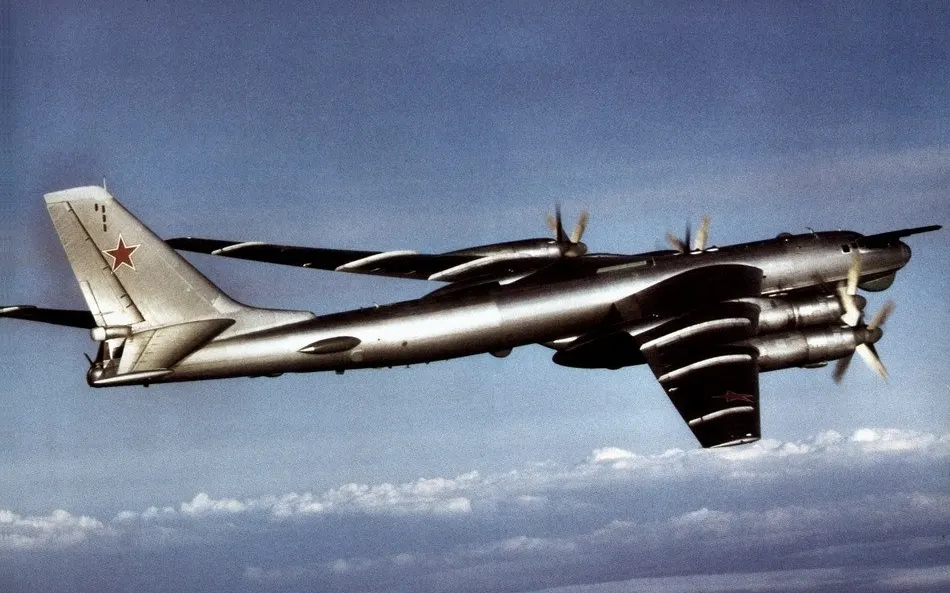
A Russian Tu-95 bomber crashed during a training flight shortly after taking off from Ukrainka air base in Russia's Amur region on Sept. 29, 2026, killing six crew members and injuring one.
- Six of seven crew members killed; one survivor hospitalized
- Crash occurred near Krasnoyarovo, shortly after takeoff from Ukrainka base
- Possible causes: fuel explosion or engine failure; unconfirmed reports cite three engines
- Ukrainka base used for cruise-missile strikes on Ukraine
- Criminal case opened, Aerospace Forces commission dispatched
What's new
- Six of seven crew members killed, one hospitalized after Tu-95 crash
- Crash occurred near Krasnoyarovo village shortly after bomber took off from Ukrainka air base
- Preliminary causes include fuel explosion or engine failure; unconfirmed reports say three of four engines failed
- Aerospace Forces commission dispatched and criminal case opened
- Multiple outlets confirm Ukrainka, a hub for missile strikes on Ukraine, as the bomber's home base
A Russian Tu-95 nuclear-capable strategic bomber crashed on Sept. 29, 2026, while flying a training mission over the Amur region in Russia's Far East, close to the village of Krasnoyarovo; six of the seven people on board died and one was injured, Russia's Defense Ministry said.1234
Crash and casualties
The bomber went down minutes after takeoff, according to Meduza and The Insider. Reports citing the Telegram channel Baza and The Kyiv Independent described a possible fuel explosion aboard the aircraft as the preliminary cause, while Defence Blog said Russian military sources attributed the crash to an engine failure during takeoff.7865
Defence Industry Europe reported that unconfirmed accounts suggested three of the bomber's four NK-12 turboprop engines failed during takeoff, though Russia's Defence Ministry has not specified a cause.10
Russia's Defense Ministry said the aircraft "crashed in a remote area" and that "six crew members were killed, and one was injured and evacuated to a medical facility," according to The Insider. The ministry also said the plane "went down in an uninhabited area during a training flight and was not carrying ammunition," Euronews reported.81
The Amur Region government said the crew "did everything possible to steer the aircraft away from residential buildings," an account matched by a regional administration statement cited by The Independent that "pilots did all they could to steer the plane away from residential buildings." According to The Insider, authorities launched a criminal probe citing Article 351 of Russia's Criminal Code, and Interfax reported via Al Jazeera that an Aerospace Forces commission traveled to the crash site to determine what happened.832
The aircraft and its base
According to Euronews and The Kyiv Independent, the Tu-95 is a nuclear-capable strategic bomber designed in the Soviet Union that made its maiden flight in 1952 and entered Soviet Air Force service four years later. Euronews reported that it is the sole propeller-driven strategic bomber still flying operationally anywhere in the world, while Defence Blog said the Tu-95MS version, equipped with wing-mounted cruise missiles, has repeatedly fired Kh-101 missiles at Ukrainian cities during the war.165
The Moscow Times reported that the downed plane had been based at Ukrainka, among Russia's biggest long-range aviation facilities, and that Krasnoyarovo, where it crashed, lies roughly 30 kilometers to the base's north. Meduza placed Ukrainka about 50 kilometers from the crash site.47
Defence Industry Europe reported that Ukrainka is among the bases from which Russian bombers have launched cruise-missile strikes on Ukraine, and that Russia had redeployed surviving strategic bombers to bases farther from the border following Ukraine's June 2025 drone attacks, a shift also referenced by The Kyiv Independent.106
Recent incidents involving Russia's bomber fleet
The crash follows a series of incidents involving Russian military aircraft. Euronews reported that in June 2025, Ukraine's security service conducted Operation Spiderweb, a clandestine drone strike on Russian airbases that damaged or destroyed over 40 aircraft, among them seven to eight Tu-95s. The Independent reported that Ukrainian officials in Kyiv described the operation's goal as "destroying as many aircraft as possible." Defence Blog said a truck carrying drones toward Ukrainka caught fire before reaching the base around the same period.135
Other recent crashes cited by outlets include a Tu-22M3 bomber that crashed in Irkutsk Region on June 15 while approaching for landing, an Antonov An-24 passenger plane that crashed in Amur Oblast on July 24, and a Mil Mi-8 helicopter that crashed on the Kamchatka Peninsula in August 2021.8625
Why it matters
The Tu-95 fleet forms part of Russia's nuclear-capable long-range strike force, and repeated crashes and drone-related losses raise questions about the condition of aircraft central to Russia's war effort against Ukraine, a conflict with direct security implications for Europe. The Kyiv Independent pointed out that sanctions have blocked Russia's aviation sector from obtaining components manufactured in the West.26
Videos
Related stories


Version history
- version 2 · Added multi-source confirmation that the bomber took off from Ukrainka air base, new detail on its NK-12 engines and unconfirmed reports of a three-engine failure, and context on Russia's redeployment of bombers to Ukrainka after Operation Spiderweb.
- version 1 ·