World · Serbia
Vucic Resigns as Serbian President After Party Already Dissolved Parliament, Named Him PM Candidate
Aleksandar Vucic stepped down as Serbia's president, after his Serbian Progressive Party named him its candidate for prime minister ahead of an upcoming election.
Listen to the story
Short version
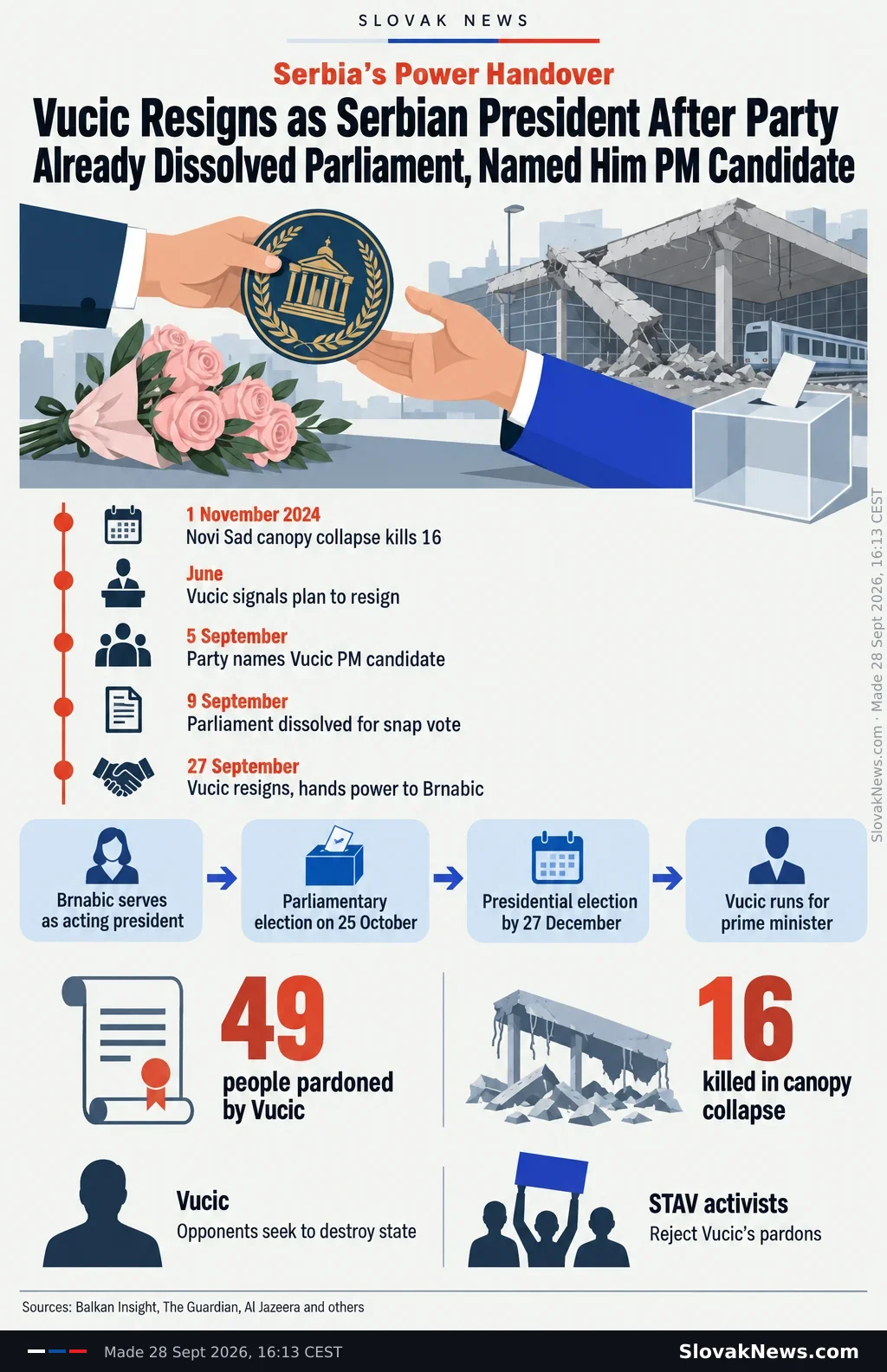
Vucic resigned as Serbia's president on September 27 to run for prime minister, formally handing power to Ana Brnabic, as new reporting details the handover, contested pardons and stalled Novi Sad investigations.
- Party nominated Vucic PM candidate Sept 5, dissolved parliament Sept 9
- Brnabic, ex-PM and speaker, became acting president; powers capped at 3 months
- Presidential election due by December 27
- Vucic pardoned 49 people; activist group STAV rejected the clemency
- OSCE found Vucic used presidency to aid his party in 2023
Infographic
What's new
- European Western Balkans reports Vucic formally handed over presidential duties to Ana Brnabic at a ceremony where he presented her with the presidential seal, pardon documents and official state records, along with a bouquet of pink roses
- The same outlet reports Vucic's pardons included opposition activists charged over an alleged attack on Serbia's constitutional order as well as people tied to his own Serbian Progressive Party; activists from the Novi Sad group STAV rejected the clemency
- An OSCE/ODIHR report cited by European Western Balkans found Vucic used the presidential office to his party's advantage during the 2023 campaign despite not being a candidate himself
- Reporting characterizes Brnabic's presidential authority as mostly symbolic and limited to no more than three months, and points out that she is unique in Serbian history for having occupied all three top state positions
- The presidential election must be completed no later than December 27, according to the latest reporting
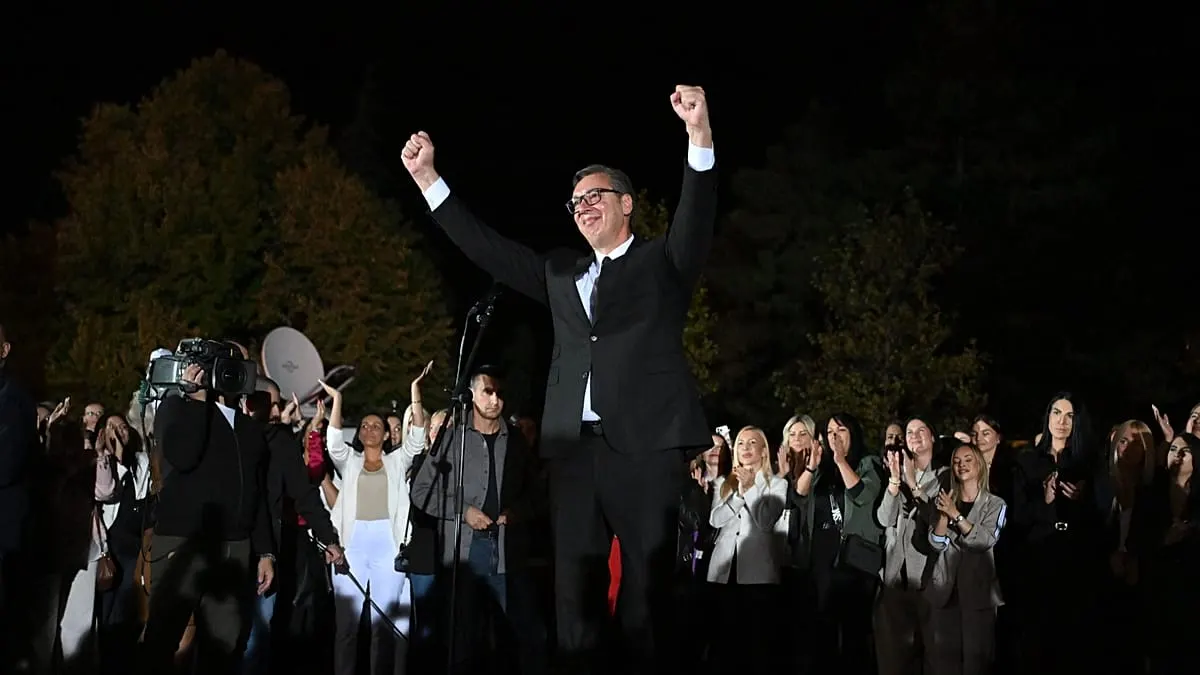
Serbian President Aleksandar Vucic resigned, ending his second term seven months early, after his Serbian Progressive Party named him its candidate for prime minister ahead of an upcoming vote.1379
Infographic
Resignation, dissolved parliament and a new candidacy
Under Serbia's constitution, Parliament Speaker Ana Brnabic, a close Vucic ally, assumed acting-president duties; Novosti and Politika reported she was to formally take over the following morning. Per Xinhua, Serbia's constitutional framework and presidential statute meant Vucic's departure became official as soon as lawmakers in the National Assembly received his written notification–no legislative vote was needed–and it obligates Brnabic to schedule a fresh presidential contest within three months. The presidential election has to conclude within 90 days after the National Assembly gets the resignation notice, with the campaign period running 30 to 60 days and voters casting first-round ballots before December ends.911616
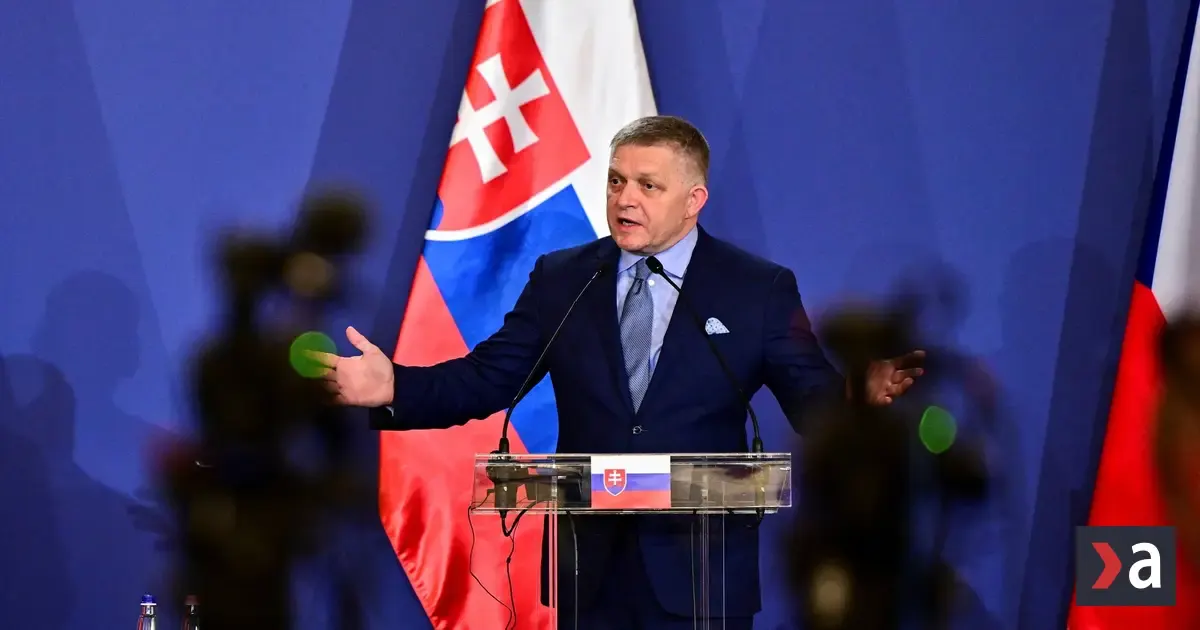
During a formal handover event, Vucic gave Brnabic the presidential seal, clemency paperwork and official government records, plus a bunch of pink roses, European Western Balkans reported. Vucic said he was resigning to campaign as "an ordinary person, as a man of the people, against those who are against the people," the outlet reported; Brnabic's presidential powers are described as mostly symbolic and capped at three months at most, and she is said to be the first and only Serbian to have held its top three government posts – prime minister, parliament speaker and president.11
Vucic also pardoned 49 people, 23 of them tied to the protest movement, according to Vucic's own remarks. Vucic himself said, "I have decided to pardon 49 people, 23 of them in connection with the terrible events we have gone through over the past year and a half." European Western Balkans reported the pardons also included opposition activists charged over an alleged attack on the constitutional order, as well as people connected to Vucic's own Serbian Progressive Party; activists from the Novi Sad group STAV rejected the clemency.26511
A twelve-year hold on power
Vucic has held either the presidency or the premiership since 2014, a run reporting describes as twelve years at the top, with his Serbian Progressive Party in power for a disputed fourteen years. He won the presidency in 2017 and secured a second term in 2022; that term was otherwise set to run until May of next year, and Serbia's constitution prevents him from pursuing a third one. Reporting also indicates Vucic had signaled plans to resign earlier in the summer, well before Saturday's announcement.8419
As president, Vucic said he wanted Serbia to join the European Union.51116
The Guardian and CBC described a gradual consolidation by the Progressive Party over state institutions since it took office in 2012, alongside accusations of corruption, links to organized crime and pressure on democratic freedoms. The Independent Bureau for Social Research filed a complaint alleging Vucic abused a public institution to promote his party, a complaint the same outlets report he dismissed – a characterization the dossier flags as disputed. The same outlets reported that democratic backsliding under Vucic, together with his refusal to align with sanctions against Russia, has left Serbia's EU accession bid at a standstill.41
Vucic's presidency has been described as having preserved "peace and stability" during his tenure – a characterization at odds with the accounts of protesters and rights groups, who accuse his government of corruption, organized crime ties and democratic backsliding.314
Protests since the Novi Sad disaster
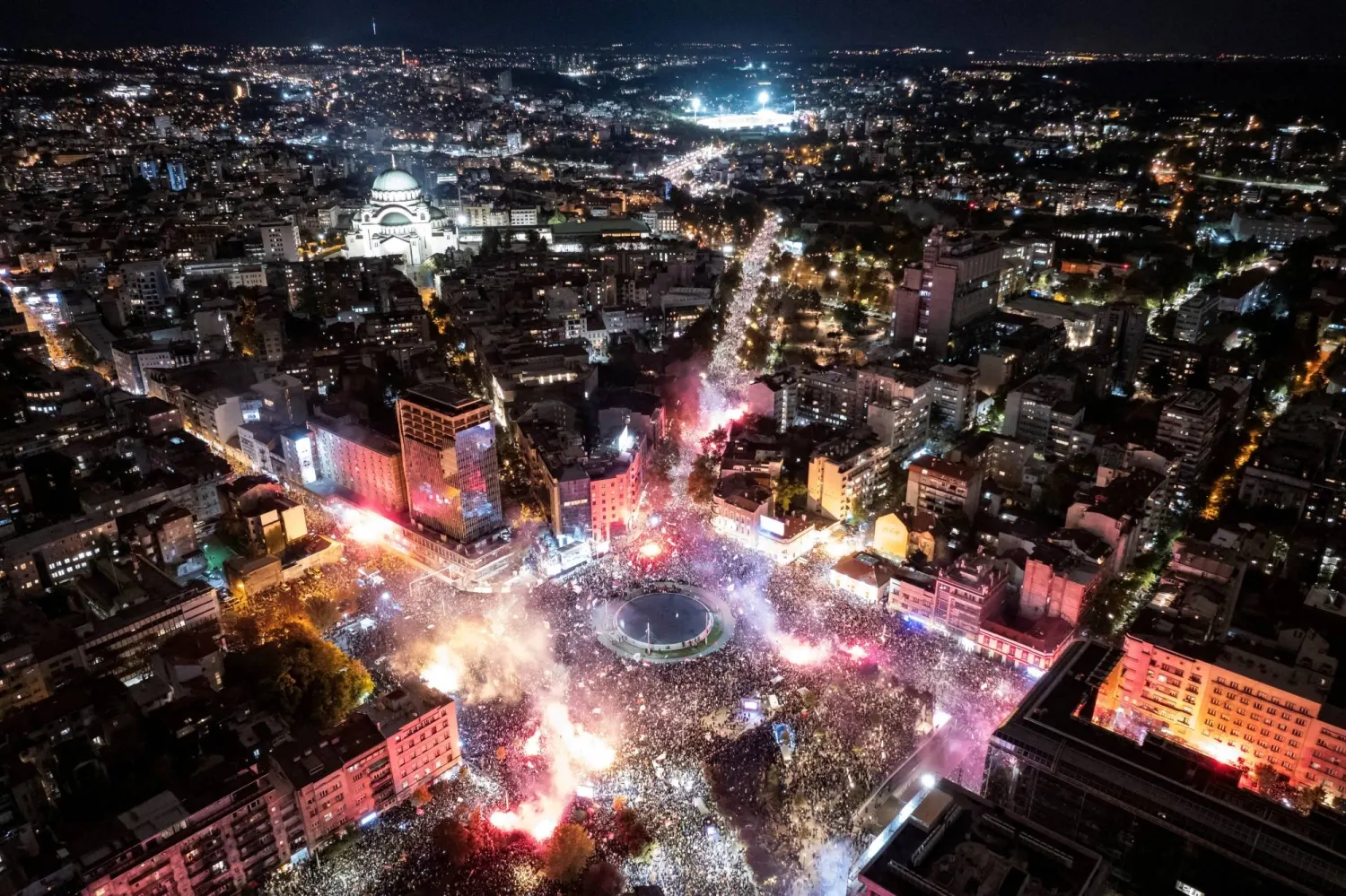
Vucic's departure follows protests led by students after a canopy at a train station in Novi Sad gave way on November 1, 2024, killing a reported 16 people, a death toll disputed by at least one outlet. Al Jazeera described the demonstrations as among the largest Serbia has seen in decades, with protesters accusing the government of corruption, lack of transparency and political interference; Vucic and his allies have rejected those allegations.2413
Balkan Insight reported that student-led faculty blockades expanded nationwide in the disaster's aftermath, with residents observing a weekly moment of silence each Friday and organizers planning a commemorative march for the anniversary; the movement's demands grew to include full disclosure of the station's reconstruction records and prosecution of those responsible.1
A pro-EU opposition party, European Serbia, is also contesting the October 25 vote.7
Students Win, a broadly non-partisan list that emerged from the protest movement following the Novi Sad disaster, is fielding a large slate of candidates with a largely pro-EU support base, the same reporting said.7
Analysts cited by the Guardian and CBC said polling shows the movement running close to Vucic's party.241
Eight months after the disaster, European Western Balkans reported no indictment had become final: prosecutors charged 13 people with endangering public safety in December and, after a separate probe was handed to organized-crime prosecutors, three more people with corruption in March, but appeals stalled the case further. A wave of renewed protests followed after former infrastructure minister Goran Vesic, indicted over the collapse, was released from custody, according to the same reporting.11
Vucic's remarks and contested claims
According to the Guardian and ksat.com, Vucic accused opponents and critical media of seeking to destroy the state under foreign influence, and told Serbia's state-run RTS Television that foreign powers and unidentified actors were planning to stir unrest on election night. These claims appear across two dossier sources but remain his characterization of unnamed threats and are not independently corroborated.111
Why it matters
Serbia's political trajectory affects the wider Balkans and its stalled bid to join the European Union, which reporting links to democratic backsliding and Belgrade's refusal to join sanctions against Russia. With parliament now dissolved and Vucic formally running as his party's candidate for prime minister, the October 25 election has become a direct test between his Progressive Party and a student-backed opposition movement.4112
Videos
Related stories
Version history
- version 8 · Added new detail from European Western Balkans on the formal handover ceremony, the contested pardons, an OSCE finding on Vucic's use of the presidency in 2023, and Brnabic's ceremonial, time-limited presidential role.
- version 7 · Added deeper background on the Novi Sad disaster's precise toll and stalled investigations, including new protests triggered by ex-minister Goran Vesic's release from custody, plus expanded timeline and sourced details.
- version 6 · Added detail on opposition parties European Serbia and Students Win, a breakdown of the 49 pardons, new farewell-speech quotes, and geopolitical framing of the October 25 vote.
- version 5 · Added the constitutional mechanism behind Vucic's resignation and Brnabic's three-month mandate to call elections, plus new verbatim quotes from his farewell address.
- version 4 · Added background on Vucic's Milosevic-era career and multi-directional foreign ties, plus new reporting on police-violence allegations and two ministers arrested or resigning over the Novi Sad disaster.
- version 3 · Corrected the sequence of events to show the Serbian Progressive Party nominated Vucic and dissolved parliament in early September, before his September 27 resignation, and added details on his 2017 election, 2022 re-election, and economic grievances behind the protests.
- version 2 · Added confirmation that parliament was dissolved and Vucic was formally nominated by his party as its prime ministerial candidate, alongside fuller sourcing on the pardons and his summer resignation plans.
- version 1 ·