Students’ List projected to win 140 seats after Vučić concedes
The BBC reports a 140-seat projection for Serbia’s student-backed movement, whose candidates included no students. Analysts expect closer scrutiny of Chinese investments rather than a break with Beijing.
Listen to the story
Short version
Vučić conceded defeat as polling groups projected a parliamentary majority for Students’ List. Final certified totals remain unavailable in the dossier.
- CeSID and Ipsos projected 140 Students’ List seats, the BBC reports.
- No students stood among the movement’s candidates, according to the BBC.
- The Novi Sad canopy collapse killed 16 people and triggered protests.
- The programme proposes anti-corruption policing and removing officials implicated in misconduct.
- Analysts expect scrutiny of Chinese investments, not severed ties.
What's new
- CeSID and Ipsos projected 140 Students’ List seats in the 250-seat parliament, according to the BBC.
- NPR reports that Students’ List claimed more than half the votes; final certified totals are not provided.
- The BBC says no students stood among the movement’s candidates.
- New reporting details the movement’s anti-corruption proposals and questions about its cohesion.
Independent polling groups CeSID and Ipsos projected that Serbia’s Students’ List would win 140 of parliament’s 250 seats, the BBC reported on October 26, after Aleksandar Vučić conceded defeat. NPR reported that the movement claimed more than half the votes. The figures are not final certified results in the dossier.23
From protests to parliamentary seats
CeSID and Ipsos projected 140 Students’ List seats in the 250-seat parliament, the BBC reported. The Guardian had reported a preliminary range of 135 to 140 seats, with SNS on 105. NPR reported that Students’ List claimed more than half the votes and that SNS finished a distant second. Final certified totals are not provided.123
The movement grew from protests after a concrete canopy collapsed at Novi Sad railway station in November 2024, killing 16 people, according to the BBC and NPR. The BBC reported that the protests expanded into a national movement involving farmers, actors and judges. The Guardian reported that hundreds of thousands participated in peaceful protests over nearly two years.123
Students’ List fielded 250 candidates, none of them students, according to the BBC. The Guardian reported that the slate included people holding more than 160 doctorates, farmers and athletes. Its programme proposes a referendum on future European Union membership and describes Kosovo as an integral part of Serbia, according to the Guardian.12
How the movement will govern remains uncertain. NPR reported that most opposition parties stood aside to give it a clear electoral run. Kurt Bassuener, co-founder of the Democratization Policy Council, warned that divisions within the broad coalition could emerge after victory and said the allocation of posts remained unclear.3
The BBC reports that the movement’s 11-point programme calls for a police unit to arrest people responsible for corruption and the removal of officials who violated rules during the protest crackdown or were linked to organised crime. Vučić and SNS deny corruption and attempts to influence the media, the broadcaster reports.2
Celebrations on familiar streets
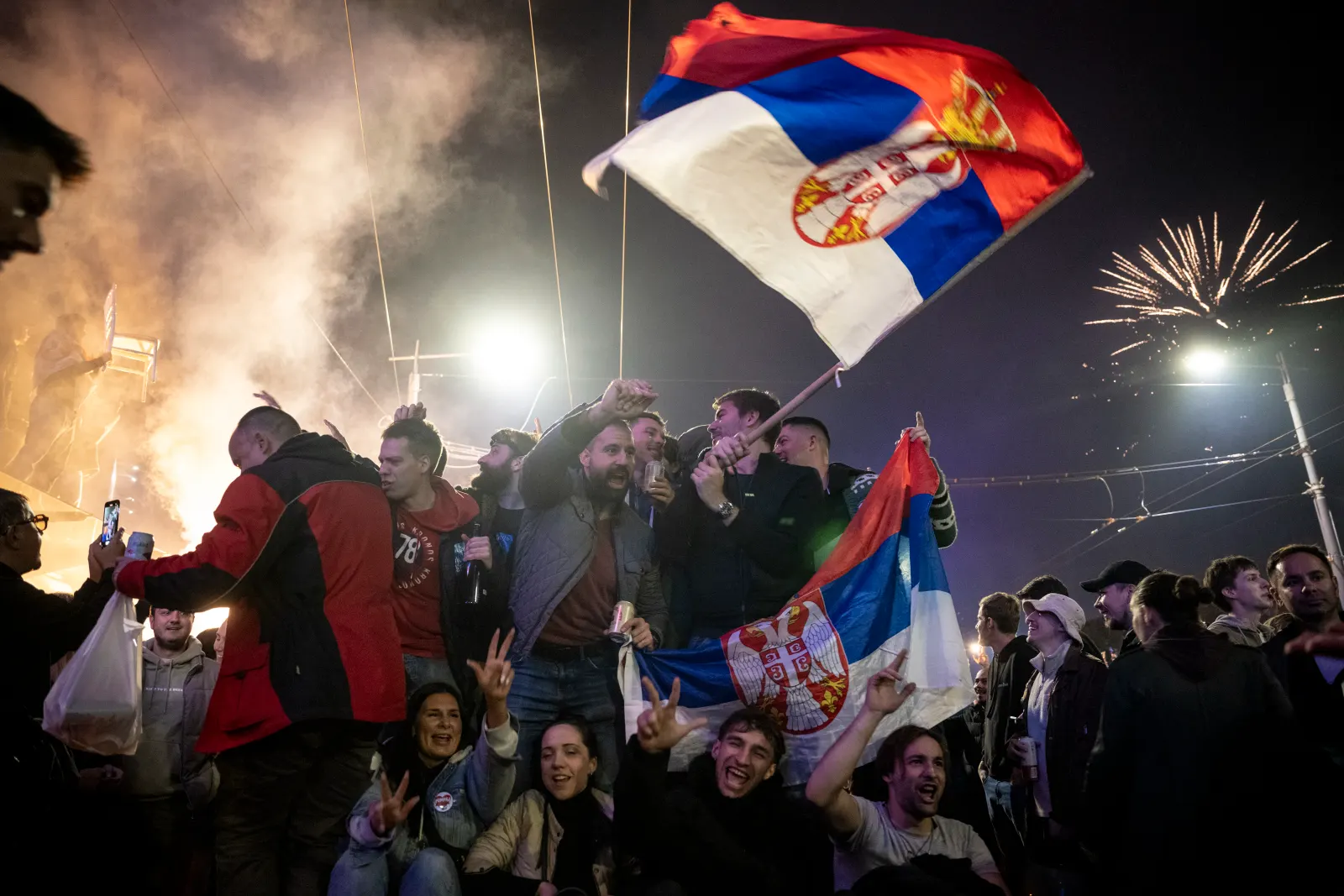
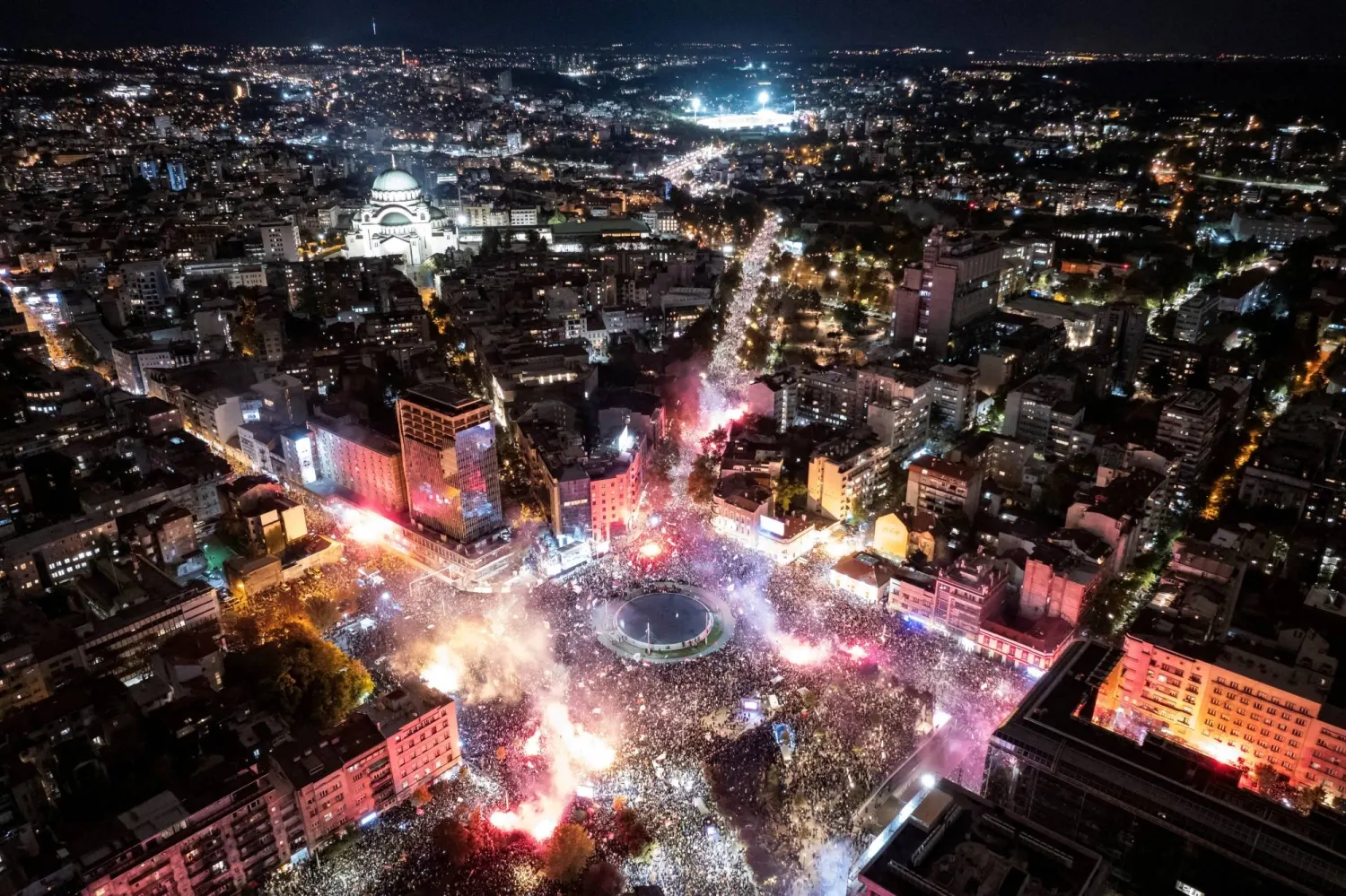
In central Belgrade, crowds removed fences and tents that had restricted access to a park where Vučić supporters had been camping for more than a year, the Guardian reported. The South China Morning Post also described large gatherings across the city, with fireworks and people dancing.14
For Sara, a 24-year-old participant quoted by the Guardian, the celebrations took place on streets where demonstrators had previously faced police violence and withdrawn before the gendarmerie. She said: “It’s simply the realisation of our dream.”1
The Guardian reported that police had used batons and teargas against the student-led protests, and possibly a sound cannon. It also described a government that repeatedly threatened critics and eroded press freedoms. Those accounts formed the backdrop to the relief expressed by celebrants interviewed by the newspaper.1
NPR reported that volunteers cleaned up debris left by the pro-government camp after the election. Volunteer Radomir Delic described the cleanup as taking place amid a new sense of freedom.3
Attention turns to China ties
The South China Morning Post focused on what the result might mean for Serbia’s relationship with China. Analysts cited in its report said diplomatic relations could cool and Chinese investments could face more searching examination, but did not expect the relationship to be overturned.4
That assessment rested on a relationship developed through years of cooperation, the newspaper reported. Its account presented closer scrutiny, rather than a break with Beijing, as the likely consequence of the political change; these were analysts’ expectations, not reported decisions by the student movement.4
Why it matters
The student-backed movement’s programme proposes anti-corruption policing and the removal of officials implicated in misconduct, according to the BBC. The Guardian reports a proposed referendum on future EU membership, while analysts cited by the South China Morning Post expect greater scrutiny of Chinese investments rather than a rupture with Beijing.124
Related stories
same actors
Version history
- version 2 · This update adds the 140-seat projection, the movement’s non-student candidates and reform proposals, governance uncertainties and corrected source references for the China coverage.
- version 1 ·