Taraba ousted after seven SNS lawmakers back no-confidence motion
The environment minister was dismissed with 77 votes after SNS lawmakers joined the opposition. SaS leader Branislav Gröhling called the state budget a major test of the government’s weakened majority.
Seven SNS lawmakers helped the opposition dismiss Environment Minister Tomáš Taraba. Gröhling says the vote weakened the government’s majority and made the budget a crucial test.
- Taraba was dismissed in a parliamentary no-confidence vote.
- The motion passed with 77 votes, including seven from SNS.
- Fico was absent as Taraba defended himself.
- Gröhling expects negotiations with additional lawmakers on individual measures.
- SaS plans further attempts to dismiss ministers.
What's new
- Parliament dismissed Environment Minister Tomáš Taraba in a no-confidence vote.
- The motion received 77 votes, including those of seven SNS parliamentary group members.
- SNS lawmakers and the opposition changed the session agenda to bring forward the vote.
- Gröhling described the state budget as a major test of the government’s ability to secure support.
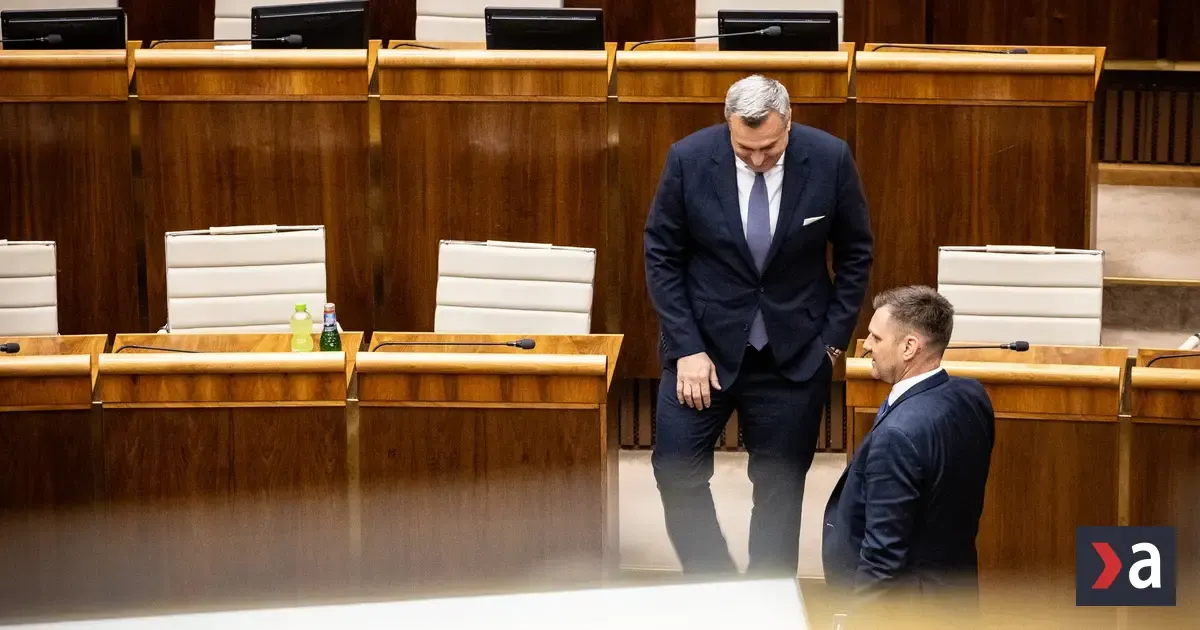
Slovakia’s parliament dismissed Environment Minister Tomáš Taraba after seven members of the coalition SNS parliamentary group joined the opposition-backed no-confidence motion. SaS chairman Branislav Gröhling said the vote showed Prime Minister Robert Fico’s majority was less stable and identified the state budget as a major test for the government.1246
An attempt to ease opposition disputes
Gröhling said the current opposition parties should identify policies they could jointly present to voters and later implement if they entered government. He said he could act as a mediator among the parties and argued that cooperation would not require them to eliminate all their political differences.125
The SaS leader has begun communicating with Igor Matovič, chairman of Hnutie Slovensko, and proposed a face-to-face meeting. Gröhling said that, apart from routine exchanges in parliament, he and Matovič had not spoken substantially for about two years. He also said Hnutie Slovensko had sometimes discussed other opposition parties in an unusual or vulgar manner.125
Gröhling proposed bringing the entire parliamentary opposition together in Bratislava for events on 17 November. SaS will accept Hnutie Slovensko’s invitation to participate in protests that day, although Gröhling said the party might not have enough lawmakers to cover every protest location.125
Gröhling nevertheless drew a boundary around the proposed cooperation, saying the extra-parliamentary Maďarská koalícia was not aligned with the broader opposition grouping. He also maintained that decisions about a party’s leadership belonged to that party and its voters.125
SaS prepares its programme and candidates
SaS said its parliamentary group could grow and that it was discussing pre-election cooperation with smaller parties. Gröhling indicated that such arrangements were more likely to involve figures from those parties joining the SaS candidate list than a different form of alliance. Eva Polerecká and Štefan Hamran were named as possible candidates in a parliamentary election.12
The party’s programme contains 18 chapters and 400 measures and is due to be published online. Its proposals include abolishing some ministries as part of a reduction in the size of the state and targeting thirteenth-pension payments rather than distributing them without such criteria.12
Pressure on the governing coalition
Krúpa, a member of the National Council’s defence and security committee, said the opposition intended to continue efforts to dismiss ministers. Parliament had removed Environment Minister Tomáš Taraba in a no-confidence vote, a step Gröhling described as correct and as a sign that Prime Minister Robert Fico no longer had as stable a majority.1236
Progressive Slovakia submitted the no-confidence motion, which passed with 77 votes, including those of seven SNS parliamentary group members. SNS lawmakers joined the opposition in changing the session agenda to bring the vote forward. Fico did not attend, and the debate became a direct confrontation between Taraba and SNS leader Andrej Danko.4
Gröhling said Danko was responsible for Taraba’s removal and that SaS had participated in the process. He also claimed that nobody had pressured SaS lawmakers during the dismissal; that assertion has not been independently confirmed in the dossier. Gröhling said SaS would not actively seek Taraba’s support after his return to parliament, although the party would watch whether he backed the opposition proposal to abolish the transaction tax.126
Gröhling argued that the government would now have to consult unaffiliated lawmakers or other parliamentary groups on important measures, whose support could depend on their own demands. He identified the state budget as a major test. Krúpa said Fico would have to make further concessions and that an early election remained possible, while Gröhling said Taraba’s dismissal did not automatically require one.1256
Deputy Prime Minister and Defence Minister Robert Kaliňák offered a different assessment. According to STVR, he said the coalition would complete its term properly. Denník N reported that Kaliňák described Smer-SD as a stabilising force in the coalition and said Fico had handled the Taraba case ideally.34
The political manoeuvring comes before Slovakia’s municipal and regional elections, scheduled for 24 October 2026.3
Why it matters
The vote deprived the governing coalition of certainty that it can command a parliamentary majority. The government may now have to negotiate with unaffiliated lawmakers or smaller groups on individual measures, while the opposition is seeking greater coordination and plans further attempts to dismiss ministers.1234
Related stories
Version history
- version 2 · The update adds the 77-vote removal of Taraba, the support of seven SNS lawmakers and Gröhling’s warning that the state budget will test the government’s weakened majority.
- version 1 ·