World · Switzerland
States agree to further UN negotiations on autonomous weapons by 2028
Countries meeting in Geneva agreed to continue work on a possible accord on lethal autonomous weapons. Whether the measures will be legally binding remains unresolved, according to reporting on the talks.
Listen to the story
Short version
States agreed to further autonomous weapons negotiations through 2028, without committing to binding rules, NPR reported.
- The Geneva talks continued work toward a possible accord.
- Future measures could be binding or voluntary, NPR reported.
- The Red Cross renewed its demand for a binding treaty.
Infographic

What's new
- States agreed to two more years of work on a possible autonomous weapons accord.
- The outcome did not commit countries to binding rules, NPR reported.
- The Red Cross renewed its appeal for a legally binding treaty.
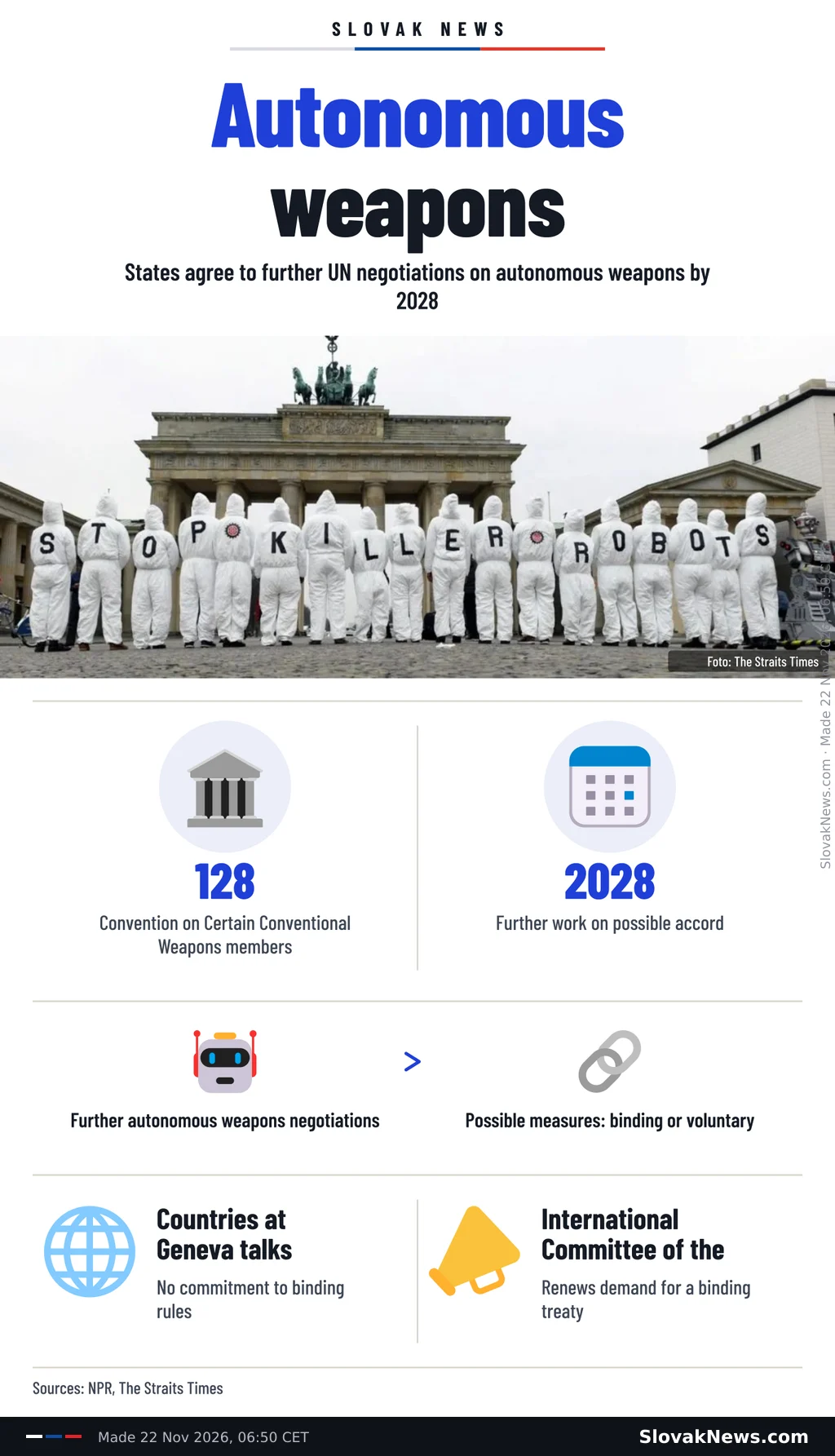
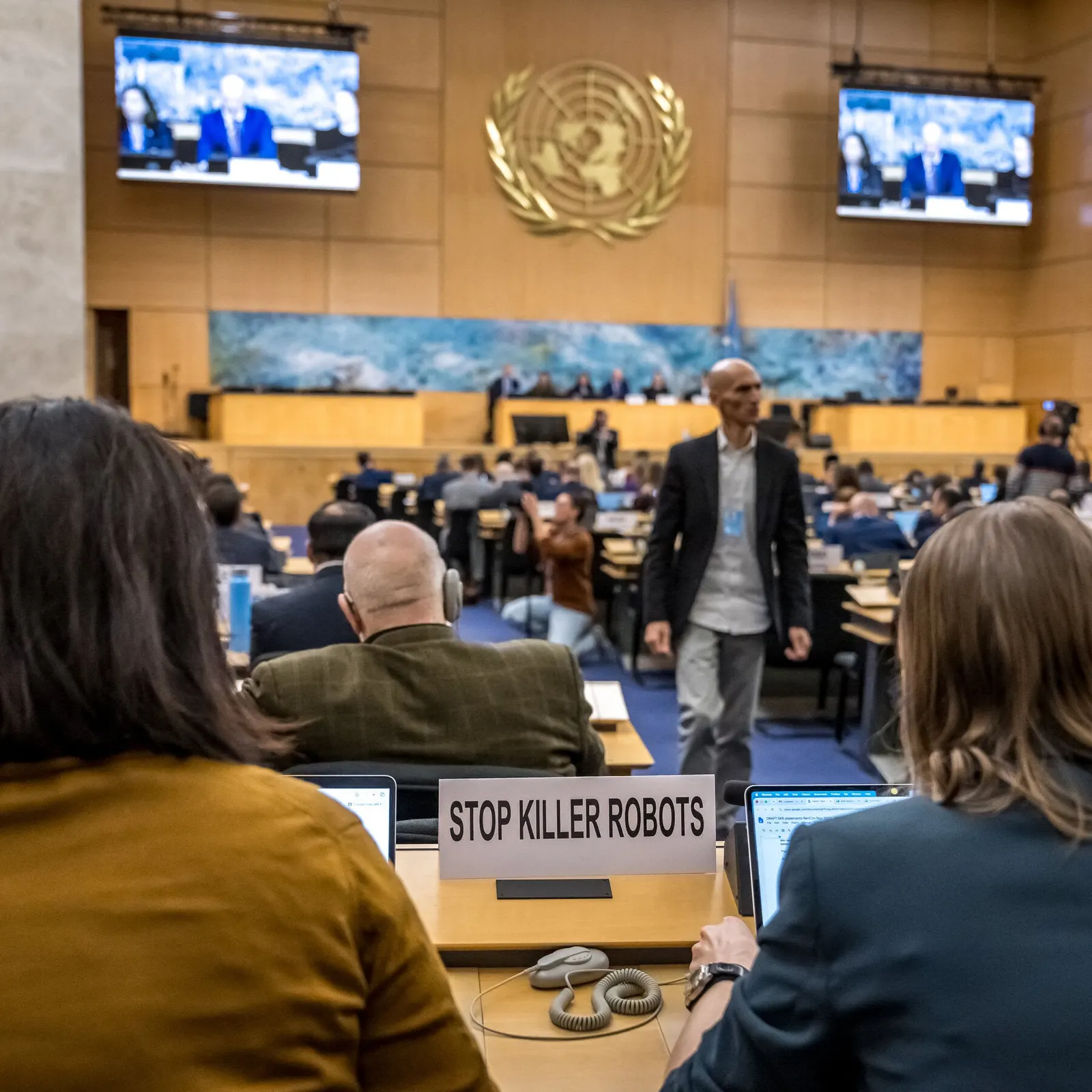
Countries at United Nations talks in Geneva agreed to continue negotiations on a possible accord on lethal autonomous weapons through 2028, according to reports published on November 21, 2026. The week-long conference ended without a commitment to binding rules, NPR reported.12
Infographic
Two years to consider options
The meeting took place under the Convention on Certain Conventional Weapons, which has 128 member states. The Straits Times reported that proceedings concluded after 4 a.m. local time, with an agreement to pursue work on new rules over the following two years.12
Under the compromise, countries can propose measures that would either impose legal obligations or remain voluntary, according to NPR. The agreement therefore continues the negotiating process without settling the legal status of any eventual controls. The Straits Times also reported that this question remained open.12
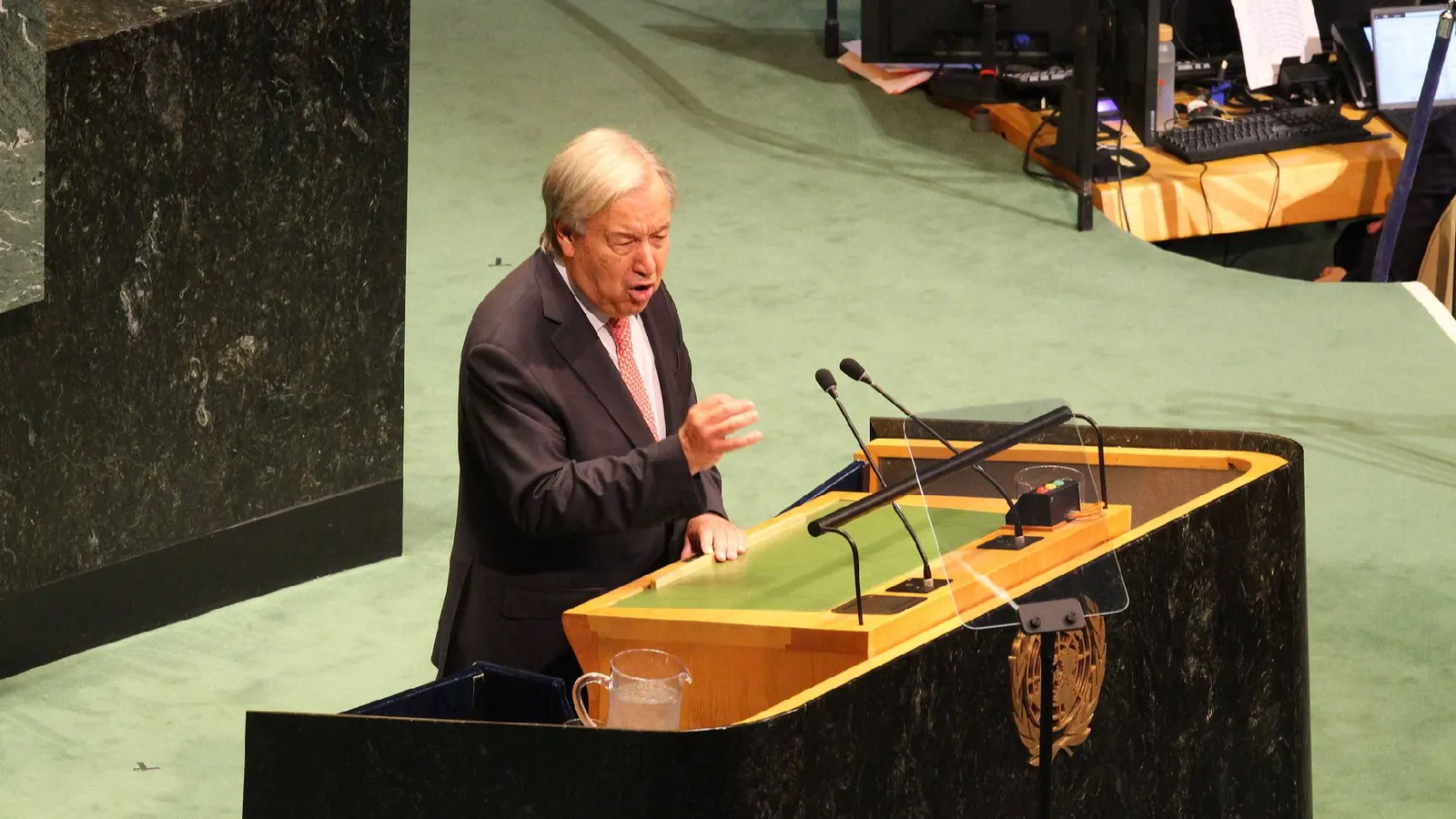
Izumi Nakamitsu, the UN high representative for disarmament affairs, welcomed the outcome as an important accomplishment, NPR reported. But the timetable fell short of the hopes of UN secretary-general António Guterres, who had sought a legally binding deal in 2026, according to the same report.1
Disagreement over binding rules
Before the meeting, seven countries had proposed negotiations on rules to prevent or restrict machines from killing without human control or accountability, NPR reported. It said most countries supported pursuing a treaty, but the convention operates by consensus, allowing one country to prevent agreement.1
The Straits Times reported that around 100 countries supported legally binding rules and that opposition from the United States, Russia and Israel led to a less demanding agreement. Separately, NPR reported that activists accused Russia and the United States of obstructing stronger wording.12
The United States proposed spending five years discussing voluntary guidelines, according to NPR. The campaign group Stop Killer Robots said the final negotiating mandate had been weakened. The International Committee of the Red Cross expressed regret over the compromise and repeated its call for a binding treaty.1
Human control and accountability
NPR reported that the Red Cross had urged countries to produce mandatory legal rules within one year, with Guterres and Pope Leo supporting that request. Its legal adviser Georgia Hinds raised concerns about delegating decisions over human life to computer programming and about accountability for unlawful actions.1
“You cannot hold a machine accountable for a violation of the law,” Hinds said. NPR reported that existing rules of war leave commanders responsible for ensuring force is used lawfully. The negotiations concern what additional controls should apply to weapons operating with little or no human oversight.12
Why it matters
For European readers, the issue includes weapons reportedly used in the conflict in Ukraine: The Straits Times identified Ukraine among places where lethal autonomous systems have been deployed. The Geneva agreement leaves unresolved whether future international controls will carry legal obligations.2
Related stories
Version history
- version 1 ·