Science & Tech · United States of America, Germany
Three Scientists Win 2026 Nobel Medicine Prize for Optogenetics
Karl Deisseroth from the United States and Peter Hegemann and Georg Nagel from Germany received recognition for their work on light-sensitive ion channels.
Three scientists won the 2026 Nobel Medicine Prize for developing optogenetics, a method to control brain cells with light.
- Deisseroth, Hegemann, and Nagel awarded 2026 Nobel Prize in Medicine
- Prize for discoveries in light-gated ion channels and optogenetics
- American and two German scientists share the honor
- Prize amount is 12 million Swedish crowns ($1.2 million)
- Optogenetics lets scientists switch nerve cells on or off with light
What's new
- Nobel Prize in Physiology or Medicine 2026 awarded to three scientists
- Prize recognizes work on optogenetics and light-controlled nerve cells
- Laureates will share 12 million Swedish crowns ($1.2 million)
In 2026, three researchers received the Nobel Prize in Physiology or Medicine for identifying light-activated ion channels and developing optogenetics, a technique that uses light to regulate neuronal activity.2
Prize details
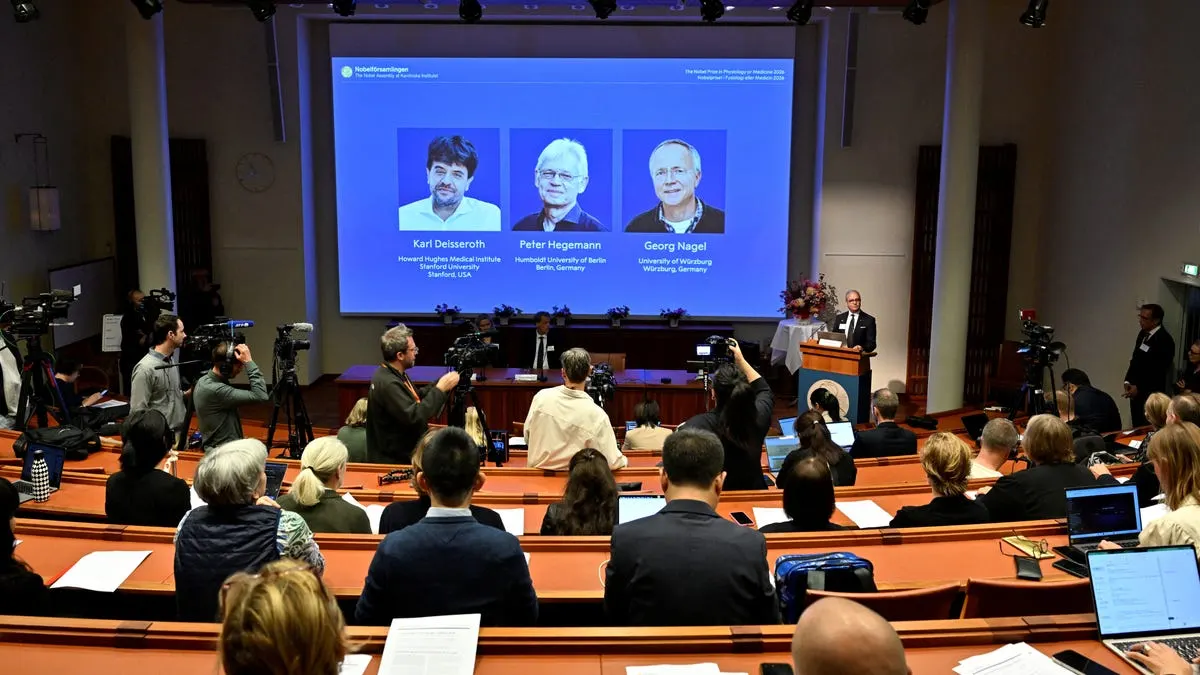
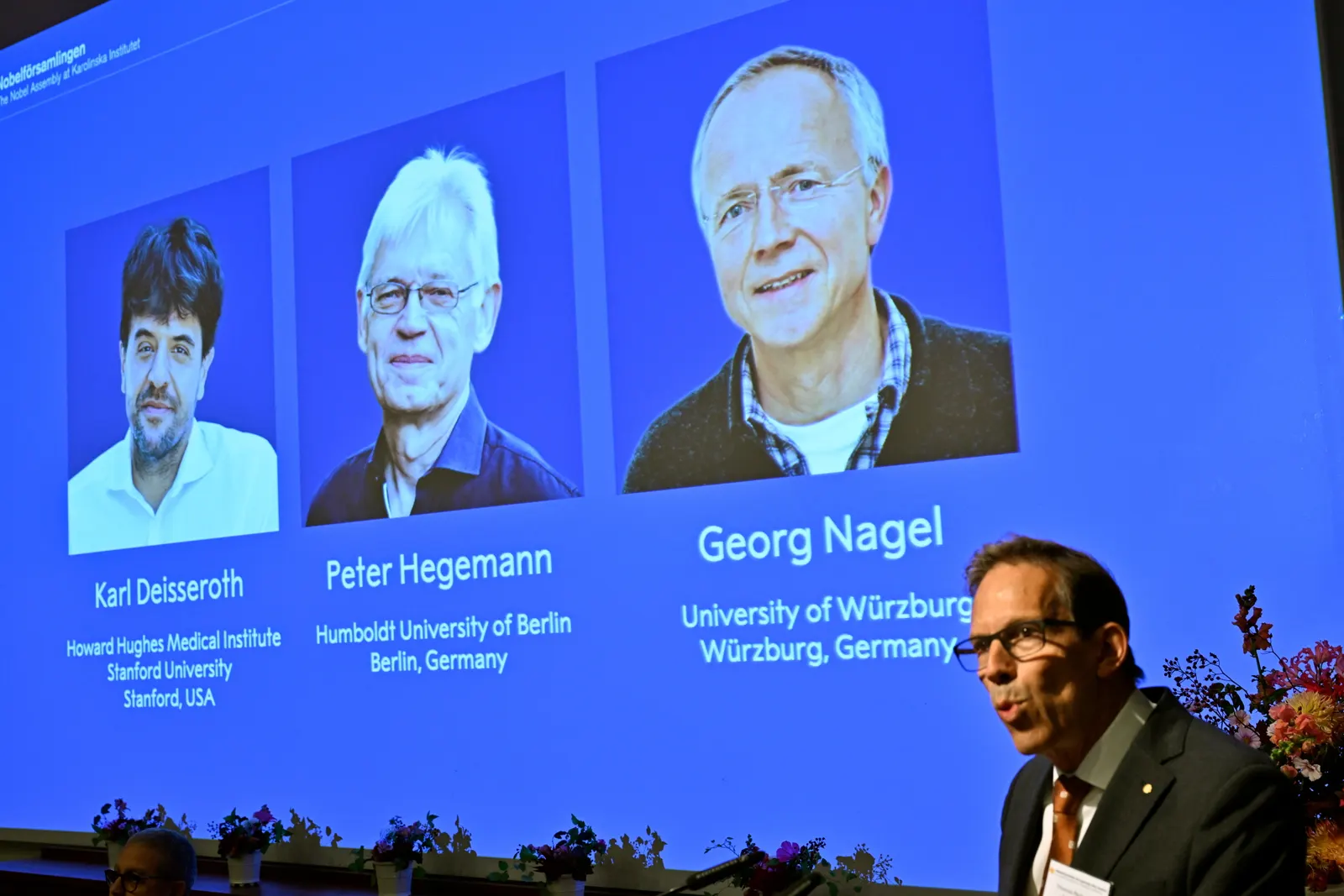
The Nobel Assembly at Karolinska Institutet selected Karl Deisseroth, Peter Hegemann, and Georg Nagel as joint recipients of the 2026 Nobel Prize in Physiology or Medicine due to their findings on light-gated ion channels and optogenetics.4
On Monday, Karl Deisseroth of the United States and Peter Hegemann and Georg Nagel of Germany were awarded the 2026 Nobel Prize in Physiology or Medicine for their contributions to light-based research and optogenetics.3
Laureate information
Karl Deisseroth, aged 54, is associated with the Howard Hughes Medical Institute and Stanford University; Peter Hegemann, 71, is based at Humboldt University in Berlin; and Georg Nagel, 73, is affiliated with the University of Würzburg.3
Why it matters
The award highlights a transformative method for studying the brain that allows researchers to switch individual nerve cells on or off with light, enabling deeper understanding of neural circuits. This technology is being used globally to investigate brain function and holds promise for treating neurological disorders.2
Videos
Related stories
Version history
- version 1 ·