World · United Kingdom, France
UK-France 'One In, One Out' Migrant Deal Expires Unrenewed
A year-long pilot scheme allowing Britain to return Channel migrants to France in exchange for asylum seekers has lapsed after talks on an extension collapsed, with Paris pushing instead for a Europe-wide arrangement.
The UK-France 'one in one out' migrant returns deal expired on 1 October 2026 after talks on extending it failed, with France seeking a wider European agreement instead.
- Deal expired Oct 1, 2026 after extension talks collapsed
- France's ministry confirmed talks on formal withdrawal
- Officials say scheme never reached deterrent scale
- About 1,500 people returned to France; similar number to UK
- Deaths occurred in Channel crossings around the deal's end
What's new
- The UK-France 'one in one out' returns pilot expired on 1 October 2026 after extension talks failed
- France's interior ministry confirmed it was negotiating the terms of withdrawal from the agreement
- Officials on both sides said the scheme never reached the scale needed to act as a deterrent
- A child and two women died in a Channel crossing in the same week the deal lapsed
The UK-France 'one in one out' migrant returns deal expired on 1 October 2026 after negotiations between London and Paris to extend it broke down, with France declining to expand the numbers exchanged and pressing instead for a Europe-wide agreement.134
How the pilot worked
Then-UK Prime Minister Keir Starmer and French President Emmanuel Macron unveiled the initiative in July 2025, with the first transfer flights departing that September. The arrangement allowed Britain to detain and send back to France people who had arrived by crossing the Channel in small boats, while France, in exchange, transferred a matching number of asylum seekers who had connections to Britain.2345
The Straits Times reported that transfers were meant to happen within three months of arrival at the latest, and that the UK had to send someone back within two weeks of their arrival. France was not obliged to accept unaccompanied minors or people deemed security threats.5
Accounts of the pilot's intended duration differed. Agence France-Presse reported it was initially agreed to last a year and had been extended to 1 October. According to the Guardian, the agreement was originally set to end in April, but its duration was pushed back to October in order to address an expected increase in summer crossings. The South China Morning Post reported the agreement was meant to run for three years, with a clause allowing either side to end it earlier.267
Why the talks collapsed
Talks to prolong the arrangement collapsed because France was insisting on a continent-wide returns framework and was hesitant to raise the volume of people being exchanged. France was not prepared to continue the scheme alone with Britain.12
French Interior Minister Laurent Nuñez recounted having informed his UK counterpart back in June that the trial program, agreed to in August 2025, was never meant to continue past 1 October 2026: "I have therefore already made it clear to my counterpart that this pilot agreement, which we signed in August 2025, was not intended to be extended beyond 1 October 2026."16
Le Monde, cited via AFP, reported that UK Prime Minister Andy Burnham urged Macron during September to preserve the arrangement, though French officials were eager to wind it down, with the paper noting "Paris was in a hurry to end the cooperation."68
The French interior ministry confirmed it was negotiating the terms of withdrawal. A ministry source said: "We are discussing the terms of withdrawal from the agreement with the British."568
UK officials said the scheme had struggled operationally, in part because of detention space constraints that made it difficult to increase removals. Home Secretary Shabana Mahmood said: "What has been more operationally difficult is to scale up very large numbers of removals every week into the French system."126
Numbers, costs and deaths
French and British officials said about 1,500 people were returned to France under the deal, with a slightly smaller number transferred to Britain. The Guardian reported a different figure, saying more than 1,400 people had been sent back to France with a reciprocal number of asylum seekers flown to the UK, at a cost of about £56,000 for every person returned.1679
The Guardian reported that, as of late June 2026, a total of 1,117 people with UK connections had been moved from France to Britain under the program. The same reporting said flights removing detained people would continue but were expected to end within weeks.2
According to the Guardian, 19,135 individuals made the crossing via small boat between January and 27 September, which the paper described as a 42 percent drop compared with the same stretch the year before. AFP reported a figure of 19,196 crossings for 2026 overall, also described as a 42 percent year-on-year fall, and said at least 22 people had died crossing the Channel during the year.126
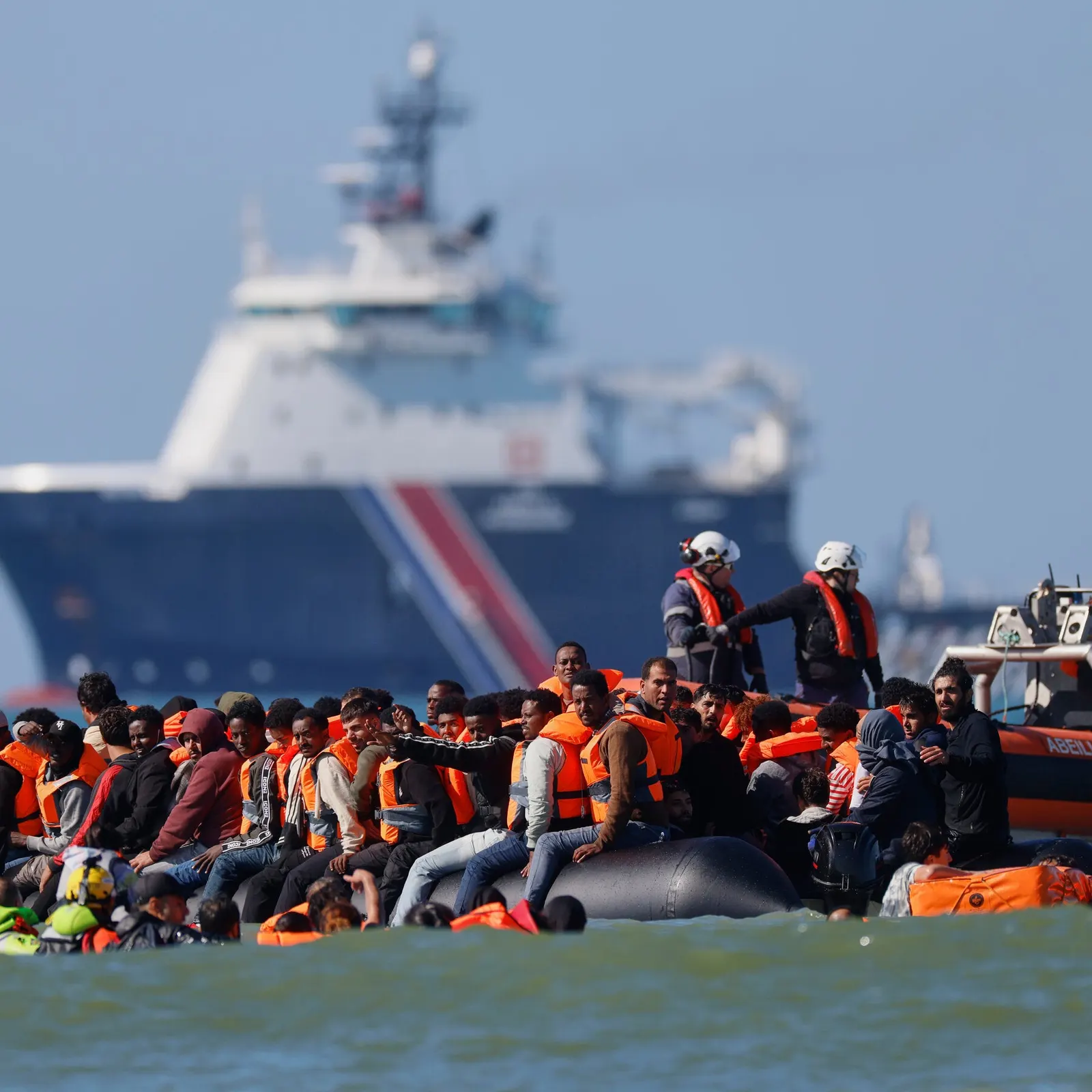
A child and two women died in a Channel crossing earlier in the week the deal expired, according to the Washington Times. AFP said three migrants, one of whom was a 10-year-old boy, lost their lives off France's coast during a crossing attempt. Separately, a French court sentenced six men to between six and ten years in prison over deaths in a November 2021 Channel tragedy, describing those responsible as "individuals driven by greed, with utter disregard for human life."69
Nuñez said data from the UN refugee agency suggested awareness of the scheme was spreading and leading some migrants to drop plans to attempt the crossing: "According to information from the UN high commissioner for refugees, word of the scheme is beginning to spread, which is prompting a number of migrants to abandon their plans to make the crossing." He also argued that France should not be left to shoulder this responsibility on its own.1
The Guardian also reported that detainees deported to France did not always remain there: some became homeless in Paris, some returned to camps around Calais and Dunkirk, and others made the crossing back to the UK.2
Reactions
A UK government source played down the significance of the deal's end, saying: "We would like to see the deal continue. They added that its lapsing was no great loss, since the scheme had never grown large enough to function as a genuine deterrent against small-boat arrivals in the UK.12
Mahmood acknowledged the scheme's limitations while cautioning against alternatives: "It's not been without its challenges. Mahmood acknowledged that the figures involved remained fairly modest, and separately warned against viewing such an arrangement as the long-term answer. She maintained that signing on to such a pact would not actually make the underlying problem disappear, despite any assurances suggesting otherwise.12
Starmer, who announced the scheme in 2025, had said at the time: "There is no silver bullet here, but with a united effort, new tactics and a new level of intent, we can finally turn the tables."2
The Home Office confirmed the pilot was winding down, stating: "The government's pilot with France to remove asylum seekers in exchange for an equal number of legal migrants is no longer processing new cases."6
Why it matters
The end of the pilot removes one of the few bilateral mechanisms Britain and France had built since Brexit to manage Channel crossings, at a time when crossing numbers remain high and deaths continue to occur. France's push for a Europe-wide replacement signals that future returns arrangements may depend on wider EU cooperation rather than a UK-France-only deal.12
Related stories
Version history
- version 1 ·